Legal literacy is defined as the ability to read, understand, and apply legal language to real decisions that affect your life. Most people sign contracts, accept privacy policies, and agree to service terms without reading them closely. That gap between signing and understanding is where rights get lost and disputes begin. Knowing why understanding legal terms matters is not a skill reserved for lawyers. It is a core modern skill, comparable to financial literacy, that every person needs to protect their interests and make informed choices.
Why understanding legal terms matters in everyday documents
Legal language sets specific, enforceable obligations in contracts, privacy notices, and service agreements. Every clause you sign carries legal weight, whether you read it or not. That is the part most people miss.
Consider a standard employment contract. Terms like "at-will employment," "non-compete clause," and "indemnification" are not decorative. Each one defines what you can do, what your employer can do, and what happens when something goes wrong. Misreading or skipping those clauses can cost you the right to work in your field for years. The same applies to workplace policies and privacy notices, which often contain opt-out windows and data-sharing permissions buried in dense paragraphs.

Legal jargon can also be used to shift power. Narrowly defined terms like "loss" or limited indemnity clauses can quietly reduce what you are owed in a dispute. You would not notice unless you knew what to look for.
Common legal terms that directly affect your rights include:
- Indemnification: You agree to cover another party's legal costs or damages.
- Arbitration clause: You give up your right to sue in court and agree to private dispute resolution.
- Force majeure: Excuses a party from obligations due to extraordinary events outside their control.
- Liquidated damages: A preset penalty amount written into the contract for specific breaches.
- Warranty disclaimer: Limits or removes a seller's responsibility for product defects.
Pro Tip: Before signing any contract, locate the arbitration clause first. If one exists, you may be waiving your right to a jury trial. That single clause changes your legal options entirely.
Why does legal language feel so hard to read?
Legal language is engineered for precision to eliminate ambiguity, ensure enforceability, and trigger procedural consequences. The complexity is not accidental. A single word change in a legal document can shift meaning, liability, or outcome entirely. That is why small wording changes in legal documents can change entire meanings.
Most legal documents also avoid contractions, casual language, and emotional phrasing. The result is text that reads like a different dialect of English. Many readers assume they need to understand every word before they can act. That assumption is wrong and it stops people from engaging with documents they have every right to question.
"Legal literacy is more about confidence to slow down and ask for clarification than memorizing every term." — SkillsYouNeed
The plain English movement has pushed back against unnecessary complexity. Courts in the United States, the United Kingdom, and Australia have adopted plain language standards for consumer contracts and government documents. Simplifying legal language preserves accuracy while increasing clarity and making justice more accessible. That shift proves the complexity was never fully necessary to begin with.
A practical approach to reading any legal document:
- Skim the full document first. Identify headings and section titles before reading word for word.
- Find the active clauses. Look for sections that define what each party must do, can do, or cannot do.
- Flag unfamiliar terms. Write them down and look them up before you sign anything.
- Ask specific questions. Do not ask "what does this mean?" Ask "what happens if I miss this deadline?" or "what does this limit my ability to do?"
- Request a plain English summary. Any reputable attorney or legal service can provide one.
What are the real benefits of legal literacy?
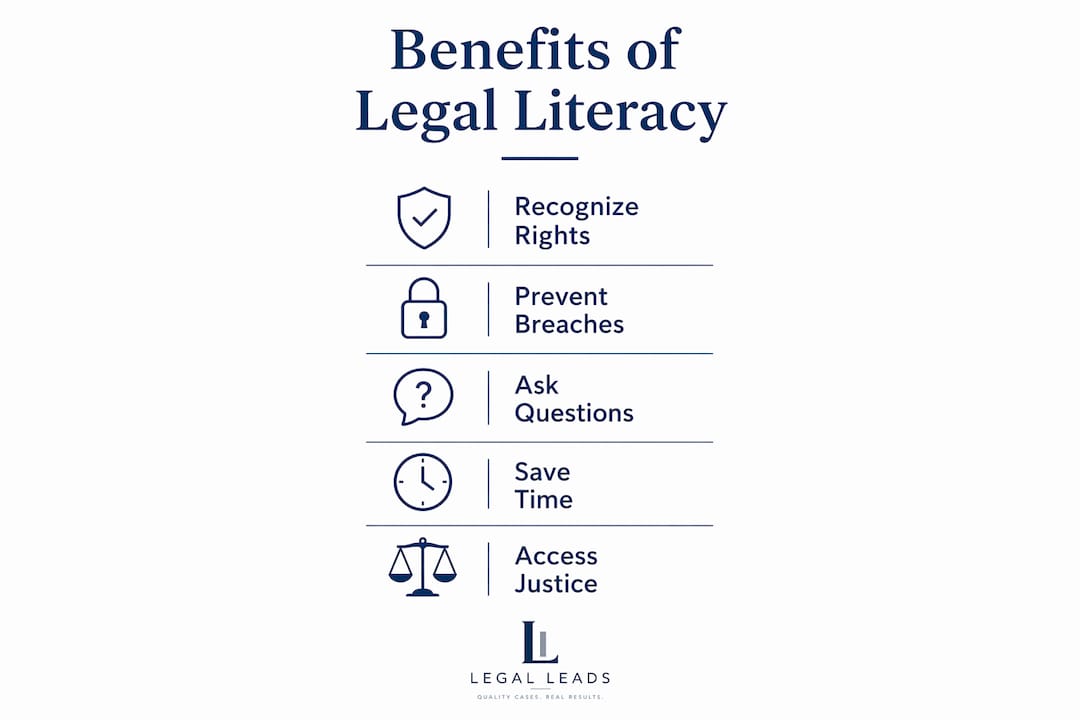
Early legal education improves access to justice by empowering individuals to understand their rights and pursue remedies earlier. That means fewer people wait until a situation becomes a crisis before seeking help. The benefit is practical, not theoretical.
Legal jargon can act as a structural barrier that blocks individuals from asserting rights or participating in justice systems. When you cannot understand the language of a process, you cannot fully participate in it. Legal literacy removes that barrier at the individual level.
Understanding legal terms also acts as a preventative measure. Clear legal communication lowers dispute risk, saves time, and supports voluntary compliance. People who understand what they agreed to are far more likely to follow through correctly.
| Benefit | Practical impact |
|---|---|
| Recognizing enforceable obligations | Prevents accidental breach of contract |
| Understanding rights in disputes | Enables earlier and more effective action |
| Identifying unfair or unusual clauses | Reduces risk of signing away protections |
| Knowing when to seek professional advice | Saves money by acting before problems escalate |
| Building confidence with legal language | Supports better communication with attorneys |
Pro Tip: You do not need to become a legal expert. You need enough knowledge to recognize when a clause is unusual and ask a professional about it. That threshold is much lower than most people think.
For anyone dealing with employment law matters, legal literacy is especially valuable. Workplace agreements routinely contain non-solicitation clauses, confidentiality terms, and dispute resolution procedures that directly affect your options if a conflict arises.
How to build practical legal term knowledge
The goal is not to memorize Black's Law Dictionary. The goal is to read a document and know which parts need attention. That is a skill you can build with consistent, low-effort practice.
Start with the documents you already have. Pull out your lease, your phone contract, or your most recent terms of service update. Read the first three sections and write down every term you do not understand. Look each one up using free resources like Cornell Law School's Legal Information Institute (LII), which provides plain English definitions for thousands of legal terms.
- Use legal glossaries. Cornell LII, Nolo, and the American Bar Association all publish free glossaries organized by topic.
- Focus on high-stakes documents first. Leases, employment contracts, and medical consent forms carry the most direct personal risk.
- Read the definitions section. Most formal contracts include a section that defines key terms as they apply to that specific agreement. Start there.
- Review a non-lawyer document guide before signing anything significant. Structured checklists help you spot the clauses that matter most.
- Know when to stop and call a professional. If a clause involves significant money, your employment, your housing, or your parental rights, get legal advice before you sign.
Legal literacy helps people ask clear questions, recognize when expert advice is necessary, and improves decision-making. The confidence to say "I need this explained more clearly" is itself a form of legal literacy. It signals that you understand enough to know what you do not understand.
Understanding legal representation timelines is also part of this skill set. Many legal rights have strict deadlines. Missing a filing window because you did not understand a notice can forfeit your claim entirely.
Key Takeaways
Legal literacy is the single most practical skill for protecting your rights in contracts, disputes, and everyday legal encounters.
| Point | Details |
|---|---|
| Legal terms create enforceable duties | Every clause you sign carries legal weight, whether you read it or not. |
| Complexity serves a purpose | Legal language eliminates ambiguity, but plain English alternatives exist and work. |
| Literacy prevents disputes | Understanding what you agreed to reduces the risk of accidental breach or missed rights. |
| You do not need to know everything | Recognizing unusual clauses and knowing when to ask for help is enough. |
| Professional advice has a clear threshold | Seek an attorney when documents involve housing, employment, money, or family rights. |
The thing most people get wrong about legal documents
Most people treat legal documents as a formality. They scroll to the bottom, check the box, and move on. I have seen this pattern cause real harm, not because people are careless, but because they assume the document is standard and therefore safe.
The uncomfortable truth is that "standard" contracts are written by the other party's lawyers. They are designed to protect that party first. Clauses that limit your ability to sue, define "damages" narrowly, or require arbitration are not unusual. They are common. And they are enforceable the moment you sign.
The fix is not to become a lawyer. It is to slow down, identify the clauses that govern your rights, and ask one or two targeted questions before you commit. That habit alone separates people who protect their interests from those who discover problems after the fact. Legal literacy is not about knowing every answer. It is about knowing which questions to ask.
— Admin
When legal literacy reaches its limits, Legalleads can help
Understanding legal terms gets you far. At some point, though, a document or situation requires a qualified attorney. That is where Legalleads steps in.
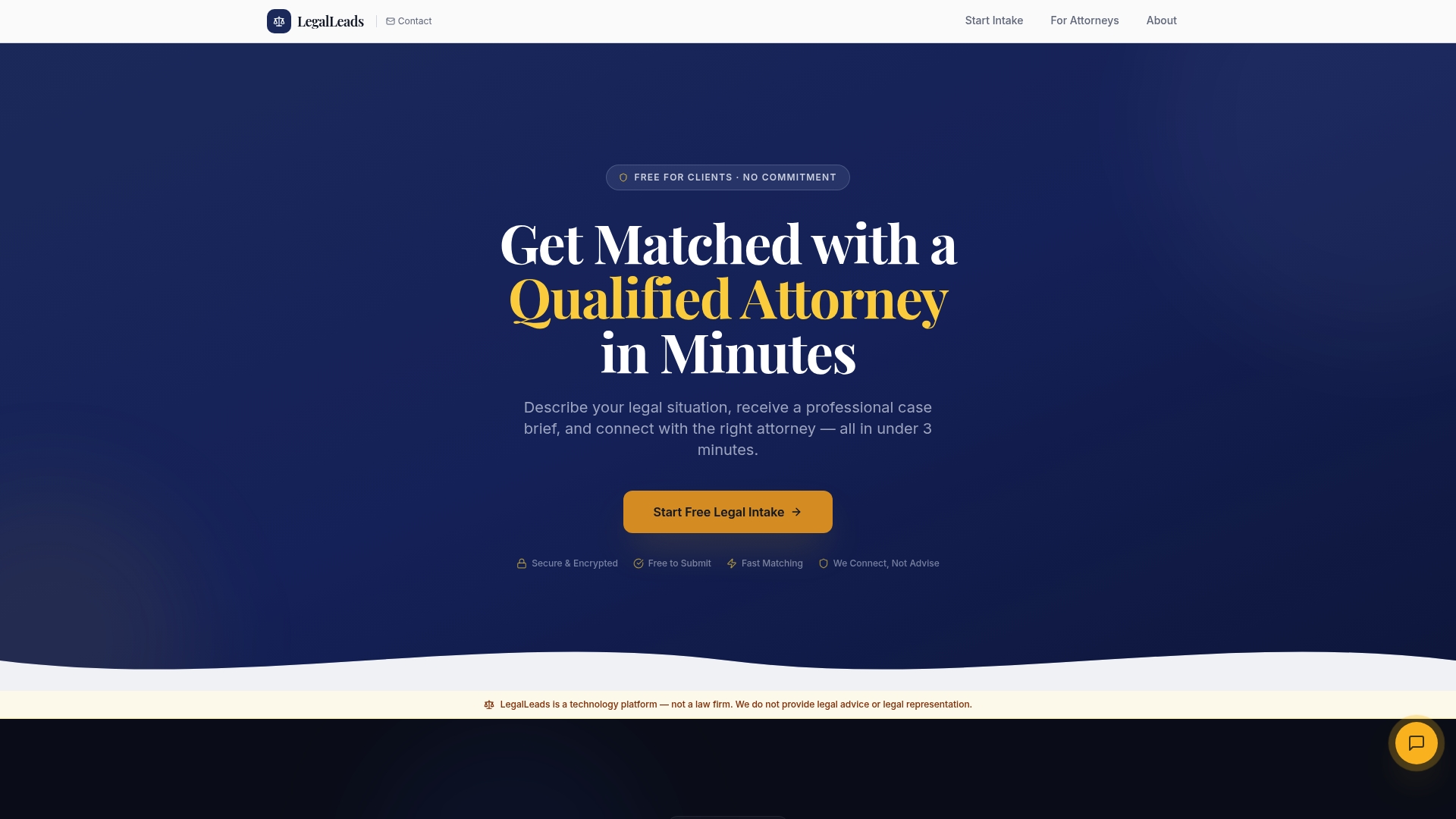
Legalleads lets you describe your legal situation in plain English and receive a professional case brief in under two minutes. The platform then connects you with a qualified attorney within 24 hours, with no calls or complicated forms required. Whether you need help with family law matters, a personal injury claim, or a criminal defense question, Legalleads matches you to the right attorney fast. When the document in front of you is too complex to handle alone, find a qualified lawyer through Legalleads and get clear answers quickly.
FAQ
What is legal literacy and why does it matter?
Legal literacy is the ability to read and understand legal language well enough to make informed decisions. It matters because legal jargon can block access to justice when individuals cannot understand the documents that govern their rights.
Do I need to understand every legal term in a contract?
No. The goal is to identify clauses that govern your key rights and obligations, then ask targeted questions about anything unclear. Recognizing when to seek expert advice is itself a core part of legal literacy.
What are the most important legal terms to know?
Terms like indemnification, arbitration clause, force majeure, warranty disclaimer, and liquidated damages appear frequently in consumer and employment contracts. Each one directly affects your rights and remedies in a dispute.
How does legal jargon affect access to justice?
Legal jargon acts as a structural barrier that prevents individuals from asserting rights or participating in legal processes. When people cannot understand legal language, they cannot effectively use the legal system.
Where can I find free legal term definitions?
Cornell Law School's Legal Information Institute (LII), Nolo, and the American Bar Association all publish free, plain English legal glossaries. These resources cover thousands of terms organized by practice area.