A business legal brief is a formal written document filed with a court that presents legal arguments, facts, and supporting authorities to persuade a judge toward a specific outcome. Every entrepreneur or business professional who faces litigation, an appeal, or a regulatory dispute will encounter one. Understanding its structure and purpose is not optional. It is the foundation of effective legal communication.
What is a business legal brief and how is it defined?
A business legal brief is the industry's standard term for what courts and attorneys call simply a "legal brief," applied specifically within a commercial or business law context. Legal briefs are defined as formal written documents filed with a court, presenting legal arguments, facts, and authorities that serve as the foundation for judicial decisions. They become a permanent part of the case file. Judges consult them during deliberations, which means every word carries weight.
The brief's core function is persuasion. It does not merely summarize events. A well-written brief connects facts to law to produce a desired legal outcome. Think of it as the written argument you make to a judge before you ever speak in a courtroom. For business professionals, this document often determines whether a contract dispute, employment claim, or liability case goes in your favor.

What are the main components of a legal brief?
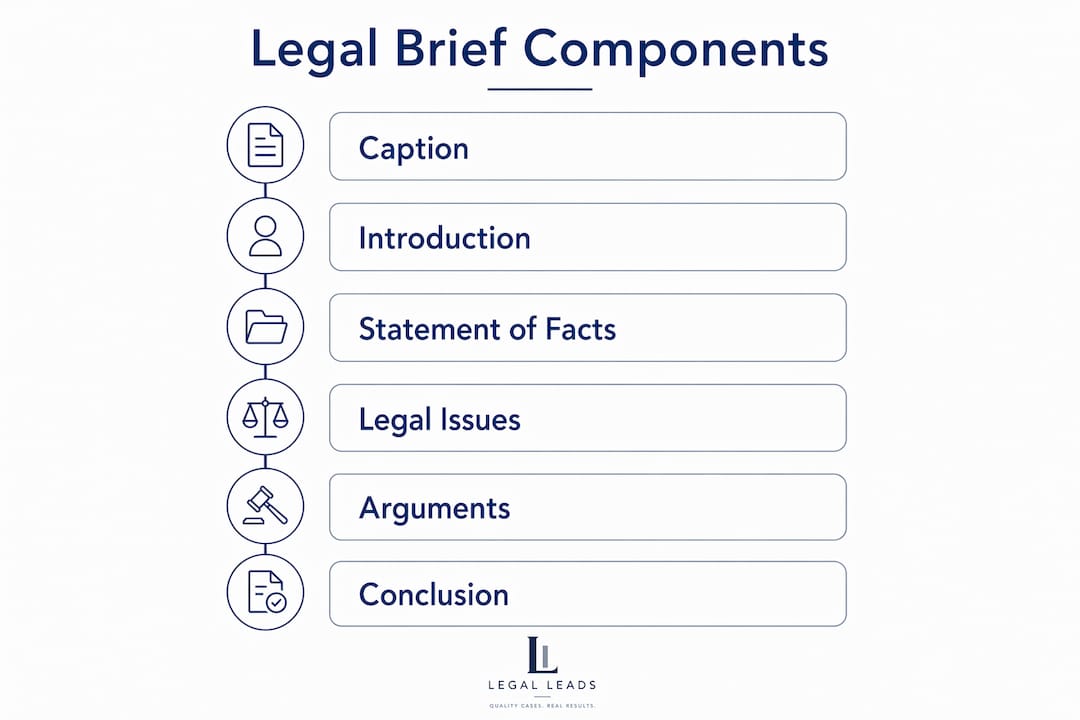
A standard legal brief contains seven core sections. Each section builds on the last to create a logical, persuasive argument.
- Caption: Identifies the parties, court, case number, and document title.
- Introduction: States the legal rule and the relief requested. This is the most read section.
- Statement of facts: Presents the relevant facts in chronological order, favoring your client's position without distorting the record.
- Issue presented: Frames the legal question the court must answer.
- Rule of law: Cites the statutes, regulations, or case law that govern the issue.
- Argument: Applies the rule to the facts. This is the analytical core of the document.
- Conclusion: States the specific relief requested, briefly and directly.
The introduction deserves special attention. Persuasive briefs lead with the rule and result rather than background context. Judges read dozens of briefs. A brief that buries its main point on page three loses the reader before the argument begins.
Pro Tip: Format your brief to match the specific court's local rules. Federal district courts, state appellate courts, and administrative tribunals each have distinct formatting requirements for margins, font size, and page limits. Ignoring these rules can get your brief rejected outright.
Here is a quick reference for the seven sections and their functions:
| Section | Primary function |
|---|---|
| Caption | Identifies parties and court |
| Introduction | States rule and relief requested |
| Statement of facts | Establishes the factual record |
| Issue presented | Frames the legal question |
| Rule of law | Cites controlling authority |
| Argument | Applies law to facts |
| Conclusion | Requests specific relief |
How does a legal brief differ from other business documents?
Business professionals frequently confuse three distinct documents: the business brief, the legal memorandum, and the legal brief. Confusing these documents leads to communication errors with serious consequences for legal outcomes.
A business brief is an internal strategic document. It summarizes a project, proposal, or initiative for internal stakeholders. Its audience is your team or leadership. Its goal is alignment, not persuasion of a judge. A legal memorandum, by contrast, is an internal legal document. Attorneys write memos to analyze a legal question objectively, exploring both favorable and unfavorable outcomes. Legal memoranda are exploratory and internal; court briefs are persuasive and directed at judges.
A legal brief is external and adversarial. It argues one side of a dispute to a court or official authority. The audience is a judge or panel. The goal is to win a ruling. Writing a business brief when you need a legal brief is like submitting a sales deck when you need a contract.
| Document | Audience | Purpose | Tone |
|---|---|---|---|
| Business brief | Internal team | Alignment and planning | Collaborative |
| Legal memorandum | Internal counsel | Objective legal analysis | Neutral |
| Legal brief | Judge or court | Persuasion toward a ruling | Adversarial |
The practical risk for entrepreneurs is real. Submitting an internal summary document to a court, or treating a legal brief as a planning document, signals to opposing counsel and the judge that you do not understand the process. That perception damages credibility before the argument even starts.
Best practices for writing or working with a legal brief
Writing an effective legal brief follows a clear set of professional standards. The Texas State Law Library identifies clarity, structure, and brevity as the three qualities judges value most. Each one is achievable with the right approach.
- Lead with the rule and the relief. The first page must function as a persuasive summary. State the controlling legal rule and what you are asking the court to do. Do not save this for the argument section.
- Insert citations during drafting. Adding citations early prevents errors and eliminates the time-consuming process of finding sources after the fact. Use short, informal citation placeholders as you write, then finalize them in revision.
- Present facts chronologically. A clear timeline helps judges follow the narrative. Avoid jumping between dates or burying key events in dense paragraphs.
- Address unfavorable facts directly. Acknowledging bad facts briefly and then pivoting to why they do not affect the legal outcome maintains credibility. Ignoring them invites opposing counsel to use them against you more effectively.
- Use legal research tools and databases. Platforms like Westlaw and LexisNexis provide access to controlling case law and statutes. Tools like Grammarly help catch grammatical errors that undermine professional credibility.
Pro Tip: Never argue more than two or three legal issues in a single brief. Courts respond better to focused, well-developed arguments than to a long list of weaker points. Prioritize your strongest legal theory and build around it.
When and why do legal briefs matter for business professionals?
Business professionals encounter legal briefs in specific, high-stakes situations. Knowing when a brief is required helps you prepare early and work more effectively with your attorney.
- Commercial litigation: Contract disputes, breach of warranty claims, and business tort cases all require briefs at the trial and appellate levels.
- Employment disputes: Claims involving wrongful termination, discrimination, or wage violations require briefs that address both factual records and statutory frameworks. Businesses facing employment law claims rely on well-structured briefs to present their defense.
- Regulatory proceedings: Agencies like the Securities and Exchange Commission or the Equal Employment Opportunity Commission accept written briefs during enforcement proceedings.
- Appellate review: When a trial court rules against your business, an appellate brief is the primary tool for challenging that decision.
Judges rely heavily on briefs to evaluate cases efficiently. A clear, structured brief reduces the time a judge needs to understand your position. That efficiency works in your favor. Entrepreneurs who understand this dynamic can have more productive conversations with their legal counsel, set realistic expectations, and make better decisions about when to settle versus when to fight.
The brief also shapes business strategy beyond the courtroom. A well-documented legal argument clarifies the strength of your position before trial. It forces your legal team to identify weaknesses early, which gives you time to address them.
Key Takeaways
A business legal brief is a formal court document that connects facts to law through structured, persuasive argument, and understanding its components directly improves how business professionals engage with legal counsel and litigation outcomes.
| Point | Details |
|---|---|
| Core definition | A legal brief is a formal court filing that presents legal arguments, facts, and authorities to a judge. |
| Seven standard sections | Every brief includes a caption, introduction, facts, issue, rule, argument, and conclusion. |
| Not a business brief | Business briefs are internal planning documents; legal briefs are external, adversarial court filings. |
| Lead with the rule | The first page must state the controlling legal rule and the relief requested to engage the judge immediately. |
| Cite early and address bad facts | Insert citations during drafting and acknowledge unfavorable facts briefly to maintain credibility. |
Why most business professionals underestimate the legal brief
Working closely with legal disputes over many years, I have seen one pattern repeat itself. Business professionals treat the legal brief as their attorney's problem. They hand over facts, step back, and wait for results. That approach is expensive and often produces weaker outcomes.
The brief is where your business story becomes a legal argument. When you understand its structure, you can give your attorney better facts, flag the unfavorable details early, and push back when the argument feels unfocused. I have seen entrepreneurs save significant legal fees simply by arriving at their first attorney meeting with a clear chronology of events and a list of the documents that support their position. That preparation directly improves the quality of the brief.
The other mistake I see regularly is treating all legal documents as interchangeable. A business owner who sends a legal memorandum to a court, or who expects a brief to function like a strategic planning document, signals to everyone in the room that they are not prepared. That perception has real consequences. Understanding the difference between a legal brief, a legal memo, and a business brief is basic legal literacy for anyone running a company.
Legal writing practices are also changing. Courts increasingly expect concise, well-organized briefs over lengthy documents packed with every possible argument. The professionals who adapt to that expectation, and who work with attorneys who write that way, consistently get better results.
— Admin
How Legalleads connects you to the right legal expertise
Finding a qualified attorney who understands business legal briefs should not take weeks of phone calls and intake forms.

Legalleads lets you describe your legal situation in plain English and receive a professional case brief in under two minutes. The platform then connects you with qualified attorneys within 24 hours. Whether you are facing a contract dispute, an employment claim, or an appellate matter, you can find a qualified lawyer through Legalleads without the usual friction. The process is direct, fast, and built for business professionals who need legal support without the delays. You can also browse attorneys by practice area to find counsel with specific experience in the type of brief your situation requires.
FAQ
What is the legal brief definition in simple terms?
A legal brief is a formal written document filed with a court that presents one party's legal arguments, facts, and supporting authorities. Its purpose is to persuade a judge to rule in that party's favor.
How does a legal brief differ from a legal memorandum?
A legal memorandum is an internal document that analyzes a legal question from multiple angles for an attorney or client. A legal brief is an external court filing designed to argue one side of a dispute persuasively.
What are the main components of a legal brief?
A standard legal brief includes a caption, introduction, statement of facts, issue presented, rule of law, argument section, and conclusion. Each section serves a distinct function in building the overall legal argument.
When does a business need a legal brief?
A business needs a legal brief during litigation, appellate proceedings, regulatory enforcement actions, or any formal dispute where a court or agency requires written legal argument.
How long should a business legal brief be?
Brief length depends on the court's local rules, which set page or word limits. Most trial court briefs range from 10 to 30 pages, while appellate briefs may be longer. Always check the specific court's requirements before drafting.