
Legal literacy is defined as the ability to understand, evaluate, and use legal information to protect your rights and make informed decisions. The American Bar Association defines this skill as making critical judgments about law substance and process, then effectively using legal resources. Why legal literacy matters explained simply: without it, you cannot recognize when your rights are being violated or when you need help. Dean Christiana Ochoa describes legal literacy as "civic infrastructure" that sustains constitutional stability and the rule of law. Legal literacy is not about becoming a lawyer. It is about having enough knowledge to navigate the legal system without being taken advantage of.
What are the real-world consequences of lacking legal literacy?
The gap between legal need and legal help is wide. 92% of civil legal problems faced by low-income Americans receive little or no help. That number means millions of people face evictions, wage theft, and custody disputes without any guidance.
The consequences show up in everyday situations most people do not recognize as legal matters:
- Rental agreements: Tenants who do not read lease terms often waive rights to security deposit returns or accept illegal fees.
- Employment contracts: Workers who sign non-compete clauses without understanding them can lose future job opportunities.
- Consumer disputes: People who miss dispute deadlines in credit card agreements forfeit their right to challenge charges.
- Medical billing: Patients who do not know their rights under the No Surprises Act pay inflated out-of-network bills they could legally contest.
Legal ignorance does not just cost money. It costs time, safety, and opportunity. Vulnerable populations bear the heaviest burden. Low-income Americans, immigrants, and people with limited English proficiency are most likely to encounter legal problems and least likely to recognize them as such. A landlord who knows a tenant does not understand tenant protection laws has a clear advantage. That advantage disappears the moment the tenant knows their rights.
People without legal awareness also tend to avoid the legal system entirely. They assume it is too complex, too expensive, or not meant for them. That avoidance turns manageable problems into crises. A missed court date, an unsigned response to a lawsuit, or a failure to file a complaint within a statute of limitations can permanently close the door on relief.

How does legal literacy empower individuals in everyday and civic life?
Legal literacy changes how you move through the world. Understanding legal frameworks builds confidence to question institutions and engage in public discourse. That confidence is not abstract. It shows up in concrete situations every day.
Here are four areas where legal awareness produces direct, practical results:
- Workplace rights: Knowing that the Fair Labor Standards Act requires overtime pay for non-exempt employees means you can identify wage theft before it becomes a pattern.
- Housing decisions: Understanding what a lease clause actually requires prevents you from accepting terms that violate local housing codes.
- Online behavior: Recognizing what data consent forms actually authorize helps you protect your personal information under laws like the California Consumer Privacy Act.
- Civic participation: Legally literate citizens vote with a clearer understanding of ballot measures, serve on juries with more confidence, and advocate for policy changes more effectively.
Legal literacy supports democratic participation by removing the alienation and intimidation that keep people disengaged from legal and civic processes. When you understand how a law works, you stop feeling like the system is something that happens to you. You start seeing it as something you can use.
Pro Tip: Keep a folder, physical or digital, for every contract you sign. Label it with the date and the other party's name. This habit alone prevents most disputes from escalating because you have a record to reference.
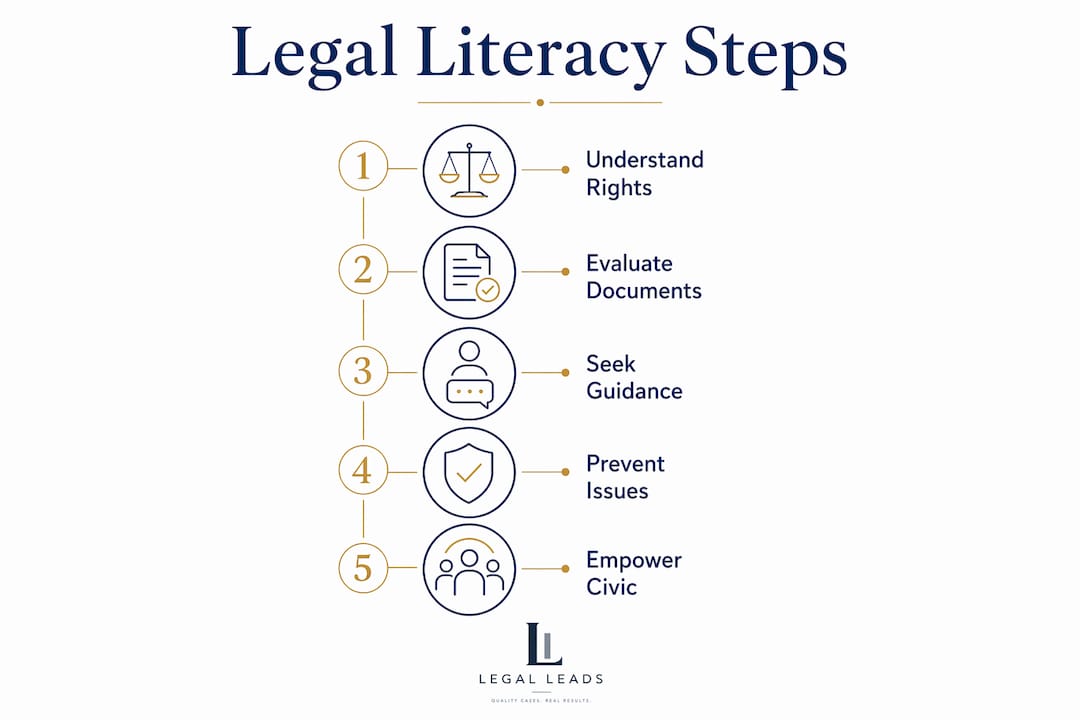
Legal literacy also prevents minor issues from becoming expensive legal battles. A person who understands the basics of contract law knows to send a written notice before terminating a service agreement. That one step can prevent a breach of contract claim. Understanding basic legal processes is often the difference between resolving a dispute in days and fighting it in court for months.
What barriers hinder legal literacy and how can they be overcome?
Legal literacy faces real obstacles. The biggest is language. Legal documents use terminology that most people have never encountered outside a courtroom. Terms like "indemnification," "tortious interference," and "res judicata" are not explained in standard education. They are barriers by design, not by necessity.
Other common obstacles include:
- Economic barriers: Legal consultations cost money. People who cannot afford an attorney often have no access to reliable legal information.
- Inaccessible official materials: Court filings, statutes, and regulatory guidance are written for lawyers, not the general public.
- Digital exclusion: Online legal resources assume internet access and digital literacy that not everyone has.
- Social stigma: Many people associate legal problems with criminality and avoid seeking help out of shame.
"Excessive technical barriers and the lack of public legal awareness alienate citizens from the legal system. Community education using plain language is the most direct solution to making law accessible to everyone." — Legal awareness research, Wikipedia
The solution is not to simplify the law itself. The solution is to build plain-language legal education into schools, workplaces, and community organizations. Several states have introduced legal literacy components into high school civics curricula. Employers who include basic employment law training in onboarding reduce HR disputes significantly. Libraries and community centers that host legal aid clinics give people a low-stakes entry point into the legal system.
Digital legal literacy is now equally important. Knowing how to evaluate an online legal resource, distinguish a reputable legal aid site from a predatory one, and use court self-help portals are skills that belong in every adult's toolkit.
What practical steps can you take to build your legal knowledge?
Building legal literacy does not require a law degree. It requires consistent, deliberate habits. The most important first step is understanding the difference between legal information and legal advice.
- Learn the information versus advice distinction: Legal information is accessible to everyone and helps you prepare. Legal advice applies the law to your specific facts and requires a licensed attorney. Confusing the two leads to over-reliance on general resources for situations that need professional judgment.
- Keep documentation: Maintain a chronological incident log for any situation that might become a legal matter. Record dates, times, names, and what was said or done. This log is your foundation if you ever need to consult an attorney.
- Recognize trigger events early: Early identification of trigger events like signing a contract, receiving a legal notice, or being involved in an accident allows you to act before problems escalate. Waiting until a crisis hits costs more time and money.
- Use free and low-cost resources: Legal aid organizations, law school clinics, court self-help centers, and public library legal reference services provide reliable information at no cost. Many state bar associations also offer lawyer referral services with reduced-fee initial consultations.
- Know when to get professional help: Legal literacy tells you when a situation exceeds your ability to handle it alone. Recognizing that signal and acting on it is itself a form of legal competence.
Pro Tip: Before signing any contract, read the dispute resolution clause. If it requires mandatory arbitration, you may be waiving your right to sue in court. That one clause changes your options significantly if something goes wrong.
Understanding basic legal terms in common documents is a skill you can build over time. Start with the documents you encounter most often: leases, employment agreements, and terms of service. Each one you read carefully adds to your practical legal knowledge.
Key Takeaways
Legal literacy is the single most effective tool individuals have for protecting their rights before problems become crises, and building it requires consistent habits, not a law degree.
| Point | Details |
|---|---|
| Legal literacy defined | It is the ability to understand and use legal information to protect your rights and make informed decisions. |
| Scale of unmet legal need | 92% of civil legal problems among low-income Americans receive little or no help, showing how critical basic legal knowledge is. |
| Everyday impact | Legal literacy prevents exploitation in rental agreements, employment contracts, and consumer disputes before harm occurs. |
| Key practical habit | Keeping a chronological incident log and learning to spot trigger events early reduces legal risk significantly. |
| When to get help | Recognizing the boundary between legal information and legal advice tells you when to consult a qualified attorney. |
Legal literacy is democratic power, not legal complexity
I have spent years watching people lose cases they should have won, not because the law was against them, but because they did not know the law was on their side. That is the real cost of low legal literacy. It is not ignorance in the abstract. It is a landlord keeping a security deposit that legally belongs to a tenant. It is a worker accepting unpaid overtime because they did not know it was illegal. It is a parent signing away custody rights in a document they did not fully read.
The conventional wisdom says legal matters are for lawyers. I disagree with that framing. Legal literacy is not about replacing attorneys. It is about knowing enough to protect yourself until you can reach one, and knowing when you need one at all. The people I have seen navigate legal problems most effectively are not always the ones with the most money. They are the ones who kept records, asked the right questions, and recognized early that something was wrong.
Community leaders, educators, and employers all have a role here. Embedding basic legal awareness into schools, onboarding programs, and community centers is not a luxury. It is a public health measure for civic life. A legally literate community is harder to exploit and more capable of holding institutions accountable. That is worth investing in.
— Admin
When legal literacy points you toward professional help
Legal knowledge tells you when a situation needs more than self-help. At that point, finding the right attorney quickly matters as much as knowing your rights.

Legalleads connects you with qualified attorneys without the usual friction. You describe your legal situation in plain English, receive a professional case brief in under two minutes, and get matched with a qualified attorney within 24 hours. No calls, no complicated forms. Whether you need a family law attorney or representation for a personal injury matter, Legalleads matches you based on your specific situation. Legal literacy gives you the foundation. Legalleads helps you find the right lawyer when the situation calls for one.
FAQ
What is legal literacy?
Legal literacy is the ability to understand, evaluate, and use legal information to protect your rights and make informed decisions. The American Bar Association defines it as making critical judgments about law substance and process, then effectively using legal resources.
Why is legal awareness crucial for everyday life?
Legal awareness helps you recognize your rights in rental agreements, employment contracts, and consumer disputes before you sign or agree to unfair terms. Without it, you are more likely to be exploited or miss deadlines that close off your legal options.
What is the difference between legal information and legal advice?
Legal information is general knowledge about the law that anyone can access and use to prepare. Legal advice applies the law to your specific facts and requires a licensed attorney.
How can I improve my legal literacy without hiring a lawyer?
Read the contracts you sign, use free resources from legal aid organizations and court self-help centers, and keep a written log of any situation that might become a legal matter. Recognizing common legal jargon in everyday documents is a practical starting point.
When should a legally literate person seek professional legal help?
Seek professional help when a situation involves a formal legal notice, a contract with significant financial or personal consequences, or a dispute that has escalated beyond informal resolution. Legal literacy helps you recognize that moment before it becomes a crisis.