Language barriers actively reduce meaningful participation in legal proceedings and can change outcomes at every stage, from arrest to sentencing. If you or someone you know faces this situation right now, take these three steps immediately:
- Pause and state clearly: "I need a certified interpreter before I respond."
- Document everything: Write down the names of officers, clerks, or attorneys present, the time, and what was said or requested.
- Contact a qualified attorney fast: Use a tech-driven matching tool like Legalleads to get connected within 24 hours.
Table of Contents
- Why language barriers affect legal cases: the "double-blind" effect
- How language barriers change legal outcomes: concrete risks
- What do U.S. and California courts actually require from interpreters?
- Practical steps to protect your rights if you don't speak English fluently
- How can technology and attorney-matching platforms reduce language barriers?
- How do you choose the right attorney when language is a barrier?
- Key Takeaways
- What the data shows about language access in California courts
- Legalleads connects California's LEP clients to qualified attorneys fast
- Useful sources and further reading
- FAQ
Why language barriers affect legal cases: the "double-blind" effect
Courtroom English is not everyday English. Legal proceedings rely on legalese, a specialized register full of terms like "waiver," "stipulation," and "mens rea" that carry precise meanings most people, including native English speakers, do not fully grasp. For someone with limited English proficiency (LEP), the gap is far wider.
Research documents a pattern courts call the "double-blind" effect: the LEP person appears to follow the conversation well enough, and the court accepts that appearance as sufficient. Neither side probes deeper. The result is a litigant who nods along without understanding what they are agreeing to.
Courts commonly equate conversational English with legal competency, but courtroom participation requires a much higher level of comprehension than everyday interactions. Accepting "passable" English without adequate inquiry harms case fairness at the most basic level.
Source: UIC Law Review
Consider a scenario that plays out regularly in California courtrooms: a defendant who speaks functional English at work misses the legal significance of "waiving your right to a preliminary hearing." They nod. The proceeding moves forward. The right is gone.
How language barriers change legal outcomes: concrete risks
The impact of language barriers on law is not abstract. Specific, documented harms occur at predictable moments. Inadequate interpretation during plea bargaining has produced cases where defendants unknowingly waived constitutional rights, leading to invalid guilty pleas and later reversals.
The highest-risk moments in any case include:
- Arrest: Miranda rights read in English to someone who does not fully understand them.
- Plea bargaining: Accepting or rejecting a deal without grasping its terms.
- Testimony: Giving answers that are mistranslated, altering the factual record.
- Document signing: Signing forms, waivers, or agreements in English without a translation.
- Immigration hearings: Wrongful removals tied to improper interpretation for Indigenous-language speakers.
Dialect bias compounds the problem. Research shows that nonstandard dialects and accented English are judged as less credible by juries and officials, even when the facts are identical. Interpreter shortages for less-common languages also cause hearing delays that disadvantage LEP litigants. And when errors do occur, the official court transcript often captures only the English portion, leaving interpretation mistakes unrecorded and nearly impossible to challenge on appeal.
What do U.S. and California courts actually require from interpreters?
The legal protections are real but uneven. Criminal defendants have stronger interpreter rights than civil litigants. In federal court and California state courts, the right to an interpreter is guaranteed by statute for criminal proceedings. Civil cases are a different story: no universal right to a court-appointed interpreter exists for most civil matters, and protections vary by jurisdiction and court discretion.
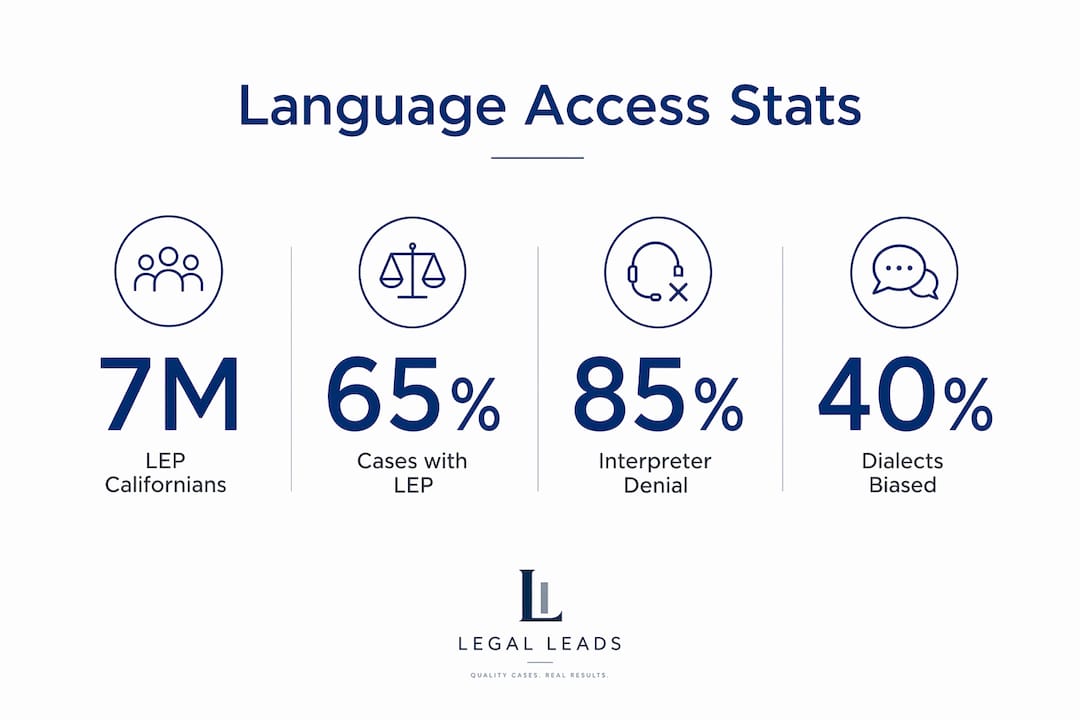
Title VI of the Civil Rights Act requires federally funded courts to provide meaningful language access, but enforcement is inconsistent. The California Judicial Council has issued guidance on interpreter services, yet the California State Bar has documented that nearly seven million Californians cannot access courts without significant language assistance.
The gap between certified and ad-hoc interpreters is significant:
- Certified interpreters: Passed a rigorous state or federal exam; held to accuracy and ethics standards; errors are attributable and challengeable.
- Ad-hoc or family interpreters: No formal training; may omit, soften, or misstate legal terms; errors rarely appear on the record; create conflicts of interest in family law cases.
Pro Tip: To request an interpreter on the record, state clearly: "For the record, I am requesting a certified court interpreter in [language]. I do not consent to proceed without one." Ask the clerk to note this request in the case file.
Practical steps to protect your rights if you don't speak English fluently
Immediate action preserves rights. Delay often forfeits them. Here is a prioritized checklist:
- Stop and request a certified interpreter before answering any substantive question from police, court staff, or opposing counsel.
- Do not sign any document you have not received in your language. Review guidance on document review before signing to understand what to look for.
- Ask for a bilingual transcript or request that proceedings be audio-recorded.
- Document every failure: Write down the name of anyone who refused your interpreter request, the date, time, and exact words used.
- Contact a bilingual attorney as quickly as possible. Legal representation timelines matter; delays can close off options.
Sample script for attorney intake: "My primary language is [language]. I need an attorney who can communicate with me in [language] or arrange a certified interpreter for all proceedings and document reviews."
Pro Tip: Keep a written log of every interpreter-related event: who was present, what language was used, whether a certified interpreter was offered, and whether you objected. This log is evidence for any future appeal or complaint to the Department of Justice's Office for Civil Rights.
How can technology and attorney-matching platforms reduce language barriers?
Technology reduces delay and friction significantly, but it cannot replace certified courtroom interpretation. The distinction matters. A plain-language intake form helps you describe your situation clearly; it does not substitute for a qualified interpreter at a hearing.
Useful technology options include:
- Plain-language intake forms that avoid legal jargon
- Machine-assisted translation for initial case descriptions
- Bilingual attorney filters in attorney directories
- AI-generated case briefs that summarize your situation for an attorney in plain English
- Bilingual document templates for standard forms
Legalleads uses an AI-driven intake process: you describe your legal situation in plain English, receive a professional case brief in under two minutes, and get connected to a qualified California attorney within 24 hours, with no calls or complicated forms required. For LEP users, this means faster access to an attorney who can then arrange proper interpretation for court proceedings.
AI transcription and machine translation are useful starting points, but they show measurable bias against nonstandard varieties of English and non-English languages. Always have a qualified human review any AI-generated transcript before it enters a legal proceeding.
Source: Innocence Project
How do you choose the right attorney when language is a barrier?
Prioritize attorneys with certified interpreter experience, bilingual staff, and a track record with LEP clients in your practice area, whether that is immigration, family law, or criminal defense.
Selection checklist:
- Confirmed bilingual capacity or a standing arrangement with a certified interpreter
- Prior cases involving LEP clients in your specific practice area (plea bargaining, immigration, family law)
- Willingness to request bilingual transcripts and preserve audio records
- Availability for a quick intake, ideally within 24 hours
Questions to ask during a first contact or platform intake:
- "Do you or your staff speak [language], or do you work with a certified court interpreter?"
- "Have you handled cases for clients with limited English proficiency in [practice area]?"
- "Will you request a bilingual transcript or audio recording of proceedings?"
- "How do you handle document signing for clients who need translation?"
- "What is your process if an interpreter is unavailable on a hearing date?"
For urgent legal questions, having these answers before you commit to an attorney can prevent the same communication failures the case is already dealing with.
Key Takeaways
Language barriers change legal outcomes at every stage of a case; requesting a certified interpreter immediately and documenting every failure are the two most protective actions an LEP person in California can take.
| Point | Details |
|---|---|
| The "double-blind" risk | Courts accept passable English without probing comprehension, leaving LEP litigants unaware of what they agreed to. |
| Plea bargains are highest-risk | Faulty interpretation at plea stage has produced invalid guilty pleas and later reversals. |
| Transcripts omit interpreter errors | Court reporters record only English; interpretation mistakes rarely appear on the official record, blocking appeals. |
| Civil cases have weaker protections | No universal right to a court-appointed interpreter exists for most civil proceedings in California. |
| Legalleads speeds attorney access | The AI intake generates a case brief in under two minutes and connects LEP users to a qualified California attorney within 24 hours. |
What the data shows about language access in California courts
The scale of the problem in California is concrete. The California State Bar documented that nearly seven million Californians cannot access courts without significant language assistance. Courts are often forced to rely on untrained interpreters, and in some civil and family law cases, even family members or children, which creates accuracy and fairness problems that compound over the life of a case.
Two patterns stand out from the platform's experience matching clients with language needs. Maria, a Spanish-speaking client in Los Angeles, described her situation through the Legalleads intake in plain English and was matched with a bilingual family law attorney within hours, avoiding a hearing she would have attended without representation. David, facing an employment dispute, used the same intake process and received a case brief that his matched attorney used to arrange a certified interpreter for the first hearing, preserving the record from the start.
The platform's limits are real: Legalleads connects you to attorneys and generates case briefs; it does not provide certified court interpretation. Once matched, the attorney handles interpreter arrangements for proceedings.
Legalleads connects California's LEP clients to qualified attorneys fast
When language is already a barrier, the last thing you need is a slow, complicated intake process. Legalleads is built for exactly this situation: describe your case in plain English, get a professional case brief in under two minutes, and receive a verified attorney match within 24 hours, with no phone calls or lengthy forms.
For LEP users in California, the platform offers an important resource to understand what happens if you miss court and how to respond appropriately.
- A plain-language intake that works even if your English is limited
- A bilingual attorney directory where you can filter for language capacity
- Verified attorney responses within 24 hours across practice areas including immigration, family law, and criminal defense
Whether you need an immigration attorney in Los Angeles or a family law attorney anywhere in California, the intake takes two minutes. Start your case brief at Legalleads now. Remember: the platform connects you to an attorney quickly, but certified court interpreters must still be arranged for any formal proceeding.
Useful sources and further reading
The claims in this article draw on the following authoritative sources. Use these to verify information, file complaints, or prepare for formal proceedings.
| Source | What it covers |
|---|---|
| UIC Law Review — Lost in Translation | Double-blind effect; civil interpreter rights; California and U.S. court standards |
| WUSTL Law Review — Lost in Interpretation | Plea bargain risks; faulty interpretation producing invalid guilty pleas |
| Fordham Urban Law Journal | Court transcripts; why interpretation errors are not preserved for appeal |
| Innocence Project — Dialect Bias | Credibility bias; AI transcription limits; wrongful convictions |
| The Conversation — Constitutional Interpreter Rights | Indigenous-language speakers; immigration hearing failures |
| California State Bar Language Barriers Report | Seven million Californians without language access; civil case gaps |
| Northwestern Journal of Law & Social Policy | Mistranslation in court records; constitutional rights of LEP defendants |
To file a language access complaint, contact the U.S. Department of Justice Civil Rights Division (Title VI complaints) or the California Judicial Council's Language Access Plan coordinator.
FAQ
What is the "double-blind" effect in legal cases?
The double-blind effect occurs when an LEP person appears to understand court proceedings well enough that no one probes further, leaving both sides unaware of the comprehension gap. Research documents this as a recurring cause of unfair outcomes in U.S. courts.
Do you have a right to a court interpreter in California?
Criminal defendants in California have a statutory right to a certified interpreter. Most civil litigants do not, and protections depend on court discretion and available funding.
Can a family member interpret for you in court?
Courts sometimes allow it in civil cases, but family interpreters lack formal training, may omit or soften legal terms, and create conflicts of interest. A certified court interpreter is always the safer choice.
How does Legalleads help if you have limited English?
Legalleads accepts plain-language case descriptions, generates a case brief in under two minutes, and connects you to a verified California attorney within 24 hours. The matched attorney then arranges certified interpretation for any formal proceedings.
What should you do if an interpreter is denied or unavailable?
State your objection clearly on the record, document the denial in writing, and contact an attorney immediately. You can also file a complaint with the DOJ's Office for Civil Rights under Title VI if the court receives federal funding.