
Attorney-client matching is a structured process that connects individuals with lawyers whose practice area, experience, and availability fit the client's specific legal needs. It goes well beyond a simple directory listing. Services like the NYC Bar Legal Referral Service, the Boston Bar Association Lawyer Referral Service, and platforms like LegalMatch use intake procedures and attorney vetting to produce referrals that are genuinely relevant. Understanding how this process works helps you get better results faster.
What is attorney-client matching and how does it differ from a directory?
Attorney-client matching is the system of pairing individuals with attorneys based on legal issue type, jurisdiction, and attorney qualifications. A directory lists lawyers. A matching service filters them. The NYC Bar Legal Referral Service emphasizes that matching involves rigorous vetting through applications and interviews to confirm practice expertise. That vetting step is what separates a quality referral from a paid ad placement.
Matching services also protect clients from mismatched referrals. A client with a wrongful termination claim needs an employment law attorney, not a general practitioner. The intake process captures those details and routes the request accordingly. The result is a referral with a much higher likelihood of leading to a productive attorney-client relationship.

How do attorney-client matching services work?
The attorney-client matching process follows a consistent structure across reputable services, though the tools and speed vary.
- Intake. You describe your legal issue, including the type of problem, the jurisdiction, key dates, and what outcome you want. The intake team or platform uses this information to categorize your case by practice area and sub-area.
- Vetting. Attorneys in the service's panel have already been screened for licensure, malpractice insurance, and relevant experience. The Boston Bar Association reviews requests for alignment between client needs and attorney practice focus before making a referral.
- Matching. The service connects you with one or more attorneys whose qualifications fit your case. This is a referral, not a hiring decision. The attorney still decides whether to accept your matter.
- Follow-up. If the matched attorney is unavailable, the Cleveland Metro Bar Association explains that clients receive additional referrals until a suitable attorney is found. You contact the attorney directly to schedule a consultation.
The speed of this process varies. Bar association services may take a few days. Technology-driven platforms like Legalleads complete the matching within 24 hours. The core steps remain the same regardless of the platform.
Pro Tip: Write a one-paragraph summary of your legal issue before you contact any matching service. Include what happened, when it happened, the state where it occurred, and what you want to achieve. Intake staff use exactly this type of detail to improve referral accuracy.
What ethical rules govern attorney-client matching services?
Ethical rules shape how matching services operate, and understanding them protects you as a client.
The Illinois State Bar Association has issued ethics guidance specifying the conditions legal matching services must meet. The key requirements include:
- No endorsements. The service cannot recommend one attorney over another or imply that a matched attorney is superior to others.
- Automated, non-discretionary matching. Matches must be based on objective criteria, such as practice area and availability, not on which attorney pays more or has a preferred relationship with the service.
- Conflict of interest management. Attorneys must screen for conflicts before accepting a referral. Initial intake disclosures can trigger conflict checks, so clients should understand that sharing sensitive details early carries some risk.
- Ongoing compliance. For-profit matching services must comply with professional conduct rules continuously. Attorneys participating in these services must reassess their participation regularly to confirm ongoing compliance.
Rule 1.18 of professional conduct rules also addresses prospective client confidentiality. Even before a formal attorney-client relationship exists, information you share during intake may be protected. This means attorneys who receive your referral have duties toward you from the moment they review your case details.
Pro Tip: Limit sensitive disclosures during initial intake to the basic facts needed to categorize your case. Share full details only after an attorney has confirmed interest and cleared any conflict checks.
What eligibility criteria do attorneys need to meet?
Reputable matching services apply strict standards before adding an attorney to their panel. The table below summarizes the most common requirements.
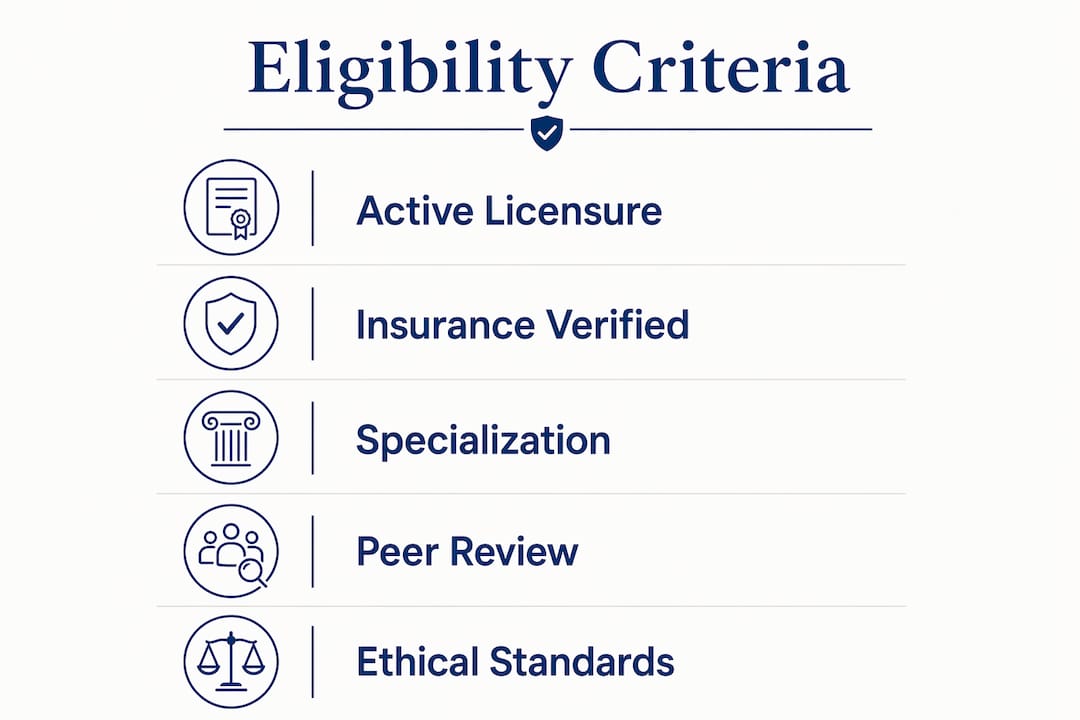
| Eligibility Requirement | Details |
|---|---|
| Active licensure | Attorney must hold a current, valid license in the relevant jurisdiction with no disciplinary suspensions. |
| Malpractice insurance | The Boston Bar Association requires attorneys to carry professional malpractice insurance as a condition of participation. |
| Practice area experience | Attorneys must demonstrate relevant experience in the specific area they wish to accept referrals for, such as criminal defense or family law. |
| Good standing | No active bar complaints or disciplinary actions that would affect the attorney's ability to represent clients. |
| Ongoing compliance | For-profit services require attorneys to continuously meet professional conduct rules and self-report changes in status. |
Bar association referral panels and for-profit platforms apply these standards differently. Bar associations typically conduct manual reviews and interviews. Technology platforms may use automated license verification combined with periodic audits. Both approaches aim to produce the same result: a panel of attorneys you can trust to be qualified.
The distinction matters when you are evaluating a service. A service that lists any attorney who pays a fee is not a matching service. It is an advertising platform. Rigorous vetting that includes interviews and qualification verification is what distinguishes trustworthy referral services from generic directories.
How can you prepare to get the best attorney match?
Your preparation directly affects the quality of your referral. Matching services work with the information you provide. Vague or incomplete intake responses produce less accurate matches.
- Be specific about your legal issue. State the type of problem clearly. "I was injured in a truck accident in California last month" is more useful than "I need a personal injury lawyer." Clients with truck accident claims need attorneys with that specific experience, not just any personal injury attorney.
- Include jurisdiction and timeline. The state and county where the legal issue occurred determines which attorneys are eligible to help. Dates matter because statutes of limitations affect whether your case is still actionable.
- State your goals. The NYC Bar advises clients to prepare a summary that includes what happened, the jurisdiction, key dates, and the outcome they want. This detail helps intake staff match your case to the right practice sub-area.
- Understand what a referral means. A match is not a guarantee that the attorney will take your case. The attorney reviews your matter and decides whether to accept it. If the first referral does not work out, request another.
- Manage your disclosures carefully. Initial intake disclosures can trigger conflict checks. Share enough to categorize your case, but hold back the most sensitive details until the attorney has confirmed interest and cleared conflicts.
Clients who treat the intake process seriously get better results. A well-prepared intake summary functions like a professional case brief. It signals to the attorney that you are organized and serious, which can influence whether they prioritize your matter.
Key Takeaways
Attorney-client matching produces better referrals than directories because it combines structured intake, attorney vetting, and practice area alignment before connecting you with a lawyer.
| Point | Details |
|---|---|
| Matching vs. directories | Matching services vet attorneys and filter by practice area; directories simply list lawyers without screening. |
| Intake specificity | Providing jurisdiction, timeline, and outcome goals directly improves the accuracy of your referral. |
| Ethical protections | Reputable services use automated, non-discretionary matching and prohibit endorsements to protect client choice. |
| Attorney eligibility | Qualified services require active licensure, malpractice insurance, and demonstrated practice area experience. |
| Referral is not a hire | A match connects you with a qualified attorney; the attorney still decides whether to accept your matter. |
Why matching services are worth using, but not blindly
Attorney-client matching services add real value. The structured intake process removes the guesswork of searching for a lawyer on your own. The vetting requirements mean you are not starting from zero when you contact a referred attorney. That alone saves significant time, especially for clients dealing with urgent legal issues like slip and fall injuries or immigration deadlines.
That said, not every service calling itself a "matching platform" meets the standards described here. Some are paid listing services with no real vetting. The clearest signal of a quality service is transparency about its attorney eligibility requirements. If a service cannot tell you how it screens attorneys, treat it like a directory, not a referral service.
The ethical framework around matching also matters more than most clients realize. The fact that services must use automated, non-discretionary matching protects you from being steered toward attorneys who simply pay more for placement. That protection only works if the service actually follows the rules. Asking a service directly whether it endorses attorneys or uses objective matching criteria is a reasonable and worthwhile question.
Preparation is the part clients most often skip. The intake summary you provide is the primary input the service uses to find your match. A vague description produces a generic referral. A specific, well-organized summary produces a referral that fits your actual situation. Treat the intake process like the first step in your legal case, because it is.
— Admin
Legalleads and the attorney-client matching process
Legalleads addresses the core problem most people face when looking for legal help: finding the right attorney quickly, without filling out complicated forms or making multiple calls.
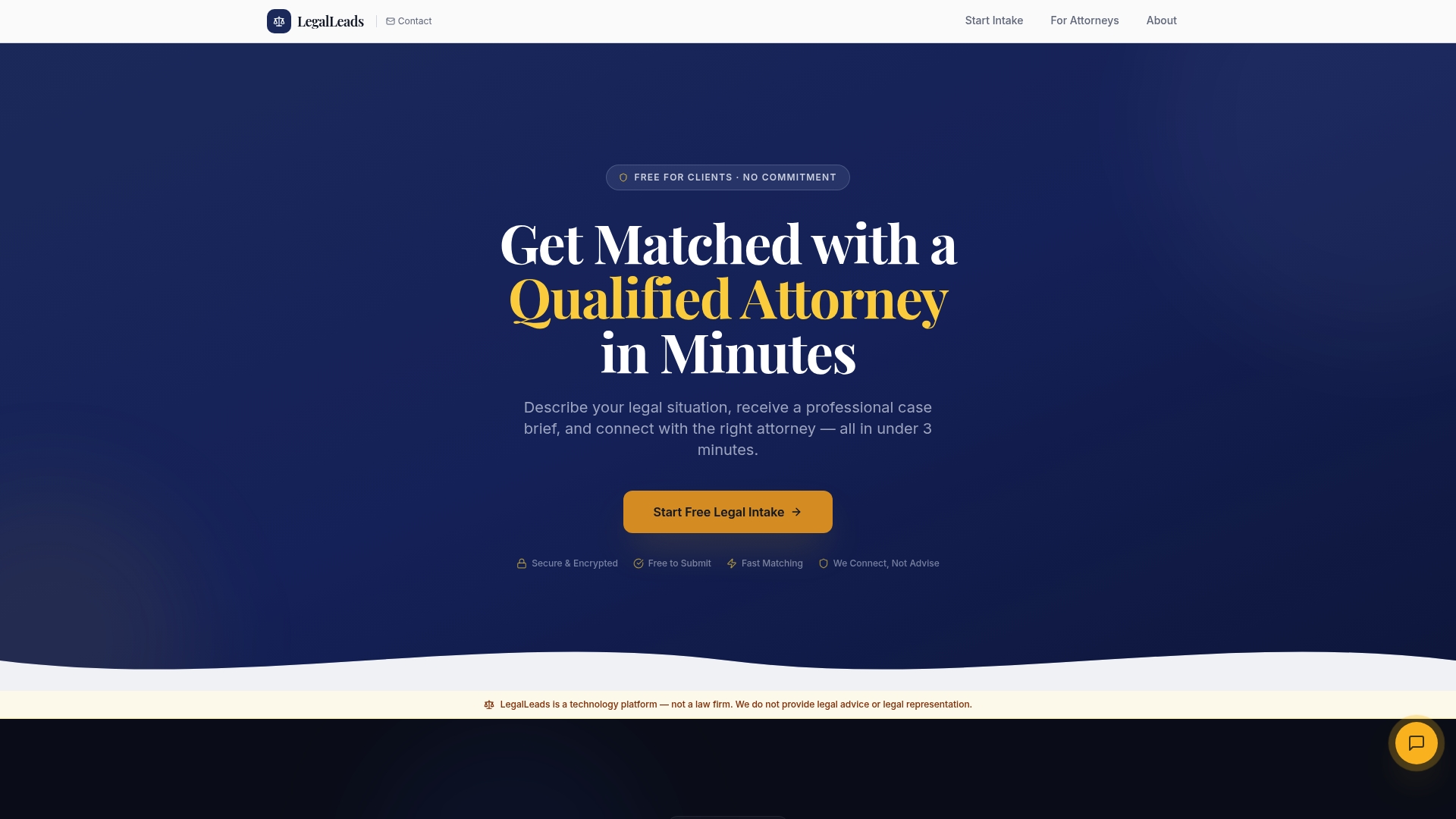
You describe your legal situation in plain English. Legalleads generates a professional case brief in under two minutes and connects you with a qualified attorney within 24 hours. The platform covers a wide range of practice areas, from family law in Los Angeles to personal injury cases across California. Attorneys in the Legalleads network are matched by practice area, so your referral is relevant from the start. You can also browse attorneys by practice area directly, or use the find a lawyer tool to get matched based on your specific legal needs.
FAQ
What is the attorney-client matching process?
Attorney-client matching is a structured referral process that connects clients with attorneys based on legal issue type, jurisdiction, and attorney qualifications. It involves an intake step, attorney vetting, and a practice area-based referral.
How does attorney-client matching differ from a legal directory?
A legal directory lists attorneys without screening them. A matching service vets attorneys for licensure, insurance, and experience, then filters referrals by practice area to produce a relevant match.
What information should I provide during attorney-client matching intake?
The NYC Bar recommends providing a summary that includes what happened, the jurisdiction, key dates, and your desired outcome. Specific details improve referral accuracy.
Can a matched attorney decline to take my case?
Yes. A referral is not a guarantee of representation. The attorney reviews your matter and decides whether to accept it. If the first attorney is unavailable or declines, the Cleveland Metro Bar Association notes that clients receive additional referrals from the panel.
Are attorney-client matching services regulated by ethics rules?
Yes. The Illinois State Bar Association has issued ethics guidance requiring matching services to use automated, non-discretionary matching and prohibiting endorsements. Attorneys must also reassess their participation in for-profit services to confirm ongoing compliance.