
Start a dated master ledger, digital and backed up, the day you get your first bill. Link every entry to an itemized statement, its matching Explanation of Benefits (EOB), and proof of payment. This single habit, more than any other, determines whether your injury claim holds up under an adjuster's scrutiny.
Before anything else, add these records to your file:
- Itemized bills from every provider, not summary statements
- EOBs from your health insurer for each visit
- Receipts for prescriptions, supplies, and equipment
- A mileage log for trips to appointments
- Proof of missed work and lost wages
Do this today: request itemized bills from each provider's billing office, photograph or scan every paper receipt, open a spreadsheet or printable tracker, and save copies in two separate places, one physical, one cloud.
Pro Tip: Write the claim number and visit date directly on each receipt or file name before you file it away. Six months from now, a stack of unmarked papers is worthless to you and your attorney.
Key Takeaways
Winning claims are built on a dated, reconciled ledger that links every bill to its EOB and proof of payment, not on memory or a shoebox of receipts.
| Point | Details |
|---|---|
| Start a master ledger now | Log every expense with date, provider, amount billed, and amount paid on day one. |
| Reconcile bills against EOBs | Match CPT codes and allowed amounts to catch unpaid adjustments or errors. |
| Track non-medical costs too | Mileage, parking, childcare, and lost wages all belong in your claim file. |
| Route records through your attorney | Send large document packages to counsel first, insurers only what they request. |
| Get matched with Legalleads | Legalleads connects you to a vetted attorney within 24 hours to review your reconciled file. |
Table of Contents
- What Counts as a Medical Expense in an Injury Claim?
- What Tools Work Best to Track Medical Bills?
- How Do You Organize and Reconcile Medical Bills?
- What Medical Billing Errors Should You Watch For?
- Who Should See Your Medical Records: Insurers or Your Attorney?
- Where Can You Find Free Trackers and Dispute Templates?
- Get Matched to a Personal Injury Attorney Who Reviews Your Records
- Where to Verify Prices and Reconcile Bills
- Sources
- FAQ
What Counts as a Medical Expense in an Injury Claim?
Insurance adjusters and courts look for a complete, itemized record of everything treatment related. Missing a category doesn't just lose you that expense. It can make your whole file look sloppy, which invites more scrutiny on the parts you did track.
Core medical charges include emergency room visits, hospital stays, surgeries, imaging (X-rays, MRIs, CT scans), specialist consultations, physical therapy sessions, and durable medical equipment like braces or wheelchairs. These form the backbone of your economic damages.
Routine out-of-pocket costs matter too, and people forget them constantly:
- Copays and deductibles for each visit
- Prescription medications and refills
- Bandages, braces, and over-the-counter supplies
- Home health aide visits
- Clinic supply fees not itemized elsewhere
Non-medical costs tied directly to treatment count as well. Mileage to appointments, parking fees, childcare during physical therapy, home modifications like grab bars or ramps, and documented lost wages all belong in your file. Adjusters use your total documented costs as the baseline for economic damages, and that number often drives the multiplier used to calculate pain and suffering. A thin file undermines your credibility before negotiations even start.
What Tools Work Best to Track Medical Bills?
Three approaches work, and most claimants end up combining two of them. A printable PDF tracker gives you a fast start with no software required. A spreadsheet master ledger scales better as bills pile up. A dedicated photo folder paired with a notes app catches receipts you'd otherwise lose in a glove box or junk drawer.

Whichever format you choose, your ledger needs these columns: date of service, provider name, procedure or CPT description, amount billed, amount insurance paid, amount you paid out of pocket, a link to the receipt or EOB file, and a notes field for anything unusual.
Free bill-check tools can do work you'd otherwise pay a paralegal for. Sites like CostKits screen itemized bills for duplicate charges, upcoding, and unbundling, then flag entries worth disputing. Price benchmark tools such as HealthPrices let you compare what you were billed against typical allowed amounts drawn from HCCI and Medicare data.
Pro Tip: Keep your master ledger in cloud storage from day one. When your attorney asks for records, you export a link instead of scrambling to scan three months of paper.
| Format | Best For |
|---|---|
| Printable tracker | Quick start, no software needed |
| Spreadsheet ledger | Growing claims with many providers |
| Photo folder + notes app | Catching receipts on the go |
How Do You Organize and Reconcile Medical Bills?
A pile of documents isn't evidence. An organized, cross-referenced file is. Follow this sequence for every new bill that arrives:
- Request the itemized version from the provider's billing office, not the summary statement.
- Scan or photograph it the same day, before it gets buried.
- Upload it to your cloud folder using a consistent file name.
- Enter the line item into your master ledger.
- Attach the matching EOB and proof of payment to that same ledger row.
A simple naming convention keeps hundreds of files sortable months later: date_provider_type_amount, for example "20260214_StMarysER_imaging_1450.pdf." Anyone reviewing your folder, including you at 11 p.m. before a deadline, can find what they need in seconds.
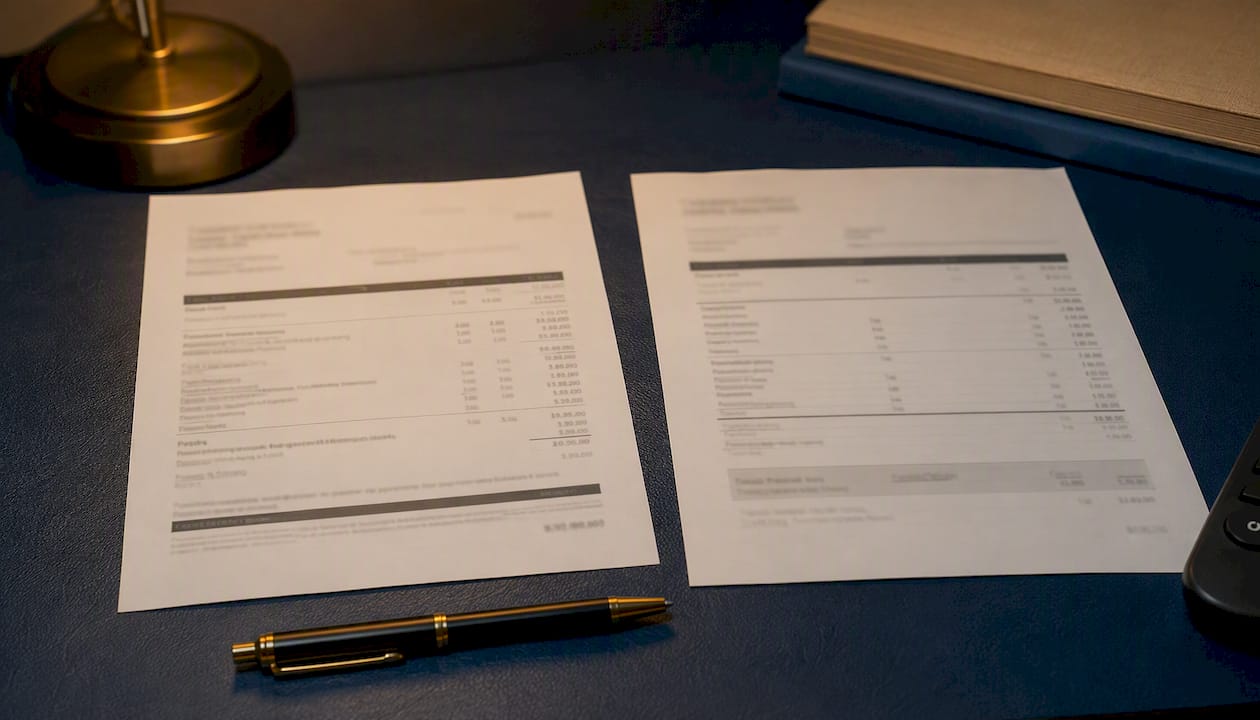
Reconciling a bill against its EOB means matching the CPT codes on both documents, checking the insurer's allowed amount against what the provider actually charged, and confirming the payment your insurer says it sent matches what shows up on the bill. Discrepancies here are common, and reconciling both documents is often the only way to catch an unpaid insurer adjustment.
Pro Tip: When a provider sends a corrected statement, don't delete the original. Label it "superseded" and keep both versions in your ledger. Attorneys and adjusters sometimes need to see what changed.
What Medical Billing Errors Should You Watch For?
Billing errors show up far more often than most people expect, and catching them can meaningfully change your claim's total. Watch for duplicate charges on the same procedure, upcoding (billing a more expensive procedure code than what was actually performed), charges for services never rendered, unbundling (billing separately for procedures that should be billed together), and incorrect patient responsibility amounts that ignore your insurance payment.
Reconciling your itemized bill against the EOB is what catches most of these, because the EOB shows the insurer's allowed amount while the bill shows the provider's chargemaster rate. A wide gap between the two is worth a second look.
When you spot a likely error, work through it in order:
- Gather the itemized bill and the corresponding EOB side by side.
- Call the provider's billing department and ask them to explain the specific line item.
- Send a written dispute referencing the exact charge, with copies of your evidence attached.
- Escalate to your insurer or your state's consumer protection office if the provider doesn't respond.
Automated bill-screening tools can flag likely coding errors faster than a manual line-by-line review, producing dispute-ready notes you can hand straight to a billing department or your attorney. Refund timelines vary by provider, but written disputes with clear documentation tend to move faster than phone calls alone, since the paper trail forces a response.
Who Should See Your Medical Records: Insurers or Your Attorney?
Route your records to your attorney first, before you send a large document package to any insurer. Give insurers only what they specifically request, not your entire file.
Health journals and treatment notes can become discoverable if your case goes to litigation, meaning the other side's lawyers may eventually read them. Keep personal notes factual and limited to your treatment and symptoms; save venting or speculation for a private conversation, not a written journal insurers might one day request.
Anything you write down about your injury, including a casual notes-app entry, should be written as though an insurance adjuster or opposing counsel might eventually read it. That single mental habit prevents most of the discoverability problems claimants run into later.
Practical safeguards worth adopting immediately:
- Redact unrelated personal information before sharing any document
- Store everything in secure, password-protected cloud storage
- Keep a log of exactly what you disclosed and to whom, and when
Contact an attorney promptly if you suspect billing errors that affect your settlement value, if a medical lien has been filed against your claim, or if coordinating benefits between multiple insurers gets complicated. Our guide on documenting injuries for attorney review walks through what to prepare before that first conversation.
Where Can You Find Free Trackers and Dispute Templates?
You don't need to build these tools from scratch. A Google Sheets damages tracker separates documented totals from projected future costs and keeps evidence linked to each line, which matters when an adjuster asks you to prove a number.
Ready-made resources worth pulling up now:
- An injury expense report template with built-in categories for treatment, prescriptions, equipment, and mileage
- A written dispute letter template you adapt with your own dates and CPT codes
Adapt any expense template to add a lost-wages column: pay period, hours missed, hourly rate, and a supervisor or HR contact for verification. Most tracker templates are free; detailed bill reviews from paid services cost more but can be worth it on large, contested claims.
A Practical Note on Staying Ahead of the Paperwork
Update your ledger the same day a bill arrives instead of letting a folder build up for weeks. Small, daily entries beat a frantic reconstruction later, and they rarely take more than five minutes. Organized, reconciled records consistently support stronger settlement outcomes because they give an adjuster less room to argue. If you do only one thing with real rigor, make it reconciling every bill against its EOB.
Get Matched to a Personal Injury Attorney Who Reviews Your Records
Legalleads is the alternative to cold-calling law firms one by one while your bills keep arriving unorganized. Once your ledger is reconciled and your files are labeled, the next step is putting them in front of someone qualified to use them. Legalleads takes your case details in plain English and generates a case brief in under two minutes, then connects you to a vetted attorney within 24 hours, no forms, no phone tag.

This is one route among several, and it works best once you've already pulled together itemized bills, EOBs, and your mileage log. Share your full record set with your attorney before sending anything comprehensive to an insurance company. Whether you're near Los Angeles, Irvine, or San Bernardino, a personal injury lawyer can review your reconciled file and flag anything worth disputing before you submit your claim. Visit the Find a Lawyer page to get matched now.
Where to Verify Prices and Reconcile Bills
- MyCareCost: aggregates hospital price files to show gross charges, cash prices, and negotiated rates side by side.
Compare your provider's bill against these benchmarks before assuming a high charge is normal for your area.
This article is general information, not a substitute for advice from a qualified lawyer. Consult a qualified legal professional about your own circumstances before acting on anything here.
Sources
- What should I do if my charges on an Explanation of Benefits statement don't match the amount from the facility or my bill? | NH HealthCost
- HealthPrices — How much does healthcare actually cost?
- Healthcare Cost & Coverage Questions Answered | CostKits
- Medical Bill Tracker After an Accident | NC Accident Help
FAQ
What Is the Best Way to Track Medical Expenses for a Claim?
Keep a single dated master ledger, digital and backed up, that links every expense to its itemized bill, matching EOB, and proof of payment. Update it the same day each bill arrives instead of batching the work later.
How Much of a Settlement Will I Actually Get?
The amount that reaches you depends on attorney fees, medical liens, and unpaid bills that get paid out of the settlement before you do, so there's no fixed percentage that applies to every case. A well-organized expense record helps your attorney negotiate down liens and maximize what you keep.
What Should I Avoid Telling My Insurance Company?
Avoid guessing about injury severity, giving a recorded statement before speaking with an attorney, or volunteering documents beyond what's specifically requested. Share detailed records with your own attorney first, not the insurer's adjuster.
Do Injections or Additional Treatments Increase My Settlement?
Additional documented treatment can increase your total economic damages, since settlement value is often tied to the total cost and duration of your care. Every injection, therapy session, or procedure needs its own itemized bill and EOB in your ledger to count.
How Do I Reconcile a Provider Bill With an EOB?
Match the CPT codes on both documents, compare the provider's charge to the insurer's allowed amount, and confirm the payment listed on the EOB actually shows up applied on your bill. A mismatch often signals an error worth disputing.