
Use a vetted, bar-verified legal matching service and submit a short case brief now to get matched with a qualified accident attorney within 24 hours. That is the fastest, safest path to legal help after an accident.
Quick benefits:
- No upfront attorney fees — most accident cases run on contingency
- Attorneys verified for State Bar standing and professional liability insurance
- Matches delivered on leading platforms within a short time frame
Find a lawyer now on Legalleads and get your case brief in under two minutes.
Table of Contents
- How do top accident case legal matching services connect you to attorneys?
- What vetting and safety checks should you demand from a matching service?
- What do accident case legal services actually cost?
- How long does matching and the first attorney response take?
- Why Legalleads is a strong choice for accident and personal-injury claimants
- How do you choose a matching service and what should you ask attorneys?
- What should you gather before your first attorney consultation?
- What privacy and data risks come with submitting case details online?
- Key Takeaways
- What Legalleads's approach means for accident claimants
- Legalleads connects accident claimants with attorneys fast
- Useful sources
- FAQ
How do top accident case legal matching services connect you to attorneys?
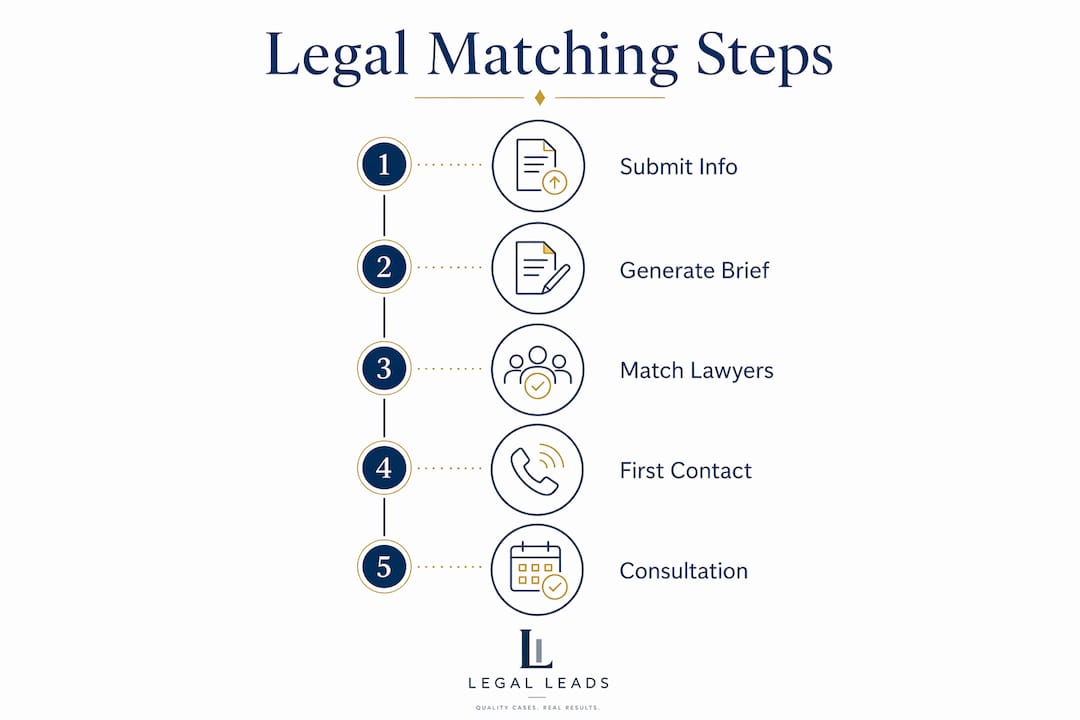
The process is straightforward. You submit a brief description of your accident, the platform triages your case, and a vetted attorney contacts you for an initial consultation. No phone trees, no complicated forms.
Most platforms follow this flow:
- Submit your case details online (plain English, no legal jargon required)
- Automated intake generates a case brief; human triage confirms case type and jurisdiction
- Platform matches you with attorneys who handle your specific accident category
- Attorney contacts you to schedule a free or low-cost initial consultation
The platform intake workflow varies by service type. The four main models differ in oversight and incentives:
- Bar-sponsored referral services: Run by state or local bar associations; attorneys must be in good standing and carry malpractice insurance. Example: The Florida Bar Lawyer Referral Service, operating for several decades.
- Nonprofit LRS programs: Often use established local relationships; may offer capped or free initial consultations.
- Private lead-generation platforms: Faster intake, broader reach, but vetting standards vary by operator.
- Direct law-firm intake: You contact a firm directly; no third-party screening.
Bar-sponsored and nonprofit services tend to prioritize match quality. Private platforms often prioritize speed. The best services combine both.

What vetting and safety checks should you demand from a matching service?
Non-negotiable vetting items before you trust any legal matching platform:
- State Bar standing: The attorney must be currently licensed and in good standing in your state.
- Professional liability (malpractice) insurance: Confirmed, not just self-reported.
- Verified practice area: The attorney must have documented experience in personal injury or accident cases.
- Client reviews: Recent, verifiable feedback from accident claimants.
Proof the service should show you:
- Bar ID number you can look up on your state bar's public directory
- Verification badge or written confirmation of malpractice coverage
- Transparent intake privacy policy with secure data submission
Bar-certified referral services require participating attorneys to be in good standing with the State Bar and to provide proof of professional liability coverage. That standard is the consumer protection floor — any private platform worth using should meet it too.
Pro Tip: Verify any referred attorney independently. Go to your state bar's public website, enter the attorney's name or Bar ID, and confirm their license is active and discipline-free. Takes under two minutes.

| Feature | Bar-sponsored LRS | Private matching platform |
|---|---|---|
| Bar standing check | Required | Varies by operator |
| Malpractice insurance verification | Required | Varies by operator |
| Initial consult fee | Low or free | Often free |
| Oversight body | State or local bar association | None (self-regulated) |
| Speed to match | Within a few business days | Often within a day |
What do accident case legal services actually cost?
Most personal-injury accident matters are handled on contingency. You pay no attorney fee unless the case recovers money. The attorney's fee comes out of the settlement or judgment.
Key cost points to confirm before signing anything:
- Contingency percentage: Typically ranges; confirm the exact split with your attorney before signing a retainer.
- Case expenses: Medical records retrieval, expert witness fees, court filing costs, and accident reconstruction reports are separate from attorney fees. Clarify whether these are deducted before or after the contingency split.
- Upfront costs: Some firms ask clients to advance case expenses; others front those costs and recover them from the settlement.
For the initial consultation itself, bar-affiliated services often cap the fee. The Florida Bar Lawyer Referral Service offers a 30-minute consultation for a set small fee or free in some cases. The NYC Bar LRS sets low or no initial consultation fees depending on the issue. Private platforms typically offer the first consultation at no charge.
Always confirm contingency terms and which costs are deducted from your recovery before hiring.
How long does matching and the first attorney response take?
Speed matters for accident cases. Faster attorney contact means better odds of preserving evidence and reaching witnesses while their accounts are still accurate.
| Step | Target time window |
|---|---|
| Submit case details | Immediate (online, 24/7) |
| Case brief generated | Under 2 minutes (Legalleads) |
| Platform triage and match | Within 24 hours |
| Attorney first contact | Same day to 24 hours post-match |
| Initial consultation scheduled | 1–3 days after first contact |
Bar-sponsored services like the Massachusetts Bar Association's LRS offer online referrals 24/7, with attorneys required to respond within three business days. Private platforms with automated intake, like Legalleads, target matches within 24 hours.
One critical timing note: every state sets a statute of limitations on personal-injury claims, typically two years from the date of the accident (Texas, for example, sets a two-year limit). Missing that deadline bars your claim entirely. Submit your case details as soon as you are able.
Why Legalleads is a strong choice for accident and personal-injury claimants
Legalleads is built for speed and simplicity. You describe your situation in plain English, and the platform generates a professional case brief in under two minutes. Attorneys receive concise, organized case facts — which means faster triage and a more productive first consultation.
Key platform features for accident claimants:
- Two-minute case brief: Plain-English intake converts to a structured brief automatically.
- Matches within 24 hours: Attorneys qualified for your case type and location are contacted on your behalf.
- No calls or complicated forms: The entire intake runs online.
- Coverage across accident case types: Car accidents, personal injury, and related claims.
Client feedback on the Legalleads Irvine platform page highlights swift matches for car accident claimants and satisfaction with the attorney connections made through the service.
Legalleads verifies attorney qualifications during intake. For proprietary vetting statistics, check the platform's current attorney verification documentation directly on the site.
How do you choose a matching service and what should you ask attorneys?
Six criteria for evaluating any legal matching platform:
- Attorney verification: State Bar standing and malpractice insurance confirmed
- Speed: Matches delivered within 24 hours or clearly stated timeline
- Fee transparency: Contingency terms and case costs explained upfront
- Client reviews: Verifiable testimonials from accident claimants
- Attorney experience: Documented track record in personal injury or your specific accident type
- Data privacy: Clear privacy policy, secure submission, plain-language data retention terms
Questions to ask the attorney on first contact:
- How many accident cases similar to mine have you handled in the past two years?
- What is your current caseload, and who will manage my case day to day?
- What is your projected timeline from intake to resolution?
- Which costs will I need to advance, and how are they deducted from my recovery?
- What percentage of your cases settle versus go to trial?
- What is your contingency fee percentage, and when does it change if the case goes to trial?
Red flags to watch for:
- Pressure to sign a retainer before you have reviewed the terms
- No Bar ID provided or refusal to confirm malpractice insurance
- Unclear or verbal-only fee terms
- High upfront costs before any work begins
- Attorney who cannot name recent accident cases they have handled
A short, focused intake and clearly stated privacy practices are also important signals. Ask any platform how long it retains your case data and whether it shares your information with third parties beyond matched attorneys.
What should you gather before your first attorney consultation?
Attorneys can assess liability and damages in a 20–30 minute consultation when clients arrive organized. Practitioners recommend assembling a concise timeline and medical documentation before that first meeting.
Core documents to have ready:
- Police or accident report (report number and responding officer's name)
- Photos of the accident scene, vehicle damage, and visible injuries
- Medical records and emergency room reports from the date of the accident
- Insurance policy information (yours and the other party's)
- Names and contact information for any witnesses
Additional useful items:
- Pay stubs or employer documentation for lost-wage claims
- All medical bills received to date
- A written timeline of events from the accident through your current condition
- Any correspondence with insurance adjusters
Pro Tip: Create a single folder — physical or digital — with every document above before the consultation. Label each item with the date. An attorney who can review organized evidence in the first 30 minutes can give you a clearer liability assessment on the spot.
For a detailed breakdown of how attorneys review referred cases, the Legalleads blog covers the evaluation process step by step.
What privacy and data risks come with submitting case details online?
Submitting accident details to a matching platform means sharing sensitive personal and medical information. Not every service handles that data with the same care.
Before you submit, check for these signals:
- Secure submission: The site URL should use HTTPS. Look for a padlock icon in your browser.
- Privacy policy: The platform must publish a clear, plain-language policy stating what data it collects, how long it retains it, and who it shares it with.
- Limited data sharing: Your case details should go only to matched attorneys, not to a broad marketing list.
- Data deletion options: Reputable services allow you to request deletion of your information.
Medical lien and billing data can also surface during case intake. Platforms that integrate tools like a pharmacy lien portal for attorneys give you a clearer picture of how medical costs are tracked and managed through the case lifecycle.
If a platform cannot answer basic questions about data retention and sharing in plain language, that is a reason to look elsewhere.
Key Takeaways
A vetted, bar-verified legal matching service that delivers matches within 24 hours is the fastest, safest way to connect with a qualified accident attorney at no upfront cost.
| Point | Details |
|---|---|
| Use bar-verified matching | Confirm the service checks State Bar standing and malpractice insurance before referring attorneys. |
| Expect contingency fees | Most accident attorneys charge no upfront fee; confirm the percentage and cost deduction terms before signing. |
| Act fast on deadlines | State statutes of limitations (often two years) make early attorney contact critical for evidence and claims. |
| Prepare documents first | Police report, medical records, photos, and a written timeline let an attorney assess your case in one meeting. |
| Legalleads for fast matches | Legalleads generates a case brief in under two minutes and matches accident claimants with attorneys within 24 hours. |
What Legalleads's approach means for accident claimants
Legalleads is a matching service, not a law firm, and this article is general information rather than legal advice. For your specific situation, confirm current rules and attorney qualifications with your state bar or a licensed professional.
That said, the platform's combination of fast intake, structured case briefs, and 24-hour matching addresses the two biggest problems accident claimants face: not knowing where to start and losing time while evidence disappears. Legalleads's commitment is to fast, vetted connections — and the intake process is designed to make that first step as simple as possible.
Legalleads connects accident claimants with attorneys fast
Waiting to find an attorney costs you time, evidence, and leverage with insurers. Legalleads cuts that wait to under 24 hours. Describe your accident in plain English, get a professional case brief in under two minutes, and receive an attorney match without a single phone call.
Legalleads is a matching service. Connecting with an attorney through the platform does not create an attorney-client relationship until you review and sign a retainer directly with that attorney. Most matched attorneys handle accident cases on contingency — read the retainer terms carefully before signing.
Find a lawyer now or browse attorney profiles to review credentials before you reach out.
This article is general information, not legal advice. Confirm attorney credentials and applicable deadlines with your state bar or a qualified attorney for your specific situation.
Useful sources
- The State Bar of California — Find a Lawyer Referral Service: Verify that a referral service meets bar certification standards and attorney insurance requirements.
- The Florida Bar Lawyer Referral Service: Find a bar-affiliated LRS in Florida; review their initial consultation fee structures.
- NYC Bar Lawyer Referral Service: Access screened attorney referrals in New York with information on consultation fees.
- Massachusetts Bar Association Lawyer Referral Service: Online referrals available 24/7; attorneys respond within three business days.
- Legalleads — Find a Lawyer: Start an accident case match and receive a case brief in under two minutes.
FAQ
How do accident case legal matching services work?
You submit your case details online, the platform generates a case brief, and a vetted attorney contacts you — typically within 24 hours on faster platforms like Legalleads.
Do I pay anything to use a legal matching service?
Most matching services charge no fee to the claimant. Matched attorneys typically handle accident cases on contingency, meaning you pay no attorney fee unless your case recovers money.
What is the hardest type of injury to prove in an accident case?
Soft-tissue injuries such as whiplash are among the hardest to prove because they often lack visible imaging evidence; thorough medical documentation from the date of the accident is critical.
How do I verify an attorney's license after a match?
Enter the attorney's name or Bar ID number into your state bar's public directory online. Confirm the license is active, the practice area matches your case, and there are no recent disciplinary actions.
Which type of referral service offers the strongest attorney vetting?
Bar-certified referral services, such as those run by state and local bar associations, require attorneys to be in good standing and carry professional liability insurance, making them the most rigorously vetted option.