
Yes, you can file a PAGA claim in California if you're a current or former employee who personally experienced a Labor Code violation, and the process starts with an online notice, not a lawsuit. Submit your notice through the LWDA PAGA Filing Portal, then serve your employer by certified mail. You have one year from the date you file that notice to act on the underlying violation.
- Filing fee: $75, or a fee waiver if you qualify
- Deadline: one year, tied to your notice filing date
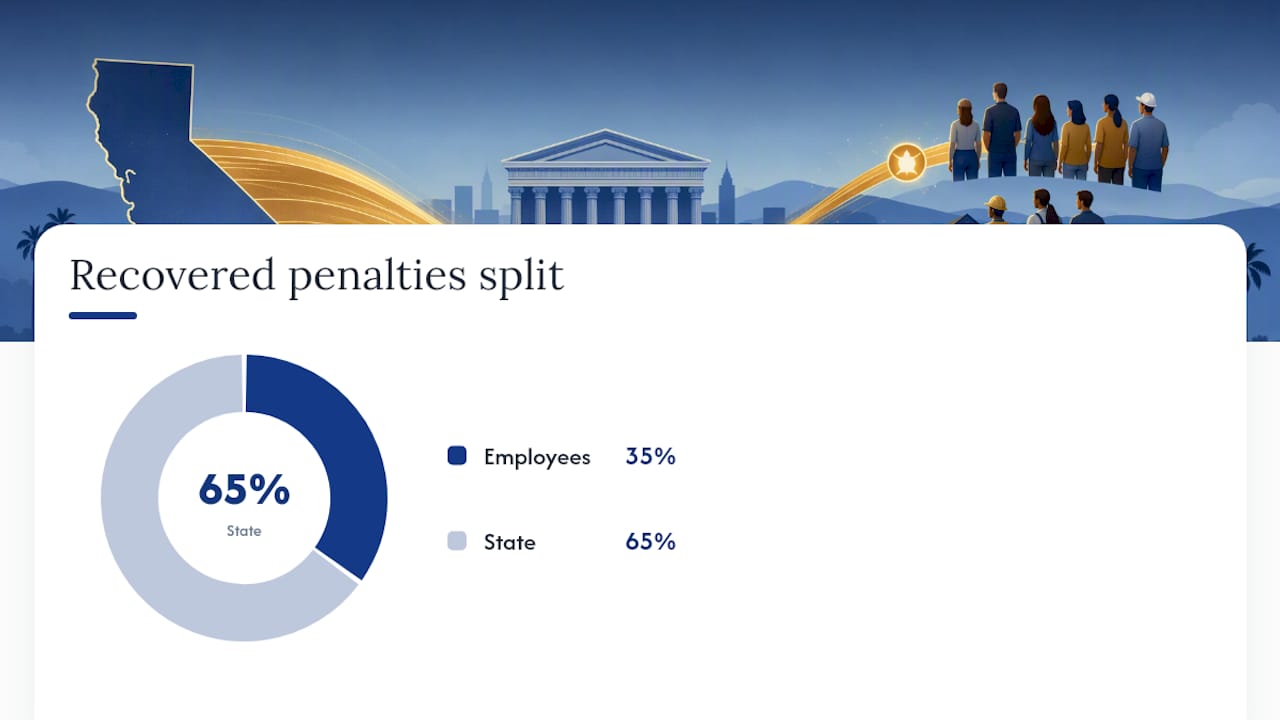
- Penalty split: for notices filed on or after June 19, 2024, penalties are allocated 35% to employees and 65% to the state
Key Takeaways
A PAGA claim requires filing a notice through the LWDA portal, serving the employer by certified mail, and acting within one year of that filing date.
| Point | Details |
|---|---|
| Confirm eligibility first | You must be a current or former employee who personally experienced the alleged violation. |
| File through the portal only | Submit your notice via the LWDA PAGA Filing Portal and pay the $75 fee or file form FW-001 for a waiver. |
| Serve the employer separately | Portal submission does not serve your employer; use certified mail and keep the receipt. |
| Expect a multi-stage timeline | LWDA has 65 days to decide on investigation, with cure deadlines like 33 days for small employer proposals. |
| Penalties split 35/65 post-reform | Notices filed on or after June 19, 2024 allocate 35% to employees and 65% to the state, with judicial discretion to reduce awards. |
| Get help organizing your case | Legalleads turns your documents into a case brief in minutes and can match you to employment counsel within 24 hours. |
This article is general information, not a substitute for advice from a qualified lawyer. Consult a qualified legal professional about your own circumstances before acting on anything here.
Table of Contents
- Who Can File a Paga Claim California Case?
- How Do You File a PAGA Claim in California?
- What Happens After You Submit a PAGA Notice?
- How Are PAGA Penalties Calculated After the 2024 Reforms?
- What Evidence Do You Need to Support a PAGA Notice?
- Do You Need a Lawyer for a PAGA Claim?
- Sources
- FAQ
Who Can File a Paga Claim California Case?
PAGA only covers "aggrieved employees." That means a current or former employee who personally experienced at least one of the violations named in the notice, not someone filing on behalf of a friend or a general workplace complaint. The LWDA ties the one-year statute of limitations to the date you file your notice, not to when the violation happened, so an employee terminated fourteen months ago can still act if the notice covers ongoing or recent conduct.
Common triggering events include:
- A missed meal or rest break that wasn't paid out correctly
- A wage statement missing required information
- Unreimbursed business expenses, like mileage or a personal phone used for work
- Final paychecks issued late after termination or resignation
Nonprofit legal organizations can sometimes represent groups of workers, but each individual named still has to show personal exposure to the alleged violation. There's no shortcut around that requirement.
How Do You File a PAGA Claim in California?
The process runs through one government system, and skipping a step can cost you the right to sue.
- Draft the written notice. It needs the specific Labor Code sections violated, the facts supporting each violation, a description of the affected employee group, and the relevant dates and pay periods.
- Submit through the portal. All PAGA notices go through the Department of Industrial Relations' PAGA Filing Portal. Paper filings or emails to the LWDA directly don't count.
- Pay the filing fee or request a waiver. The fee is $75. If you can't afford it, submit Judicial Council form FW-001 to request a waiver.
- Serve the employer separately. This is the step people miss most often. Submitting through the portal does not serve your employer. You must send the notice to the employer by certified mail on your own.
- Keep every confirmation. Save the portal confirmation email and the certified mail return receipt. Both are your proof that you followed procedure correctly.
The most common way a solid PAGA claim gets thrown out isn't a weak legal argument. It's a procedural gap, most often a failure to properly serve the employer alongside the portal filing. Vague factual allegations, like "the company doesn't pay overtime correctly," without specific pay periods or affected job titles, also draw dismissals.
Pro Tip: Print your certified mail receipt and portal confirmation the same day you file, then scan both into a single folder labeled with the filing date. You don't want to be searching for proof of service eight months into a dispute.
What Happens After You Submit a PAGA Notice?
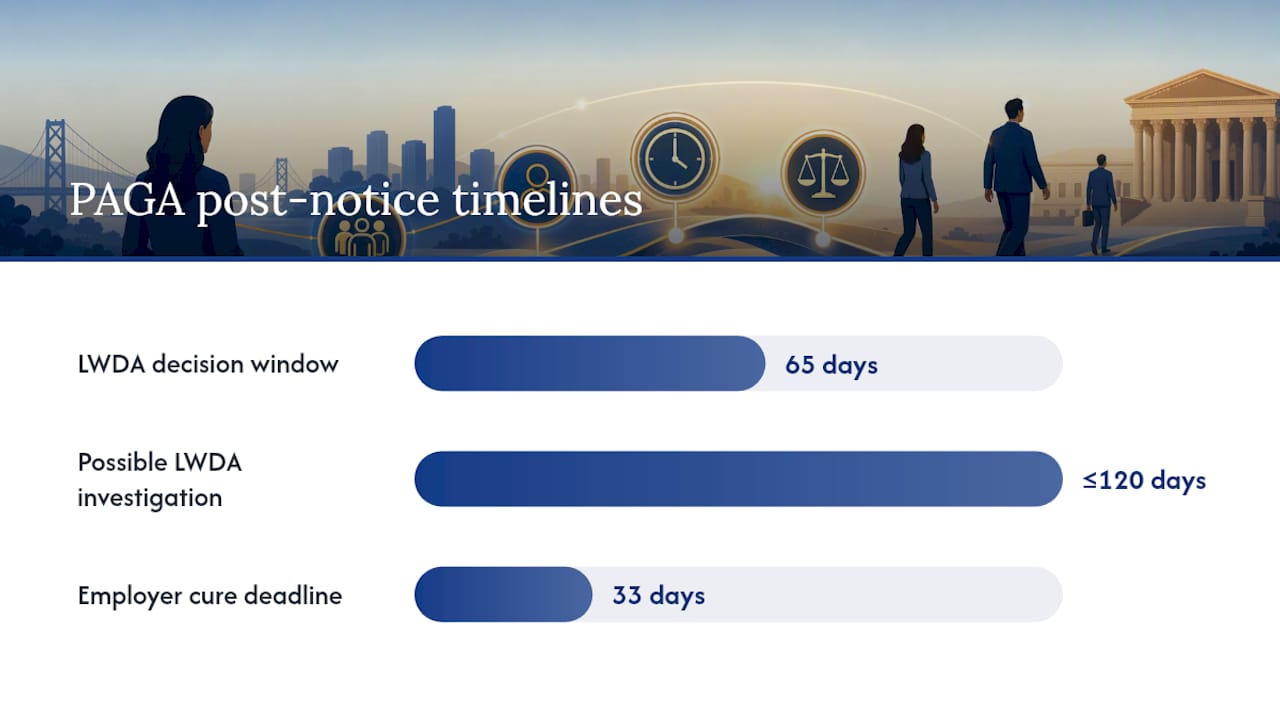
Once your notice is filed, the LWDA has 65 days to decide whether it will investigate the claim itself. If the agency doesn't act within that window, or if it declines to investigate, you gain the right to file a civil lawsuit on behalf of yourself and other affected employees.
If the LWDA does investigate, the process can extend further, with some investigation stages running up to 120 days before a citation or resolution. That timeline matters for planning: an employee expecting a fast answer needs to know this can stretch several months.
Employers also get a chance to fix the problem before things escalate:
- Small employer cure: available to businesses under a certain size, contingent on submitting a cure proposal within 33 days of receiving the notice
- Wage statement cure: a specific administrative process for correcting defective pay stub violations
- Employer Cure Notice/Proposal: a formal filing through the same portal system, often involving a confidential settlement offer
Cure proposals are treated as confidential settlement offers, not admissions of guilt. Evaluate any cure offer on two fronts: does the dollar amount cover the actual harm, and does accepting it close the door on future claims tied to the same conduct?
How Are PAGA Penalties Calculated After the 2024 Reforms?
Penalties under PAGA were historically calculated per employee, per pay period, per violation, which could stack into enormous totals fast. The 2024 reforms didn't eliminate that structure, but they gave judges more room to scale penalties down when the math produces an outcome disconnected from the actual harm.
For notices filed on or after June 19, 2024, recovered penalties split 35% to employees and 65% to the state, a meaningful change from the older 25/75 split under the original statute.
- Employers who show they took "all reasonable steps" toward compliance before the violation, think wage audits, updated written policies, and documented training, can see penalties reduced substantially
- One legal commentary described penalty reductions to as low as $15 to $30 per employee per pay period in scenarios where compliance efforts existed before the notice
- Courts have used their post-reform discretion aggressively: one recent case saw a court cut a PAGA penalty award by 99% after finding the calculated amount wildly disproportionate to the underlying harm
That last data point matters for anyone filing a claim today. A big theoretical penalty on paper doesn't guarantee a big final award. Documentation of actual harm, not just technical violations, is what tends to hold up when a judge starts exercising that discretion.
What Evidence Do You Need to Support a PAGA Notice?
A PAGA notice lives or dies on specifics. Vague claims about "unfair treatment" don't survive scrutiny; dated, itemized records do.
- Pay stubs and wage statements covering the relevant pay periods named in your notice
- Time records or schedules showing actual hours worked versus hours paid
- Expense records for anything you paid out of pocket for work, like mileage or supplies
- HR policies and employee handbooks that show what the company's stated practices were
- Emails or written communications where a manager acknowledged a scheduling issue, break denial, or pay discrepancy
Organize everything by date and pay period before you file, not after. A chronology file that maps each alleged violation to a specific pay period turns a messy pile of pay stubs into something an attorney or the LWDA can actually evaluate quickly.
If assembling that file feels like more than you can manage alone, a platform like Legalleads can turn your documents and a plain-English description of your situation into a structured case brief in under two minutes, then match you to employment counsel who reviews the specifics.
Pro Tip: Label each document with the pay period it covers before you file anything. A folder full of unlabeled PDFs is the single biggest time-waster for any attorney reviewing your case later.
Do You Need a Lawyer for a PAGA Claim?
Not every PAGA situation requires an attorney from day one, but certain signals mean you should get one involved fast.
- The claim involves a large group of affected employees, not just you
- The employer disputes the cure timeline or challenges the notice's legal sufficiency
- Damages could span months or years of violations across multiple pay periods
- You're weighing whether to accept an employer's cure proposal or push toward litigation
When you do contact counsel, ask direct questions: How many PAGA cases have they handled? Is the fee contingency-based? What's the realistic timeline given current LWDA backlogs? Will the case likely stay in the administrative phase, or is litigation probable?
Two paths run in parallel here. If the LWDA investigates, an attorney can respond to agency requests and negotiate directly. If the agency declines and you sue privately, the same attorney shifts into litigation mode. Either way, experienced employment counsel navigates both tracks without restarting your case from scratch. Starting with a Find Lawyer match gets that conversation moving fast if you're ready for it.
Why documentation and timing decide most PAGA outcomes
The single biggest mistake I see in PAGA situations isn't a legal one. It's timing. Employees wait months to gather pay stubs, let the one-year window creep closer, then rush a notice that's too vague to survive an employer challenge. File the notice early, serve the employer correctly, and build your evidence file in parallel rather than after the fact.
— Admin
Legalleads Turns Your Situation Into a Case Brief Fast
If you're staring at a stack of pay stubs and a filing deadline, the fastest path forward isn't researching Labor Code sections for a week. Legalleads is the option for Californians who want their situation organized and reviewed without picking up the phone or filling out a complicated intake form.

Describe what happened in plain English, and the platform generates a professional case brief in under two minutes. That brief helps clarify the facts, dates, and violation categories that belong in a PAGA notice, then connects you to a qualified California employment attorney within 24 hours. There's no cost to start, and no forms to wrestle with. If your situation extends beyond PAGA, the same intake covers personal injury, family law, and other practice areas. Start with the Find Lawyer page and get matched to counsel who can review your documents this week, not next month.
Sources
- Private Attorneys General Act (PAGA) Frequently Asked Questions | LWDA
- Private Attorneys General Act (PAGA) – Filing | DIR
- Understanding California's 2024 PAGA reforms: What business owners need to know | Mondaq
FAQ
What Is a PAGA Claim in California?
A PAGA claim lets a current or former employee sue an employer on behalf of the state for Labor Code violations they personally experienced, rather than filing an individual wage claim alone.
How Much Does It Cost to File a PAGA Claim?
Filing costs $75 through the LWDA PAGA Filing Portal, though eligible filers can request a fee waiver using Judicial Council form FW-001.
What Is the Deadline to File a PAGA Claim?
You generally have one year from your notice filing date to act on the alleged violation, so gathering pay records and filing promptly protects your claim.
Can My Employer Fix the Problem Before I Sue?
Yes. Depending on employer size and violation type, cure options like the small employer cure or wage statement cure can resolve the notice, but proposals must typically be submitted within 33 days.
How Do I Find an Attorney for a PAGA Claim?
You can search independently or use a matching service; Legalleads generates a case brief from your description and connects you to California employment counsel within 24 hours through its Find Lawyer page.