
A law firm press release is a formal announcement, usually posted to the firm's own newsroom and distributed through a wire service, covering news like a lateral hire, a case result, or a merger. The fastest way to find one is to check the firm's newsroom page directly or search PR Newswire and GlobeNewswire, where most large firms syndicate their announcements. The tracking of these releases helps connect people to attorneys with current, verifiable activity.
TL;DR:
- Most law firm press releases are first posted on the firm's own newsroom pages before being syndicated through wire services like PR Newswire or GlobeNewswire.
- Authentic releases have a consistent domain, credible media contacts, and match the firm's official website; red flags include generic contacts, inconsistent branding, or outdated boilerplate.
- Press releases about lateral hires or new practice groups indicate strategic growth, while case results and awards typically serve reputation-building purposes.
- Distribution through wire services enhances visibility on search engines and legal databases, making the firm's news easier to find and verify by clients and partners.
- Clear, specific headlines, timely release timing, and accurate attorney details significantly improve a press release's impact and trustworthiness.
Table of Contents
- Where to Find Law Firm Press Releases
- How to Verify a Press Release Is Authentic and Current
- Common Types of Law Firm Press Releases and What Each One Signals
- Why Distribution Matters for Discoverability and Reputation
- Best Practices for Writing Law Firm Press Releases
- How to Measure the Impact of a Press Release
- Timing Considerations for Maximum Effect
- What Makes a Press Release Actually Work
- Why Clear Press Releases Matter to People Seeking Legal Help
- How Legalleads Helps You Act on a Press Release
- Sources
- FAQ
Where to Find Law Firm Press Releases
Most firm announcements start in one of two places, and knowing both cuts your search time in half.
Start with the source, then check the wires. Firm newsroom pages usually sit under a "/news" or "/insights" URL and list releases in reverse chronological order. Once posted, larger firms typically distribute the same release through a wire service, which creates additional indexed copies. Kirkland's newsroom shows this pattern clearly: original text on the firm's own domain, then a matching version syndicated elsewhere.
Here's a practical checklist for tracking down a specific release:
- Go directly to the firm's website and look for "News," "Press," or "Insights" in the main navigation.
- Search PR Newswire or GlobeNewswire using the firm's name and the attorney or matter in question.
- Check legal trade press like Law360 or Above the Law, which often republish or summarize firm news.
- Search your local business journal if the announcement involves a regional office or hire.
- Use Google's News tab with date filters to narrow results to the last week or month.
A few other channels are worth checking when the standard search comes up empty:
- LinkedIn company pages, where firms often repost hire announcements with added commentary.
- Firm email newsletters, which sometimes carry news before it hits the public newsroom.
- A Google
site:search restricted to the firm's domain plus a keyword like "partner" or "verdict."
How to Verify a Press Release Is Authentic and Current
Not everything that looks like a law firm announcement actually came from the firm. Verification takes a few minutes and follows a consistent pattern.
- Check the originating domain. A legitimate release lives on the firm's own newsroom page or a recognized wire service, not a generic blog or hosting subdomain.
- Match the media contact. Firms typically use centralized functional addresses (something like prteam@firmname.com) rather than personal or free-email accounts. If the contact information looks improvised, treat the release with skepticism.
- Cross-check the wire record. PR Newswire and GlobeNewswire both timestamp distribution, so you can confirm when a release actually went out and compare it against the version on the firm's site.
- Look for independent pickup. Genuine firm news tends to show up, at least briefly, in legal trade coverage or a local business journal with matching details.
- Scan for structural red flags. Missing boilerplate, inconsistent firm branding, or claims that sound too specific about confidential settlement terms are common signs of a fabricated or outdated release.
Pro Tip: Compare the release's headline date against the firm's newsroom archive. If the wire version is dated days or weeks after the newsroom post, you're likely looking at a syndicated copy rather than the original filing, which matters if you're citing it for accuracy.
Common Types of Law Firm Press Releases and What Each One Signals
Reading a firm's news feed for a few minutes tells you a lot about where that firm is headed.
- Lateral hires and partner moves usually signal a firm building out a specific practice or entering a new market. Norton Rose Fulbright's announcement of an eight-lawyer real estate team joining its New York office is a textbook example: named partners, practice focus, and a clear growth narrative.
- New practice groups or office openings point to capacity expansion, often tied to client demand the firm has already secured.
- Case results, settlements, and verdicts are selectively disclosed. Firms tend to publicize favorable outcomes and stay quiet on confidential settlement terms, so a release naming a dollar figure usually means that figure was public record.
- Awards, rankings, and pro bono announcements function as reputation signals aimed at clients and recruits rather than legal peers.
- Mergers and major transactions often arrive with embargo language and a "counsel to" list, meaning the release was likely held until a deal closed.
Why Distribution Matters for Discoverability and Reputation
Where a firm publishes its news determines whether anyone besides its own visitors ever sees it.
Wire syndication through PR Newswire creates multiple indexed copies of the same release across news aggregators, legal databases, and search results. That matters because a release sitting only on a firm's own newsroom page competes for visibility against every other page on that domain, while a wire-distributed copy gets picked up independently by search engines and legal trade outlets.
Firm newsrooms that follow good practice tend to share a few traits:
- A canonical URL structure so search engines know which version is the authoritative source.
- Structured data markup (dateline, headline, organization) that helps search engines parse the release correctly.
- A clearly formatted media contact block, which both journalists and search crawlers use as a trust signal.
- Multimedia elements, like headshots or firm logos, that improve engagement once the release is found.
This same visibility principle is why clear, well-distributed announcements matter for legal press releases beyond media relations alone. Observations show that firms with clean, wire-distributed announcements are easier for prospective clients to find and verify than firms whose news lives only in a hard-to-navigate newsroom archive. A release with a working phone number and a named attorney does more for client trust than a page of vague accomplishments.
Practical tips firms use to raise the value of a release include writing a specific, non-generic headline, keeping the boilerplate paragraph current, and testing that the media contact email actually forwards to a live person. None of this is complicated, but it's frequently skipped, which is exactly why so many firm releases underperform relative to the news they contain.
Best Practices for Writing Law Firm Press Releases
Tone matters more in legal PR than in most industries, because overreach creates real liability. A release announcing a favorable verdict should state facts as reported in court records, not editorialize about guilt, wrongdoing, or the opposing party's conduct. Bar association advertising rules in most states also restrict language that implies a guaranteed outcome for future clients, so phrases like "we always win" or "guaranteed results" should never appear.
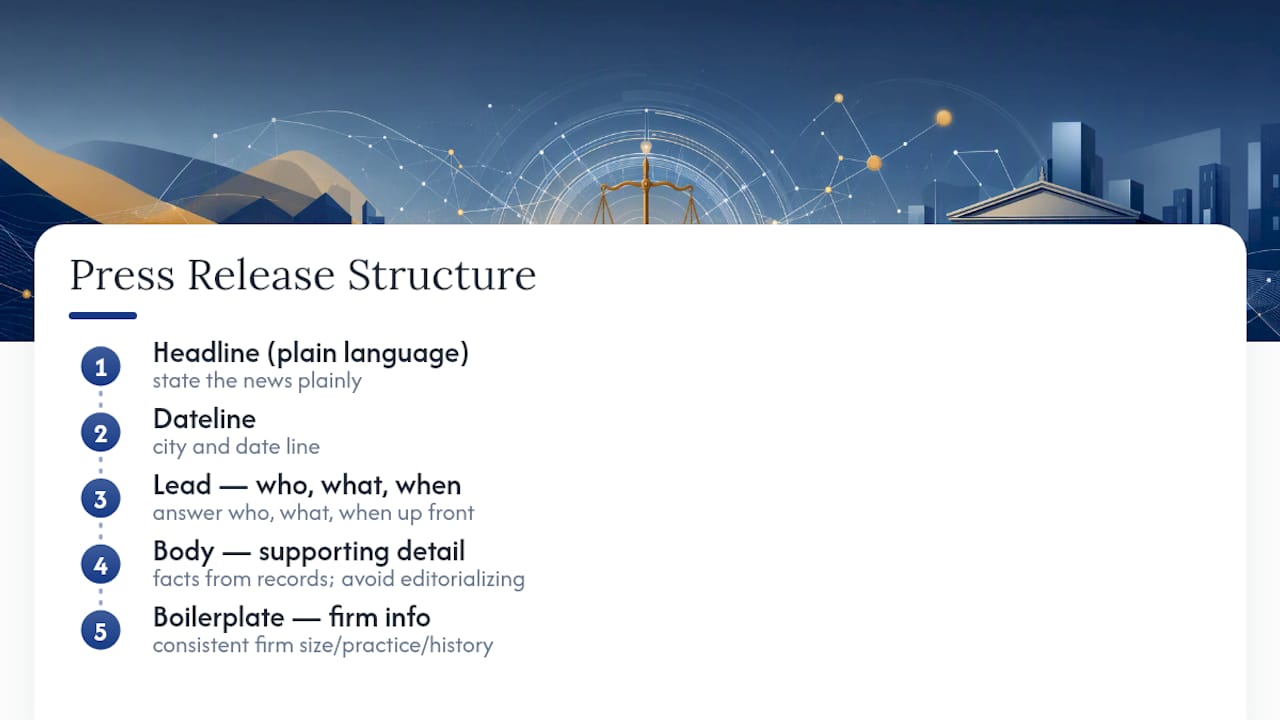
Structurally, a release should open with a headline that states the news in plain terms, followed by a dateline, a lead paragraph answering who, what, and when, and a body section with supporting detail. The boilerplate paragraph at the end, describing the firm's size, practice areas, and history, should stay consistent across every release so search engines and readers recognize it as a stable identifier.
Attorney names, titles, and practice areas need to match the firm's own website exactly. A mismatch (a "partner" listed as "senior associate" elsewhere) undermines the release's credibility the moment someone checks. Quotes attributed to named attorneys should be reviewed by that attorney before publication, both for tone and for compliance with client confidentiality obligations. Firms handling sensitive matters, like employment law disputes or family law cases, generally avoid naming clients or case specifics unless the information is already part of the public record.
How to Measure the Impact of a Press Release
A press release earns its keep through a mix of visibility and direct outcomes, and firms that track only one side miss half the picture.
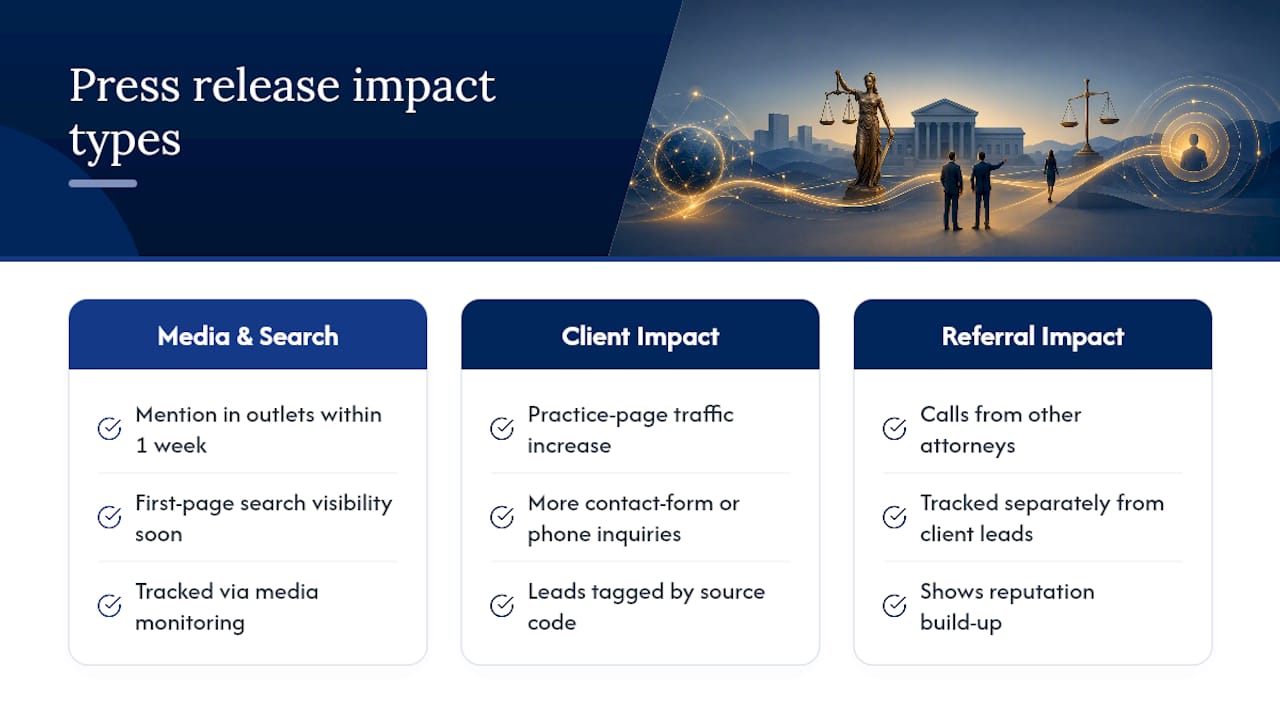
Media pickup is the most visible metric: did a legal trade outlet, local business journal, or general news site reference the release within a week of distribution? Search visibility follows a similar logic. A well-optimized release should appear on the first page of results for the attorney's name or the case in question within days of wire distribution.
Client-facing impact is harder to track but more important. Firms watch for increases in website traffic to a specific practice page after a related release goes out, along with a bump in contact-form submissions or phone inquiries mentioning the announcement. Some firms tag inbound leads with a source code tied to a specific release date, which makes attribution far more precise than guessing based on timing alone.
Referral impact matters too. A release about a new personal injury verdict or a notable hire often generates calls from other attorneys looking to refer cases, not just prospective clients. Tracking that referral source separately from direct client inquiries gives a fuller read on whether a release built the reputation it was meant to build.
Timing Considerations for Maximum Effect
When a release goes out often matters as much as what it says. Tuesday through Thursday mornings tend to get the strongest reporter attention, since Monday inboxes are backlogged and Friday afternoon releases frequently get buried before the weekend.
Case result announcements need to wait until a verdict or settlement is actually final and, where applicable, until any confidentiality terms have been reviewed. Releasing case news too early, before a judgment is entered or an appeal window closes, creates both a credibility problem and a potential ethics issue. Lateral hire announcements work best once the attorney has actually started, not merely signed an offer, since early leaks can create friction with the departing firm.
Merger and major transaction announcements are the most timing-sensitive of all. These typically run under embargo until signatures are final, then release simultaneously across the firm's newsroom and wire distribution to avoid one outlet scooping another. Firms also tend to avoid releasing major news during holiday weeks or alongside larger news cycles that would bury the story.
What Makes a Press Release Actually Work
The releases that get picked up and remembered share a few specific traits rather than a generic formula.
Crowell & Moring's announcement of senior DOJ and FTC attorneys joining its antitrust practice works because the headline states exactly who joined and why it matters, government enforcement experience arriving at a firm that litigates against those same agencies. There's no vague language about "excellence" or "commitment to clients." The names, titles, and practice implications are stated plainly.
Norton Rose Fulbright's real estate team announcement succeeds for a similar reason: it names all eight lawyers, specifies the practice focus, and ties the move to a clear business rationale, growth in the New York market. Readers don't have to guess what changed.
The common thread across effective releases is specificity over polish. A release that names exact figures, dates, and people reads as more credible than one filled with adjectives and no verifiable detail. Effective releases also match their boilerplate and attorney bios to the firm's live website, so anyone who checks finds consistent information rather than outdated titles or mismatched practice descriptions.
Why Clear Press Releases Matter to People Seeking Legal Help
Press releases give you fast, checkable evidence of what a firm actually does and how recently they've done it. A verdict announcement or a lateral hire tells you more in thirty seconds than a "practice areas" page ever will.
What speeds things up further is contact clarity. A release with a real name, a working number, and a specific practice area lets you move from reading to calling without hunting through a firm's website. This problem is addressed by solutions that turn scattered public information into a fast, direct connection with the right attorney.
— Admin
How Legalleads Helps You Act on a Press Release
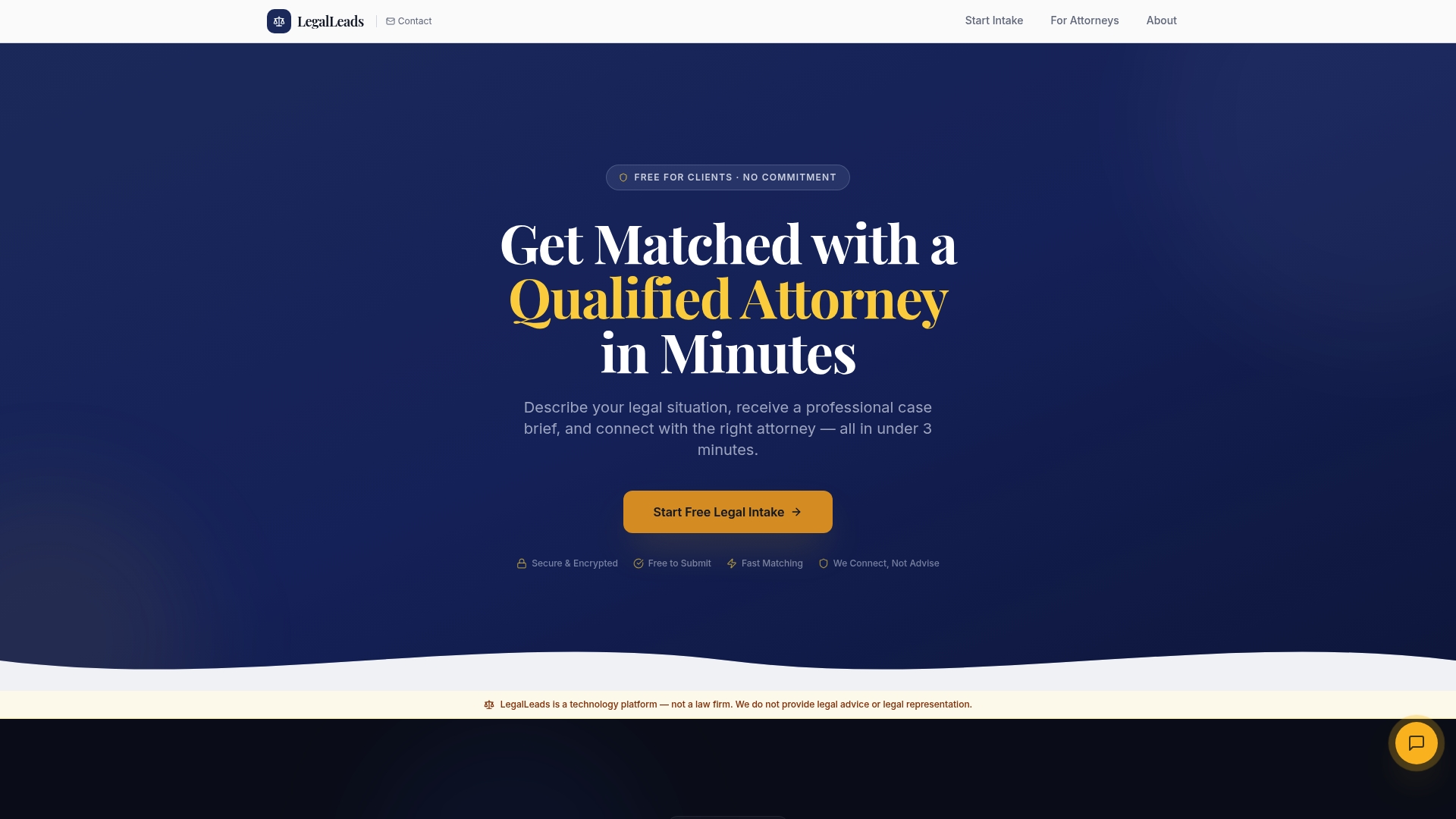
Reading a press release is easy. Figuring out whether that firm, or one like it, actually fits your situation takes more work, especially if you're comparing several announcements at once. Some platforms offer faster alternatives to cold-calling firms off a press page: you describe your situation in plain language, and the service generates a case brief and connects you to a qualified attorney within 24 hours, no forms or phone tag required.
If the release you found involves a personal injury matter, you can move straight to personal injury attorney matching. Family law announcements point toward family law attorney matching, and criminal defense news connects through the criminal defense matching page. Firms looking to generate their own announcements and manage ongoing visibility can look at the All-In-One PR Package, which bundles press distribution, website work, and content management into one monthly service. Whichever side of the release you're on, the next step is the same: describe your case and get matched.
Sources
For original, verifiable text, always check the source before relying on a summary elsewhere.
- Crowell & Moring Adds Senior DOJ, FTC Attorneys to Antitrust Practice
- Norton Rose Fulbright expands in New York with eight-lawyer real estate team
- Leading Project, Energy and Infrastructure Finance Lawyer Fern Han Joins Kirkland
FAQ
What Is a Law Firm Press Release?
It's a formal announcement, usually about a hire, case result, merger, or new practice group, published on a firm's newsroom and often distributed through a wire service like PR Newswire. It typically follows a set structure: headline, dateline, lead paragraph, boilerplate, and media contact.
Where Do Law Firms Publish Their Press Releases First?
Most firms post to their own newsroom page before or alongside wire distribution. Checking both the firm's site and services like GlobeNewswire gives you the most complete picture.
How Can I Tell if a Law Firm Press Release Is Fake?
Check the domain it's hosted on, the media contact format, and whether the details match the firm's live website. Missing boilerplate, generic email addresses, or claims that sound too specific about confidential terms are the clearest warning signs.
Do Law Firm Press Releases Affect Search Rankings?
Yes. Wire-distributed releases create multiple indexed copies that improve a firm's visibility in search results and legal databases, which is part of why firms invest in structured, well-formatted announcements.
Can services like LegalLeads help me find or act on a firm mentioned in a press release?
Yes. Legalleads lets you describe your situation and generates a case brief connecting you to a qualified attorney within 24 hours. The current price for the firm-facing All-In-One PR Package is published on the Legalleads site.