
Online legal services are digital platforms that deliver legal help entirely online, combining licensed attorneys with technology to handle your legal needs without office visits or hourly billing surprises. You describe your situation, the platform generates documents or matches you with a qualified lawyer, and you get results fast. Platforms use question-and-answer formats and AI to tailor legal documents and connect clients with attorneys suited to their case.
Here is what most platforms offer:
- Document creation: wills, contracts, leases, and business formation papers
- Direct attorney access via chat, video call, or email
- Lawyer matching based on your legal issue and budget
- Secure document storage and sharing
- Transparent, upfront pricing with no hidden fees
Table of Contents
- How online legal services work, step by step
- Key benefits of using online legal services
- What online legal services cannot do
- Common legal issues handled online
- Pricing models and cost savings
- Security and privacy for your legal data
- Qualifications of online legal professionals
- How to choose a reputable online legal service provider
- Online legal services vs. traditional legal services
- What users say about online legal services
- Legalleads connects you with a qualified attorney fast
- Key Takeaways
- FAQ
How online legal services work, step by step
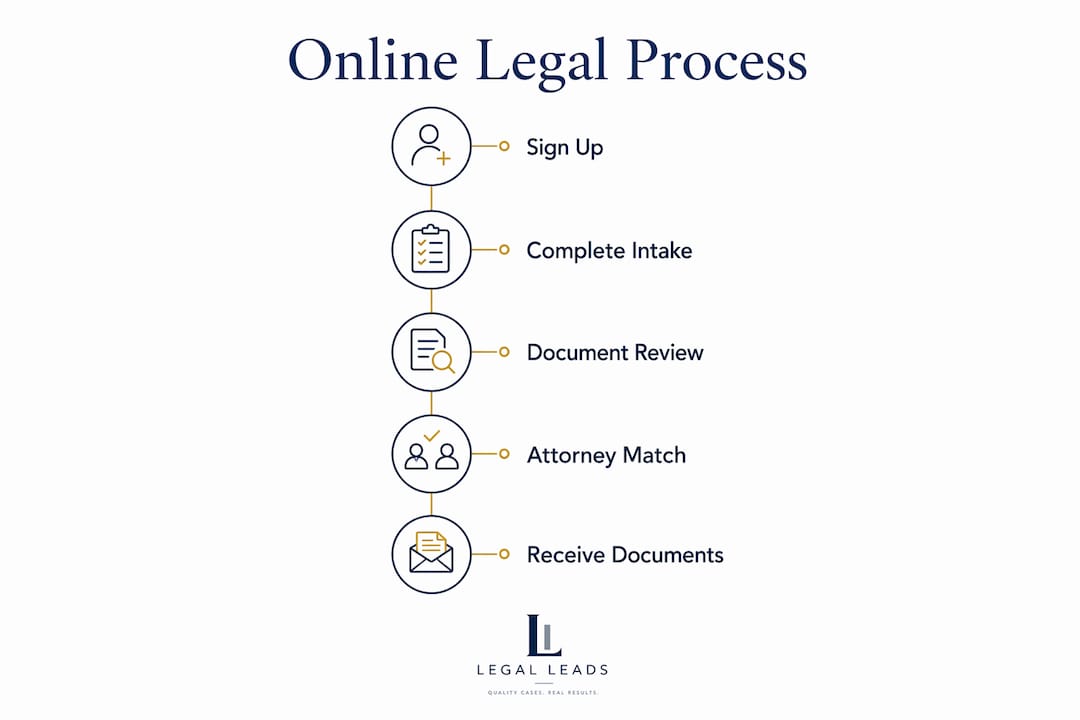
The typical user process follows a clear sequence: account creation, intake questionnaire, service selection, lawyer matching, communication, service delivery, billing, and feedback. Smart questionnaires and AI assist in customized document delivery and attorney matching throughout.
- Account creation: Sign up with basic contact details.
- Intake questionnaire: Answer structured questions about your legal situation, budget, and goals.
- Service selection: The platform recommends document drafting, a consultation, or full attorney representation.
- Lawyer matching: Software reviews your case and connects you with a licensed attorney by skills and experience.
- Communication: You and your attorney exchange documents and messages securely through the platform.
- Service delivery: The attorney reviews documents, answers questions, or provides formal representation.
- Billing: You pay a fixed fee upfront, with no surprise invoices.
- Feedback: You leave a review to help other users.
Pro Tip: Before filling out the intake questionnaire, write down the key facts of your situation, including dates, names, and any documents you already have. Accurate input directly determines the quality of your documents and attorney match.
Turnaround times vary by service type. Document generation often completes within hours. Attorney matching on platforms like Legalleads takes under 24 hours, with a professional case brief ready in under two minutes.

Key benefits of using online legal services
Online legal services increase accessibility by reducing costs and removing geographical barriers. They offer faster turnaround times and transparent pricing, making legal aid available to people who previously could not afford or access it.
- Affordability: Fixed fees or monthly subscriptions typically cost less than traditional hourly rates.
- Accessibility: Available 24/7 from any device, with no travel required.
- Speed: Automated document creation and attorney matching cut wait times from weeks to days or hours.
- Transparent pricing: You see the cost before you commit.
- Simplified language: Platforms use plain English instead of legal jargon.
- Document automation: Templates generate customized contracts, wills, and filings quickly.
Industry experts emphasize that online services increase accessibility rather than replacing traditional attorneys. They work best for routine, standardized legal needs.
What online legal services cannot do
Online services generally cannot provide courtroom representation or handle complex, bespoke disputes. Users may need to transition to a traditional attorney for litigation or high-stakes matters.
- No courtroom representation in most cases
- Limited personalization for complex or contested disputes
- Quality of output depends on accurate user input; errors in your answers can affect document validity
- Restricted consultation scope compared to a dedicated attorney relationship
- Service quality varies across providers
For criminal defense, contested divorces, or multi-party business litigation, a traditional attorney remains the right choice. Online platforms work best as a complement to, not a replacement for, full legal representation when stakes are high.
Common legal issues handled online
Online platforms handle a wide range of routine and documentation-based legal tasks efficiently. These include:
- Drafting rental agreements and basic contracts
- Business formation: LLCs, corporations, and sole proprietorships
- Trademark registration and patent filing support
- Wills, trusts, and estate planning documents
- Legal notices and demand letters
- Compliance tracking for small businesses
- Uncontested divorce paperwork
- Employment agreements and non-disclosure agreements
For a deeper look at which legal processes work online, routine documentation and compliance tasks are consistently the strongest fit.
Pricing models and cost savings
Online legal platforms offer fixed pricing or subscriptions, often costing significantly less than traditional hourly lawyer fees. Lower costs come from reduced overhead and structured, repeatable processes.
- Fixed fees: One-time payment per document or service
- Subscription plans: Monthly access to unlimited consultations or document templates
- Per-service charges: Pay only for what you need
Traditional attorneys bill by the hour, which makes costs unpredictable. Online platforms show you the price before you start. Legaltech improves pricing transparency and billing clarity over traditional opaque hourly arrangements.
Security and privacy for your legal data
Platforms use encrypted document storage, secure login systems, and confidential communication channels to protect client data. Transparent privacy policies and compliance with data protection laws are standard on reputable platforms.
Secure document sharing, client identity verification, and regular legal database updates maintain both data safety and service accuracy. When evaluating a platform, check for clear data protection policies and explicit statements on third-party data sharing.
Qualifications of online legal professionals
Attorneys working through online platforms must hold valid state bar licenses and meet the same professional standards as any practicing lawyer. Platforms verify credentials before listing attorneys, and licensed professionals remain responsible for the advice and documents they produce.
The technology role in legal access is to connect you with qualified attorneys faster, not to replace their judgment. AI handles document generation and matching; a licensed attorney reviews and approves the final work.
How to choose a reputable online legal service provider
Look for these signals before committing to a platform:
- Verified, licensed legal professionals listed with credentials
- Transparent pricing with no hidden fees
- Clear service descriptions and scope limitations
- Data protection and privacy policies
- Customer reviews and satisfaction ratings
- Secure document handling systems
Platforms like Traced provide additional context on evaluating online legal service features and trust indicators.
Online legal services vs. traditional legal services
| Factor | Online legal services | Traditional legal services |
|---|---|---|
| Cost | Fixed or subscription fees | Hourly billing, often unpredictable |
| Accessibility | 24/7, any location | Office hours, in-person required |
| Speed | Hours to days | Days to weeks |
| Best for | Routine documents, consultations | Complex litigation, court representation |
| Attorney access | Matched via platform | Direct, ongoing relationship |
Online services handle volume and speed well. Traditional attorneys handle complexity and courtroom work. Many people use both, depending on the issue.
What users say about online legal services
Client satisfaction with online legal platforms tends to be highest for speed of attorney matching and document turnaround. Users report that quick matches to qualified attorneys and user-friendly platforms reduce the stress of finding legal help. Negative reviews most often cite limitations for complex cases or situations where the intake questionnaire did not capture enough detail.
Platforms with strong review profiles consistently share three traits: verified attorneys, upfront pricing, and responsive customer support.
Legalleads connects you with a qualified attorney fast
Spending hours searching for the right attorney is a real obstacle. Legalleads removes it. You describe your legal situation in plain English, receive a professional case brief in under two minutes, and get connected to a qualified attorney within 24 hours. No calls, no complicated forms, no waiting.

Legalleads serves clients across personal injury, family law, and more. Whether you need a family lawyer in Los Angeles or want to find a lawyer for another legal matter, the process is direct: describe your situation, get matched, move forward.
Key Takeaways
Online legal services work best for routine, document-based legal tasks where speed, cost, and accessibility matter most.
| Point | Details |
|---|---|
| How the process works | You complete an intake questionnaire, the platform generates documents or matches you with a licensed attorney. |
| Cost advantage | Fixed fees and subscriptions cost less than traditional hourly billing, with pricing shown upfront. |
| Accuracy depends on input | Incomplete or incorrect answers in the questionnaire can affect document validity. |
| Know the limits | Complex litigation and courtroom representation still require a traditional attorney. |
| Legalleads | You receive a professional case brief in under two minutes and get connected to a qualified attorney within 24 hours. |
FAQ
How do online legal services work?
You sign up, complete a structured questionnaire about your legal situation, and the platform either generates documents automatically or matches you with a licensed attorney. Communication, document sharing, and payment all happen through the platform.
Are documents from online legal services legally valid?
Yes, when the platform follows applicable regulations, documents meet jurisdictional requirements, and the information you submit is accurate. A licensed attorney typically reviews the final output.
How fast can I get matched with an attorney online?
Platforms vary, but Legalleads connects clients with a qualified attorney within 24 hours and provides a professional case brief in under two minutes.
What types of legal issues can I handle online?
Routine matters work well online: contracts, wills, business formation, trademark filings, rental agreements, and uncontested divorce paperwork. Complex litigation and criminal defense require a traditional attorney.
How do online legal platforms protect my data?
Reputable platforms use encrypted document storage, secure login systems, and confidential communication channels, along with clear privacy policies and compliance with data protection laws.