
Business legal intake is the structured process of capturing, evaluating, and routing legal requests so that attorneys and legal teams can act on them efficiently. Known formally as the legal intake procedure, it functions as the gateway between a business or individual's legal need and the attorney who handles it. The process covers everything from the first point of contact through conflict checks, case qualification, and formal onboarding. Understanding how business legal intake works gives you a direct advantage in managing legal risk, allocating resources, and protecting your organization from costly missteps.
What are the key stages of the legal intake process?
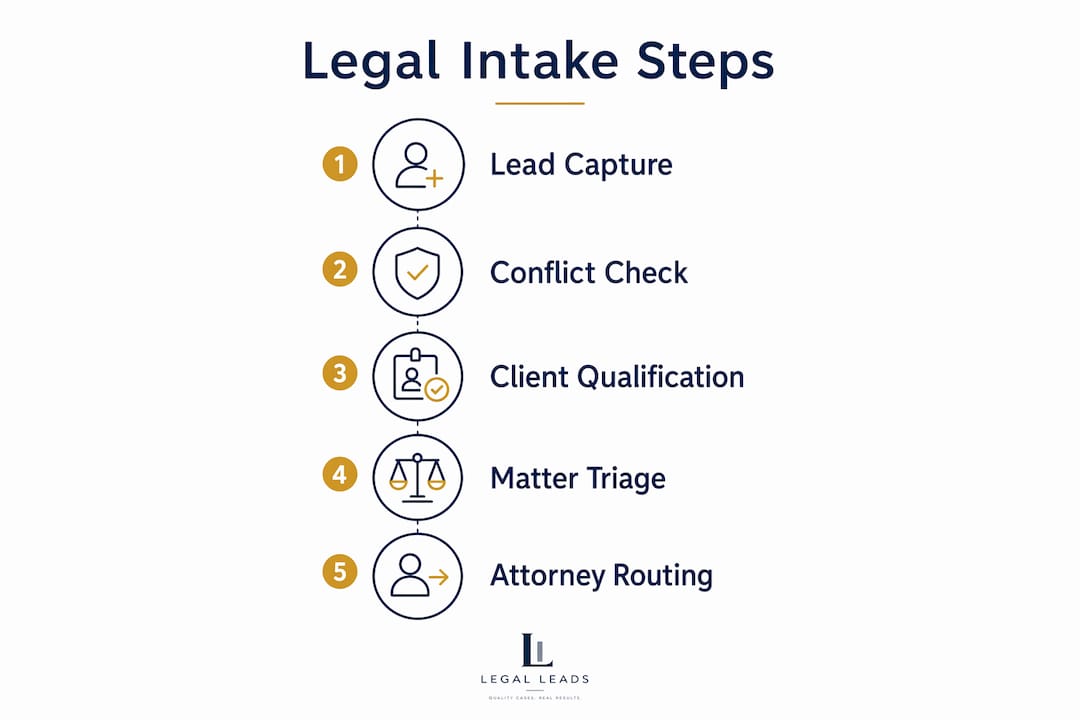
The legal intake process follows seven core stages, and skipping any stage increases liability risk for the firm or legal team handling the matter. Each stage has a specific purpose, and the sequence matters.
- Lead capture. The first contact point collects basic identifying information: name, contact details, and the nature of the legal issue. This can happen through a web form, phone call, or chat tool.
- Initial response. A staff member or automated system acknowledges the request and confirms receipt. Speed matters here. Law firms that schedule consultations within 24–48 hours of first contact maintain significantly higher conversion rates.
- Conflict check. The firm or legal department checks whether representing this matter creates a conflict of interest with existing clients or matters. The Model Rules of Professional Conduct, specifically Rule 1.7, require this step before any substantive legal work begins.
- Case screening. The legal team evaluates whether the matter fits its practice area, jurisdiction, and capacity. Defined screening criteria, including practice area fit, conflict thresholds, and matter size, improve conversion rates and reduce unqualified workload.
- Consultation scheduling. A formal meeting is arranged to discuss the matter in depth. This is where the attorney or intake specialist assesses the full scope of the legal need.
- Engagement letter. The firm issues a written agreement defining the scope of representation, fees, and responsibilities. This document protects both parties and sets clear expectations.
- Onboarding. The client or internal matter is formally set up in the case management system. Files are created, billing codes are assigned, and the legal work begins.
| Stage | Law firm task | In-house task |
|---|---|---|
| Lead capture | Web form, phone, or referral | Internal request portal or email |
| Conflict check | Client database search | Vendor or counterparty check |
| Case screening | Practice area and jurisdiction fit | Priority and resource assessment |
| Consultation | 30–45 minute intake call | 10–15 minute stakeholder meeting |
| Onboarding | Engagement letter and file setup | Matter tracking system entry |
Pro Tip: Review your intake form quarterly. Legal needs shift, and a form built for last year's case mix may miss critical data points for current matters.

How does legal intake differ between law firms and in-house legal departments?
The purpose of intake determines its design. Law firms treat intake as a client acquisition and qualification function. In-house legal teams treat it as demand management and workload tracking. Both use the same core stages, but the priorities and time investments differ significantly.
For law firms, intake is a business development tool. The goal is to qualify prospects, build rapport, and convert inquiries into paying clients. Intake calls at law firms typically run 30–45 minutes. That time covers case facts, potential damages, jurisdiction, and client expectations. The intake specialist or paralegal must gather enough detail to let the attorney make a sound acceptance decision.
In-house legal teams operate differently. Their "clients" are internal business units, and the goal is triage, not conversion. In-house intake calls run 10–15 minutes because the focus is on categorizing the request, assigning priority, and routing it to the right attorney or outside counsel. There is no sales element.
Key distinctions between the two models:
- Staffing. Law firms often use dedicated intake specialists or trained receptionists. In-house teams rely on legal operations staff or paralegals.
- Tools. Law firms use practice management platforms with CRM features. In-house teams often use ticketing systems or legal operations software.
- Metrics. Law firms track conversion rates and time to engagement. In-house teams track cycle time, matter volume, and attorney utilization.
- Compliance focus. Both must separate data collection from legal advice, but in-house teams also manage internal confidentiality and privilege concerns.
Pro Tip: Frame your intake process around the goals of the person submitting the request. A business unit leader needs a fast acknowledgment and a clear timeline. A prospective law firm client needs reassurance and a clear next step.
What best practices and technologies improve the legal intake procedure?
The most effective legal intake procedures combine structured data collection with automation. Digital intake forms with conditional logic reduce form abandonment and improve data accuracy. Conditional logic means the form shows only the questions relevant to the user's specific situation. A personal injury inquiry triggers different follow-up questions than a contract dispute.
Mobile optimization is not optional. A significant share of legal inquiries now originate from mobile devices. A form that requires pinching and zooming loses potential clients before they finish the first field.
Automation handles the repetitive work that slows intake down:
- Routing. Automated systems assign incoming requests to the right attorney or team based on practice area, geography, or matter type.
- Reminders. Automated follow-ups reduce the number of prospects who go cold after an initial inquiry.
- Data population. Intake forms automatically populate engagement letters and conflict check databases, cutting manual re-entry errors.
- AI triage. AI-powered tools can categorize incoming requests, flag high-priority matters, and answer basic FAQs through chat interfaces. Automated routing and AI-driven intake reduce delays and improve prioritization in high-volume environments.
One compliance rule applies to every intake system: separate fact gathering from legal advice. Intake staff collect information. Attorneys provide advice. Mixing the two creates unauthorized practice of law exposure. Your intake workflow design must enforce this boundary, not just your policy documents.
Common pitfalls to avoid:
- Incomplete forms that require callbacks to collect missing data
- Manual re-entry of intake data into separate case management systems
- No defined escalation path for urgent or high-risk matters
- Intake forms that ask for legal conclusions rather than facts
Pro Tip: Integrate your intake form directly with your case management or CRM system. Every manual data transfer is a potential error and a delay.
How does effective legal intake impact case outcomes and business legal operations?
Strong intake directly affects the quality of legal work that follows. Efficient intake systems reduce lost clients, minimize errors, and provide the data foundation for contract templates and case workflow automation. Clean intake data means attorneys spend less time chasing missing information and more time on substantive legal work.
For law firms, intake quality shapes client trust from the first interaction. A slow or disorganized intake process signals to a prospective client that the firm may handle their case the same way. Firms that respond within 24 hours and collect complete information at first contact retain more clients and generate fewer billing disputes.
For in-house teams, intake creates visibility. A single point of entry for legal requests enables legal operations leaders to track workload trends, identify bottlenecks, and make staffing decisions based on real data rather than gut estimates. Without structured intake, legal teams operate reactively, responding to whoever shouts loudest.
The consequences of poor intake are concrete:
- Data errors that cascade into billing mistakes and contract gaps
- Missed conflicts that create professional responsibility violations
- Lost clients who move to a competitor after a slow or confusing first contact
- Misaligned expectations that lead to disputes over scope and fees
"Legal intake is often underestimated as busywork, but it is actually a strategic business function that directly impacts client trust, revenue, and legal team capacity. Treating intake as a formal qualification process rather than a gut-feeling exercise improves case acceptance and reduces wasted attorney time."
The legal representation timeline for any matter is set, in large part, by how well intake was handled at the start. Errors introduced at intake compound throughout the case lifecycle.
Key Takeaways
The business legal intake procedure is the single most controllable factor in legal operational efficiency, and getting it right from the first contact determines case quality, client retention, and risk exposure.
| Point | Details |
|---|---|
| Seven-stage structure | Legal intake follows a defined sequence from lead capture to onboarding; skipping stages increases liability. |
| Firm vs. in-house differences | Law firms use intake for client acquisition; in-house teams use it for demand management and triage. |
| Automation reduces errors | Digital forms with conditional logic and automated routing cut manual errors and speed response times. |
| Compliance is non-negotiable | Intake staff must collect facts only; attorneys provide advice. Mixing the two creates legal exposure. |
| Clean data drives outcomes | Accurate intake data feeds conflict checks, engagement letters, and case workflows automatically. |
Why I think most businesses underestimate their intake process
Legal intake is treated as administrative overhead in most organizations. That is a mistake I have seen repeated across law firms and corporate legal departments alike. The intake process is not paperwork. It is the first substantive interaction between a legal team and the matter it will spend weeks or months working on. The quality of that interaction sets the trajectory for everything that follows.
The most common error I observe is treating intake as a one-time form rather than a living workflow. Legal needs change. A firm that handled mostly employment matters two years ago may now field a significant volume of contract disputes. If the intake form and routing logic have not kept pace, the team is collecting the wrong data and routing matters to the wrong attorneys.
The second error is separating intake from the rest of legal operations. Intake data should flow directly into case management, billing, and conflict systems. When it does not, staff re-enter data manually, errors multiply, and attorneys start their work with incomplete information. The non-lawyer document review process downstream becomes harder when intake data is thin or inconsistent.
Treat intake as the foundation of your legal operation, not the doormat. Every improvement you make to intake pays dividends across every matter that follows.
— Admin
Legalleads connects you to the right attorney after intake
The intake process identifies what legal help you need. The next step is finding the attorney who can deliver it. Legalleads makes that connection fast and direct.

Legalleads lets you describe your legal situation in plain English and generates a professional case brief in under two minutes. From there, the platform connects you with a qualified attorney within 24 hours, with no phone tag and no complicated forms. Whether you need a family law attorney or representation for an employment matter, Legalleads matches you to vetted legal professionals based on your specific situation. Visit the find a lawyer page to get started.
FAQ
What is the legal intake process for businesses?
The legal intake process is the structured method of capturing, evaluating, and routing legal requests within a business or law firm. It covers seven stages from initial contact through conflict checks, case screening, and formal onboarding.
How long does a legal intake call typically take?
Law firm intake calls run 30–45 minutes to cover case facts and qualification criteria. In-house legal intake meetings run 10–15 minutes because the focus is on triage and routing rather than client conversion.
Why is the conflict check step required in legal intake?
The conflict check identifies whether representing a new matter creates a conflict of interest with existing clients. The Model Rules of Professional Conduct require this check before any substantive legal work begins.
What technology improves the legal intake procedure?
Digital intake forms with conditional logic, automated routing systems, and AI-powered triage tools reduce errors and speed response times. Integration between intake forms and case management systems eliminates manual data re-entry.
What happens if a business skips steps in the legal intake process?
Skipping intake stages increases liability exposure, creates data gaps, and raises the risk of missed conflicts. Poor intake also leads to misaligned client expectations and billing disputes that are difficult to resolve after the matter is underway.