
Attorney case review is the systematic assessment of all case materials, legal factors, and evidence to determine a case's strength, value, and best path forward. Also called case evaluation or case assessment, this process is the foundation of every legal strategy. Attorneys use it to identify what a client can realistically expect, what risks exist, and whether litigation or settlement makes more sense. Understanding how attorney case review works helps you prepare better, communicate more clearly, and make decisions with confidence rather than guesswork.
How attorney case review works: the core steps
The attorney case evaluation process follows a defined sequence. It begins the moment a client makes contact and continues through a structured analysis of every relevant document and fact.
1. Initial consultation and intake

The attorney gathers your account of events, identifies the legal issues involved, and flags any immediate procedural concerns. Rushed or under-prepared evaluation risks an unclear recovery theory and missed deadlines that can permanently bar a claim. This first meeting sets the tone for everything that follows.
2. Document collection and triage
Attorneys request all relevant materials: contracts, medical records, emails, police reports, and photographs. Efficient legal teams use a structured 30-minute workflow that prioritizes key records like history of present illness to assess case merit early. That prioritization prevents attorneys from spending hours on low-value documents before confirming the case has merit.
3. Three-pass document review
Legal document review often follows a three-pass structure: checking completeness, assessing risk allocation, and confirming jurisdictional compliance. Each pass serves a distinct purpose. The first pass catches missing documents. The second identifies legal exposure. The third confirms the case meets procedural requirements in the correct jurisdiction.
4. Liability and damages analysis
The attorney maps the facts against the legal elements required to prove the claim. They identify where liability is clear, where it is contested, and what damages are recoverable. This step produces a working theory of the case.
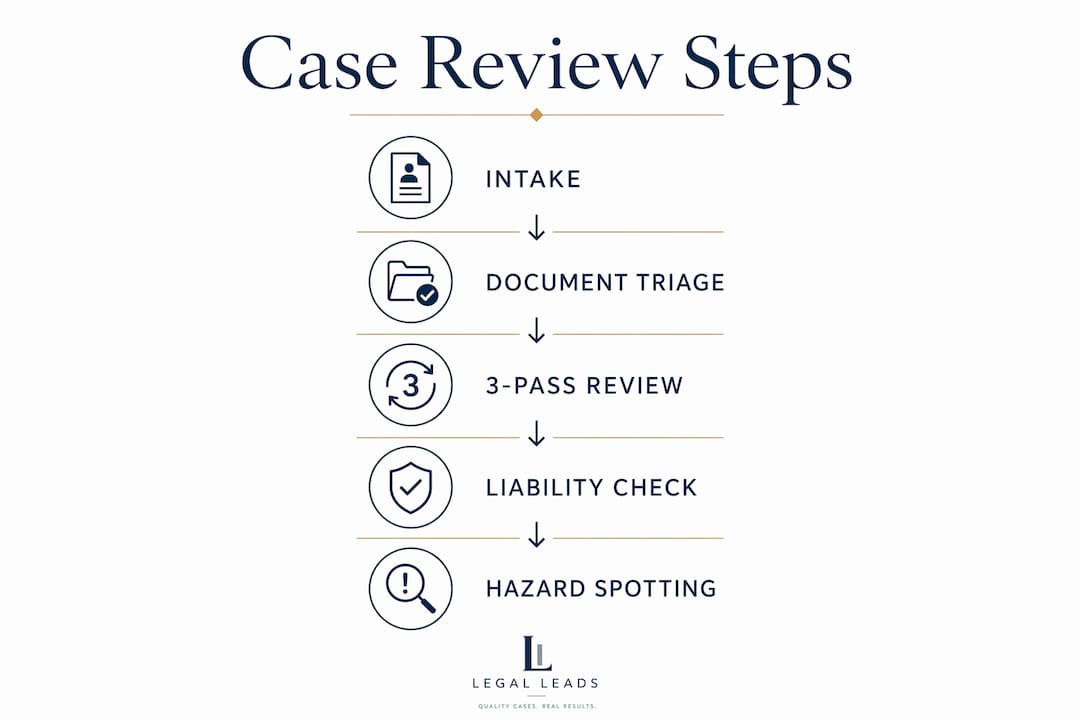
5. Procedural hazard check
Initial case review is investigative to spot procedural hazards like filing deadlines that may bar claims if missed. Statutes of limitations vary by case type and state. Missing one ends a valid claim before it starts.
Pro Tip: Ask your attorney to confirm the statute of limitations for your specific claim type at the very first meeting. This single question can save your entire case.
How do attorneys assess the strength and weaknesses of a case?
Early case evaluation anchors litigation strategy in evidence-based facts, focusing discovery and settlement negotiations on realistic risk assessments. Attorneys do not guess at outcomes. They build a structured picture of what the evidence supports and where the gaps are.
Fact and legal element mapping
Every legal claim has required elements. A personal injury claim, for example, requires duty, breach, causation, and damages. Attorneys list each element and match it to available evidence. Any element without supporting evidence is a vulnerability.
Risk evaluation
Attorneys assess probable defenses the opposing side will raise. They also weigh procedural risks: missing witnesses, spoliation of evidence, or jurisdictional issues. This risk profile shapes whether the case is worth pursuing and at what cost.
What attorneys look for during case assessment
- Liability clarity: Is it clear who caused the harm, or is fault shared?
- Evidence quality: Are documents authenticated? Are witness accounts consistent?
- Damages documentation: Are medical records, lost wage statements, and repair estimates complete?
- Opposing defenses: What arguments will the other side make, and how strong are they?
- Evidentiary gaps: What is missing, and can it be obtained through discovery?
Attorney review must identify weaknesses, evidentiary gaps, and probable defenses to effectively prepare a case for trial. Identifying a weakness early is an advantage. It gives the attorney time to address it rather than face it unprepared at trial.
Case strength summary table
| Factor | Strong case signal | Weak case signal |
|---|---|---|
| Liability | Clear, documented fault | Shared or disputed fault |
| Evidence | Complete, authenticated records | Missing or inconsistent documents |
| Damages | Quantified with supporting records | Vague or undocumented losses |
| Defenses | Limited opposing arguments | Strong procedural or factual defenses |
| Deadlines | All filings within statute of limitations | Approaching or missed deadlines |
What should clients prepare for an effective case review?
Client preparation directly affects how fast and how well an attorney can evaluate a case. Clients who proactively gather records such as chief complaints, physical exam findings, and diagnostic reports allow attorneys to evaluate cases in as little as 30 minutes. Waiting for the attorney to request each document one at a time adds days or weeks to the process.
A written timeline of events with all supporting documents enables efficient and focused case evaluation. Verbal narratives are harder to follow and easier to misremember. A written account forces clarity and gives the attorney a reference point throughout the review.
Documents to gather before your first meeting
- Contracts, agreements, or leases related to the dispute
- Medical records, bills, and treatment notes (for injury or malpractice cases)
- Emails, text messages, and written correspondence
- Photographs, videos, or physical evidence
- Police or incident reports
- Pay stubs or tax records (for employment or wage claims)
- Insurance policies and claim correspondence
You can use a legal case preparation checklist to organize these materials before your consultation. Arriving prepared signals to the attorney that you are a reliable source of information. It also reduces the time they spend on administrative tasks and increases the time spent on actual legal analysis.
Pro Tip: Write your timeline in chronological order with exact dates where possible. Include what happened, who was present, and what documents exist for each event. This single document often cuts consultation time in half.
Attorney-client privilege protects everything you share during case review. Speak openly and completely. Attorneys cannot build an accurate picture of your case if you withhold facts out of embarrassment or fear.
What are common challenges and nuances in attorney case reviews?
The attorney case assessment process is not always straightforward. Several obstacles can slow it down or reduce its accuracy.
Documentation gaps are the most common problem. A missing medical record, an unsigned contract, or a deleted email chain can leave a critical element of the claim unproven. Attorneys must decide whether the gap can be filled through discovery or whether it fatally weakens the case.
Complex legal terminology creates friction between attorneys and clients. When clients do not understand what their attorney is asking for or explaining, they provide incomplete information. Attorneys who define terms plainly and check for understanding get better input from clients.
Miscommunication about expectations is a persistent challenge. Clients often arrive at case review expecting a verdict. Attorneys are conducting an investigation. Quality preparation and clear communication protocols established during case review set the tone for client confidence and engagement throughout litigation. Setting expectations explicitly at the start prevents frustration later.
Case type differences also affect how review works. A personal injury case centers on medical records and accident reconstruction. A family law case focuses on financial disclosures and custody history. An employment case relies heavily on HR records and performance documentation. The role of evidence shifts depending on the legal theory, and attorneys adjust their review process accordingly.
"Disciplined early review creates cases that move forward with clarity and procedural efficiency. Attorneys who skip this step often find themselves correcting preventable mistakes mid-litigation, at significant cost to the client."
Key Takeaways
A thorough attorney case review, conducted early and with complete documentation, is the single most reliable predictor of a well-prepared legal strategy.
| Point | Details |
|---|---|
| Start with a structured process | Attorneys follow defined steps: intake, document triage, three-pass review, liability analysis, and procedural checks. |
| Identify gaps early | Evidentiary and documentation gaps found during review can be addressed before trial rather than discovered too late. |
| Client preparation matters | Proactively gathering records and writing a chronological timeline speeds up evaluation and improves accuracy. |
| Procedural deadlines are critical | Statutes of limitations vary by case type and state; missing them ends valid claims permanently. |
| Communication sets the foundation | Clear expectations and open dialogue during review build client confidence throughout the entire legal process. |
Why I think most clients underestimate the case review stage
Most people treat the initial attorney meeting as a formality. They show up, describe what happened, and wait for the attorney to take over. That approach costs them.
The case review stage is where the entire legal strategy is built or broken. Attorneys who receive complete, organized information at the start can identify the strongest legal theories, flag procedural risks, and set realistic expectations before a single dollar is spent on litigation. Attorneys who receive incomplete information spend weeks chasing documents and revising their analysis.
I have seen clients arrive at consultations with a shoebox of unsorted receipts and no timeline. The attorney spends the first hour just organizing the story. That is time that should be spent on legal analysis. The client pays for it either in fees or in a weaker initial assessment.
The most effective clients treat case review as a collaborative process. They prepare a written timeline, gather every relevant document, and ask direct questions about what the attorney needs next. They do not wait to be asked. That proactive posture changes the quality of the legal work that follows.
Transparency matters just as much as preparation. Attorneys cannot protect you from facts they do not know. Sharing an unflattering detail early gives the attorney time to address it strategically. Hiding it means the opposing side finds it first.
— Admin
Getting connected to the right attorney through Legalleads
Understanding the case evaluation process is the first step. The next step is finding an attorney qualified to conduct it for your specific situation.

Legalleads lets you describe your legal situation in plain English and generates a professional case brief in under two minutes. The platform then connects you with qualified attorneys within 24 hours, without phone calls or complicated intake forms. Whether you need a personal injury attorney in Los Angeles or representation in another practice area, Legalleads matches you based on your actual case details. You can also find a lawyer across multiple practice areas directly through the platform. The process is fast, direct, and built around getting you to the right attorney quickly.
FAQ
What is attorney case review?
Attorney case review is the structured process by which an attorney analyzes all facts, documents, and legal issues in a case to assess its strength, identify risks, and determine the best legal strategy.
How long does an attorney case review take?
Review time varies by case complexity. Attorneys using structured triage workflows can assess straightforward cases in as little as 30 minutes when clients provide complete documentation upfront.
What documents should I bring to a case review?
Bring contracts, medical records, emails, photographs, police reports, and any financial records relevant to your claim. A written chronological timeline of events is equally valuable.
What happens after the attorney reviews my case?
The attorney presents their assessment of case strength, identifies legal theories, outlines risks, and recommends a course of action, whether that is filing a claim, negotiating a settlement, or gathering additional evidence.
Does attorney-client privilege apply during case review?
Yes. Everything you share with an attorney during case review is protected by attorney-client privilege, even if you do not ultimately hire that attorney for representation.