
These are the contract clauses most likely to cost you money or control — and what to do about each. The highest-risk provisions in any U.S. agreement are indemnification, limitation of liability, IP assignment, termination, arbitration and governing law, auto-renewal, confidentiality, payment terms, personal guarantees, and data protection obligations. Together, they decide who pays when something goes wrong, what you own after the work is done, where disputes get resolved, and whether you can exit without penalty.
Before you sign anything, scan for one-way or uncapped language, unusual venue or arbitration rules, perpetual obligations, and hidden renewal windows. If you find any of these, flag them for an attorney. The American Bar Association consistently notes that most contract disputes trace back to provisions the signing party never read carefully.
- Indemnification: one-way, uncapped, and broad
- Limitation of liability: missing, waived, or full of carve-outs
- IP assignment: covers "all inventions" with no scope limit
- Termination: no cure period, no notice window
- Arbitration and governing law: forces you into a distant forum
- Auto-renewal: short opt-out window, price hike buried in renewal language
- Confidentiality: perpetual duration, no exceptions listed
- Payment terms: late fees, interest, and collection costs stacked against you
- Personal guarantees: you become personally liable for a business obligation
- Data and privacy obligations: vague, one-sided, or non-compliant with state law
Pro Tip: Predatory clauses are almost always presented as standard boilerplate to discourage pushback. Treat any clause that imposes an uncapped obligation on only one side as a high-priority negotiation point.
Table of Contents
- 1. Confidentiality and non-disclosure clauses
- 2. IP assignment clauses
- 3. Limitation of liability clauses
- 4. Indemnification clauses
- 5. Termination clauses and notice periods
- 6. Payment terms and remedies for nonpayment
- 7. Force majeure clauses
- 8. Dispute resolution, arbitration, and governing law
- 9. Automatic renewal and notice periods
- 10. Assignment and change-of-control provisions
- 11. Non-compete and non-solicitation clauses
- 12. Data protection and privacy clauses
- 13. Definitions, entire agreement, and boilerplate provisions
- How to spot red flags and negotiate U.S. contracts
- Sample clause language to adapt or show a lawyer
- Key Takeaways
- Why the boilerplate sections deserve more attention than they get
- Get an attorney to review your contract through Legalleads
- Useful sources and further reading
- FAQ
1. Confidentiality and non-disclosure clauses
What it does: A confidentiality clause restricts one or both parties from sharing information designated as confidential. In a standalone NDA, it is the entire agreement. In a service contract, it is usually one section.

Why it matters: A poorly drafted confidentiality clause can bind you indefinitely, cover information you never intended to protect, or expose you to liquidated damages for an accidental disclosure.
Red flags to watch:
- Perpetual duration with no end date
- No list of exceptions (public domain, independently developed, required by law)
- Liquidated damages set at amounts disproportionate to the contract value
Negotiation priority: Limit duration to a few years, define confidential information precisely, and require a written list of exceptions. Mutual confidentiality is the standard in balanced agreements.
Sample language:
2. IP assignment clauses
What it does: An IP assignment clause transfers ownership of intellectual property — code, designs, written work, inventions — from the creator to the contracting party.
Why it matters: Broad "all inventions" language can transfer ownership of work you created on your own time, using your own tools, with no connection to the contract. California has statutory limits on what an employer can claim under such clauses (California Labor Code § 2870), but the language still creates a chilling effect and requires you to affirmatively assert your rights.
Red flags to watch:
- "All inventions, whether or not related to the company's business"
- No carve-out for pre-existing IP or personal projects
- Assignment extends beyond the contract term
Negotiation priority: Add a schedule of pre-existing IP, carve out personal projects explicitly, and limit assignment to work created specifically under this agreement.
Sample language:
3. Limitation of liability clauses
What it does: This clause caps the total financial exposure of one or both parties. Without it, a breach could expose either side to unlimited damages.

Why it matters: Limitation of liability clauses commonly cap exposure at the prior 12 months' fees paid under the agreement. Carve-outs typically include IP infringement, gross negligence, willful misconduct, and indemnification obligations. A missing cap is a serious risk; a cap with too many carve-outs is nearly as bad.
Red flags to watch:
- Cap applies only to one party
- Carve-outs so broad they swallow the cap entirely
- No cap at all (unlimited liability)
Negotiation priority: Demand a mutual cap, tie it to fees paid in the prior 12 months, and keep carve-outs narrow.
Sample language: Pro Tip: A liability cap with unlimited carve-outs for "any breach of confidentiality" effectively removes the cap. Read carve-outs as carefully as the cap itself.
4. Indemnification clauses
What it does: An indemnification clause requires one party to cover the other's losses, legal costs, and third-party claims arising from specified events.
Why it matters: Indemnification clauses are often drafted one-way and uncapped, making them the most expensive provisions in a contract when left unchecked. A broad indemnity can require you to defend and pay for claims that have nothing to do with your own conduct.
Red flags to watch:
- One-way obligation (only you indemnify, not the other party)
- Covers "any and all claims" with no scope limit
- Includes defense costs with no right to control the defense
Negotiation priority: Require mutuality, limit scope to claims arising from your own negligence or breach, and add a right to approve counsel and settlement.
Sample language:
5. Termination clauses and notice periods
What it does: Termination clauses define when and how either party can end the contract, including termination for cause (a breach) and termination for convenience (no reason required).
Why it matters: Without clear termination milestones and notice periods, parties risk being locked into perpetual obligations or scope creep. A contract with no termination-for-convenience right can trap you in a relationship that no longer works.
Red flags to watch:
- No cure period before termination for cause takes effect
- Termination for convenience available only to one party
- Notice period so short it is practically impossible to meet
Negotiation priority: Require a reasonable notice and cure period for cause, mutual termination-for-convenience rights, and clear post-termination obligations (data return, final payment).
Sample language:
6. Payment terms and remedies for nonpayment
What it does: Payment clauses define invoice timing, due dates, late fees, interest rates, and what happens when payment is not made.
Why it matters: Vague payment terms create collection disputes. One-sided remedies — high interest rates, attorney fees payable only by the non-paying party, or suspension rights that favor only the vendor — shift leverage significantly.
Red flags to watch:
- Interest rate above the legal limit for your state
- Attorney fees clause that applies only if you fail to pay (not if they fail to pay)
- No dispute resolution process for contested invoices
Negotiation priority: Set a clear due date (net 30 is standard), cap interest at a reasonable rate, and make the attorney fees clause mutual.
Sample language:
7. Force majeure clauses
What it does: A force majeure clause excuses a party's performance when an extraordinary event outside its control makes performance impossible or impractical.
Why it matters: Courts interpret vague "acts of God" language narrowly. COVID-era litigation showed that contracts listing only natural disasters left parties unprotected during government-ordered shutdowns. A modern force majeure clause needs to be specific.
Red flags to watch:
- List limited to "acts of God" or "natural disasters" only
- No notice requirement or time limit on the excuse
- No termination right if the event lasts beyond a defined period
Negotiation priority: Explicitly list pandemics, government orders, cyberattacks, and telecom failures. Require prompt written notice and add a mutual right to terminate if the event lasts beyond a defined reasonable period.
Sample language:
8. Dispute resolution, arbitration, and governing law
What it does: These clauses determine where disputes are resolved (state, federal court, or arbitration), which state's law applies, and whether class actions are waived.
Why it matters: Failing to define forum and choice of law can force you into the counterparty's home-state courts or mandatory arbitration in a distant city. Boilerplate venue and governing law clauses are frequently ignored but often decide the cost and forum of litigation, making disputes more expensive than the contract value itself.
Red flags to watch:
- Arbitration required in a city where the other party is headquartered
- Class-action waiver buried in the arbitration clause
- Governing law set to a state with no connection to your business
Negotiation priority: Negotiate for your home state or a neutral venue, confirm the arbitration rules (AAA or JAMS are standard), and push back on class-action waivers in consumer-facing agreements.
Sample language: Pro Tip: If the contract requires you to arbitrate in a city more than 500 miles away, that is an attorney-trigger signal. The travel cost alone can exceed the value of a small dispute.
9. Automatic renewal and notice periods
What it does: An auto-renewal clause extends the contract for a new term automatically unless one party gives notice within a defined window before the expiration date.
Why it matters: Predatory auto-renewal terms lock customers into renewals with price hikes and short opt-out windows. A 7-day cancellation window buried in a 40-page agreement is a common trap. The Federal Trade Commission has increased enforcement of unfair auto-renewal practices under its negative option rule.
Red flags to watch:
- Opt-out window shorter than 30 days before renewal
- Price adjustment language that takes effect automatically at renewal
- Notice required by certified mail only (easy to miss)
Negotiation priority: Require at least 60 days' notice before renewal, allow cancellation by email or written notice, and prohibit price increases without separate written consent.
Sample language:
10. Assignment and change-of-control provisions
What it does: An assignment clause controls whether a party can transfer its rights or obligations under the contract to a third party, including through a merger or acquisition.
Why it matters: Without a change-of-control provision, a company you contracted with can be acquired by a competitor, and your contract automatically transfers to that competitor. Conversely, a strict no-assignment clause can prevent you from restructuring your own business.
Red flags to watch:
- No consent requirement for assignment to a competitor
- Change-of-control treated the same as voluntary assignment (no termination right)
- Assignment clause applies only to you, not the other party
Negotiation priority: Require written consent for any assignment, carve out internal restructuring and affiliate transfers, and add a termination right triggered by a change of control to a direct competitor.
Sample language:
11. Non-compete and non-solicitation clauses
What it does: A non-compete restricts a party from working for or starting a competing business for a defined period after the contract ends. A non-solicitation clause restricts poaching the other party's employees or clients.
Why it matters: Overly broad non-competes can restrict your ability to earn a living. California largely prohibits employee non-competes under Business and Professions Code § 16600, but non-solicitation clauses and non-competes in business sale agreements remain enforceable. The Federal Trade Commission proposed a near-total ban on employee non-competes, though that rule faces ongoing legal challenges.
Red flags to watch:
- Geographic scope covering the entire United States with no business justification
- Duration longer than 12–24 months
- Applies to independent contractors with no access to trade secrets
Negotiation priority: Narrow the geographic scope to where you actually compete, limit duration to 12 months, and exclude clients or employees you introduced to the relationship.
Sample language:
12. Data protection and privacy clauses
What it does: Data protection clauses define how personal data is collected, stored, processed, and protected under the contract, and allocate liability for breaches.
Why it matters: California's Consumer Privacy Act (CCPA) and California Privacy Rights Act (CPRA) impose specific obligations on businesses that handle personal data. A contract that is silent on data handling can leave you exposed to regulatory fines and third-party claims if a breach occurs.
Red flags to watch:
- No data processing agreement or data security standards specified
- Breach notification timeline longer than 72 hours (inconsistent with state law requirements)
- Indemnification for data breaches flows only one way
Negotiation priority: Require a data processing addendum, specify security standards (SOC 2, ISO 27001), set a 48-hour internal notification window, and make breach-related indemnification mutual.
Sample language:
13. Definitions, entire agreement, and boilerplate provisions
What it does: Definitions clauses set the meaning of key terms used throughout the contract. "Entire agreement" (also called a merger clause) states that the written contract supersedes all prior negotiations and side agreements. "No waiver" clauses prevent a party's failure to enforce a provision from being treated as a permanent waiver of that right.
Why it matters: Miscellaneous boilerplate provisions like "entire agreement" and "no waiver" can void side agreements or prevent enforcement flexibility. These provisions often control dispute outcomes despite appearing minor. A definition that is too broad or too narrow can change the meaning of every clause that uses that term.
Red flags to watch:
- Definitions that expand the scope of key obligations without clear limits
- Entire agreement clause that voids written side letters you relied on
- Severability clause that allows the other party to sever a favorable provision
Negotiation priority: Review every defined term against the clause where it appears. Confirm that any side letters or prior commitments are incorporated by reference, not voided.
How to spot red flags and negotiate U.S. contracts
Use this checklist the first time you open any contract. Work through it before you focus on the headline price or delivery terms.
- Scan for one-way obligations. Any clause that imposes an obligation on only one side — indemnity, confidentiality, termination rights — is a signal of imbalance. Ask for a mutual version.
- Check every cap and carve-out. Find the limitation of liability clause and read every carve-out. If the carve-outs cover most realistic scenarios, the cap is effectively meaningless.
- Locate the governing law and venue clause. Confirm the state and city. If it is not your home state and the contract value is significant, calculate the cost of litigating or arbitrating there.
- Find the auto-renewal window. Mark the opt-out deadline in your calendar immediately. A missed window can lock you in for another full term.
- Read the IP assignment clause against your existing work. List any pre-existing IP before you sign and attach it as an exhibit.
- Check confidentiality duration. If it says "perpetual" or has no end date, negotiate a 3–5 year limit.
- Identify personal guarantee language. Any clause that makes you personally liable for a business obligation requires attorney review before signing.
- Review the data obligations. Confirm breach notification timelines and security standards are specified.
Questions to bring to negotiations:
- "Can we make this indemnity mutual?"
- "What is the basis for the liability cap — can we tie it to fees paid?"
- "Why is arbitration required in [distant city] — can we use a neutral venue?"
- "What triggers the auto-renewal, and how do we cancel?"
- "Can we add a cure period before termination for cause takes effect?"
Attorney-trigger signals — get counsel before signing if:
- Financial exposure exceeds three times your annual fees under the contract
- The contract includes a personal guarantee
- Arbitration is required in a forum more than 500 miles away
- The indemnity is uncapped and covers third-party claims broadly
- The IP assignment covers work unrelated to the contract scope
For a broader legal document checklist, especially if this is your first time reviewing a commercial agreement, that resource covers the full intake process step by step.
Sample clause language to adapt or show a lawyer
These templates illustrate fair, balanced versions of the highest-risk provisions. Show them to counsel before using them — they are starting points, not final drafts.
| Clause | Sample Language | Key Variable to Negotiate |
|---|---|---|
| Liability cap | "Total liability shall not exceed fees paid in the prior 12 months." | Cap amount; carve-outs for gross negligence |
| Mutual indemnity | "Each party indemnifies the other for claims arising from its own negligence." | Scope of "negligence"; defense cost allocation |
| IP assignment | "IP created solely for Client under this Agreement is assigned to Client. Pre-existing IP in Exhibit A is excluded." | Scope of "solely for"; pre-existing IP schedule |
| Confidentiality | "Confidential Information is protected for five (5) years; excludes public domain and independently developed information." | Duration; list of exceptions |
| Termination for cause | "30-day written notice and cure period required before termination takes effect." | Cure period length; notice method |
| Force majeure | "Excused events include pandemics, government orders, cyberattacks, and telecom failures; 90-day termination right." | Event list; notice period; termination trigger |
| Auto-renewal | "A reasonable written opt-out window; price increases require separate written consent." | Opt-out window; price adjustment restrictions |
| Arbitration | "AAA Commercial Rules; neutral venue agreed by both parties; class actions permitted." | Venue; rules; class-action waiver |
| Data protection | "48-hour breach notification; SOC 2 security standards; mutual breach indemnity." | Notification window; security standard; indemnity scope |
Plain-language notes:
- Auto-renewal: — The FTC's negative option rule requires clear disclosure of renewal terms. If a vendor's contract does not meet this standard, that is a negotiation point, not just a legal technicality.
Pro Tip: Common legal jargon mistakes in boilerplate sections cost clients real money. The "attorneys' fees" clause alone can shift thousands of dollars in litigation costs — read it carefully.
For lease-specific clause examples, including termination notice and auto-renewal language in residential and commercial leases, renter-friendly lease terms covers the tenant-side perspective in detail.
Key Takeaways
The most costly contract mistakes come from clauses that look standard but impose one-sided, uncapped, or perpetual obligations — scan these provisions first, demand mutuality, and involve counsel when personal liability or significant financial exposure is at stake.
| Point | Details |
|---|---|
| Scan load-bearing clauses first | Indemnity, liability caps, IP assignment, and termination clauses carry the most financial risk. |
| Demand mutuality | Any obligation imposed on only one side is a negotiation point; ask for a reciprocal version. |
| Watch forum and auto-renewal | Distant arbitration venues and short opt-out windows are common traps that compound costs. |
| Get counsel for personal guarantees | Uncapped exposure or personal liability requires attorney review before signing. |
| Legalleads connects you fast | If a clause triggers attorney involvement, Legalleads matches you with a qualified attorney within 24 hours. |
Why the boilerplate sections deserve more attention than they get
Most people spend their contract review time on price, deliverables, and deadlines. Those terms matter, but they rarely decide who wins a dispute. The provisions that actually control outcomes are the ones in the back of the agreement: governing law, venue, attorneys' fees, entire agreement, no waiver, and severability.
A governing law clause that points to Delaware when your business is in California does not just change which state's law applies. It changes which courts are available, which procedural rules govern, and how long a dispute takes to resolve. An attorneys' fees clause that applies only when you fail to pay — but not when the other party fails to deliver — creates an asymmetric cost structure that discourages you from asserting legitimate claims.
The "entire agreement" clause is particularly underestimated. If a vendor's sales representative promised you a feature, a discount, or a service level that is not in the written contract, the entire agreement clause voids that promise. Courts enforce it consistently. The fix is simple: put every commitment in writing and attach it as an exhibit before you sign.
The practical implication is this: spend at least as much time on the last three pages of a contract as on the first three. That is where the leverage lives.
Get an attorney to review your contract through Legalleads
Flagging a clause is the first step. Getting it reviewed by a qualified attorney is the one that protects you.
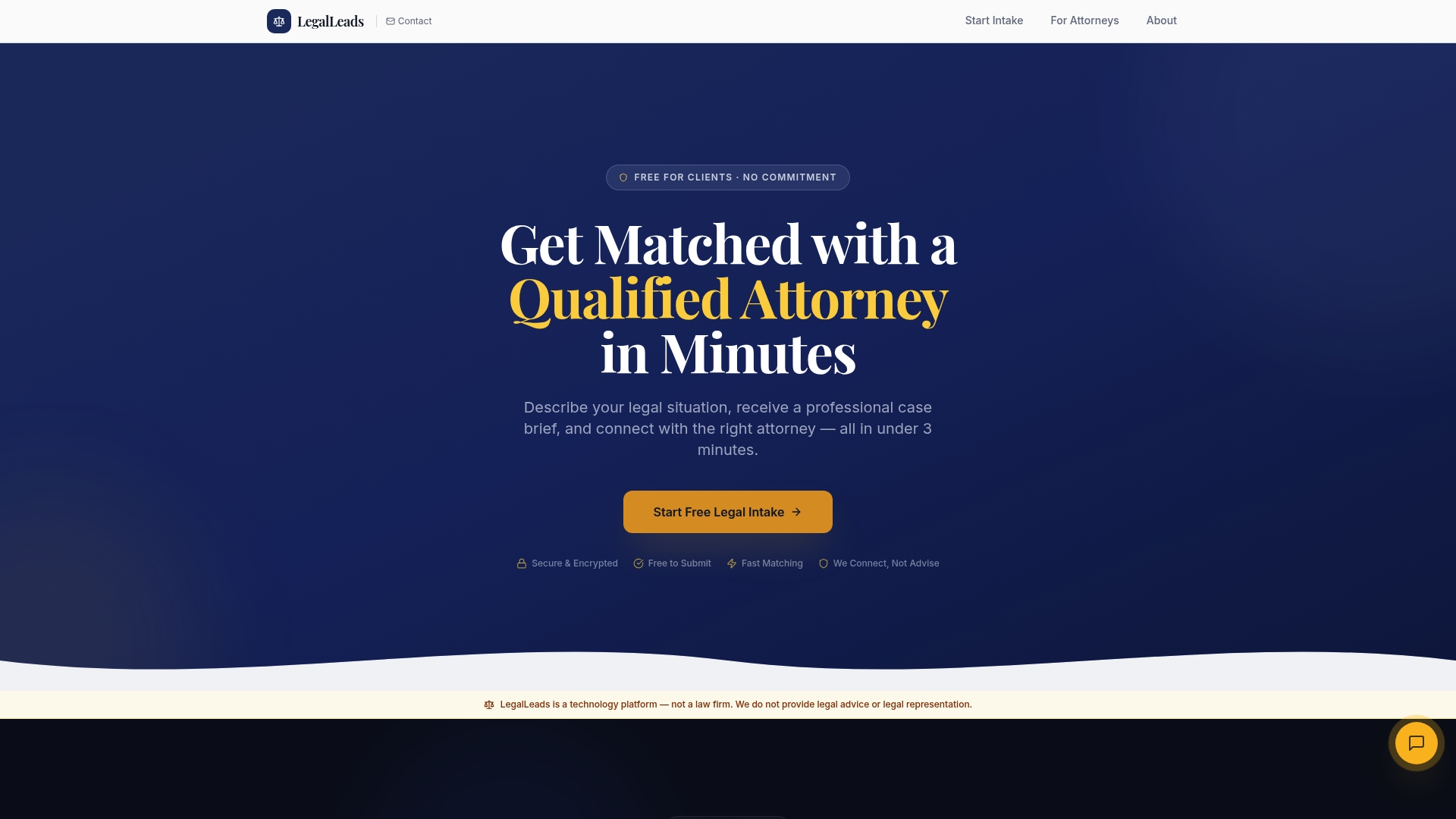
Legalleads gives you a faster path to that review. Describe your contract situation in plain English, and the platform generates a professional case brief in under two minutes. From there, a qualified attorney in California is matched to your case within 24 hours — no phone calls, no intake forms, no waiting.
Two situations where this matters most:
- Before you sign: You have identified a one-sided indemnity, an uncapped liability clause, or a personal guarantee and need an attorney to assess your exposure and suggest specific edits.
- During negotiation: The other party is pushing back on your redlines and you need a licensed attorney to advise on what is standard, what is negotiable, and what to walk away from.
When you share contract excerpts through the platform, your information is handled with the same confidentiality standards that govern attorney-client communications.
Find a lawyer through Legalleads or browse attorneys by practice area to get started.
This article is general information, not legal advice. Show flagged clauses to a qualified attorney before signing or relying on any contract provision.
Useful sources and further reading
- Cornell Law School — Contract (LII): Primary legal reference for U.S. contract law definitions and enforceability standards.
- Thomson Reuters — Indemnification Clauses in Commercial Contracts: Practitioner-level analysis of indemnity scope, defense obligations, and interaction with liability caps.
- Thomson Reuters — Contract Clause Overview: Plain-language breakdown of common contract clause types and their business impact.
- U.S. Department of Justice — Liquidated Damages Provisions: Federal guidance on when liquidated damages clauses are enforceable versus punitive.
- Federal Trade Commission: Primary source for negative option rule enforcement and auto-renewal disclosure requirements.
- American Bar Association — Business Law Publications: Practitioner articles on contract drafting, dispute resolution, and commercial clause standards.
- Cambridge — Intellectual Property Licensing and Transactions, Chapter 13: Academic treatment of boilerplate provisions including assignment, force majeure, merger clauses, and no-waiver language.
FAQ
What are the most important contract clauses to watch?
The highest-risk clauses are indemnification, limitation of liability, IP assignment, termination, and governing law or arbitration. These provisions decide who pays when something goes wrong, what you own, and where disputes are resolved.
Can you give examples of common contractual clauses?
Common examples include: a mutual indemnity clause that limits each party's obligation to claims arising from its own negligence; a liability cap set at 12 months' fees; a confidentiality clause with a 5-year duration and a list of exceptions; and a termination clause requiring 30 days' written notice and a cure period.
What are the biggest red flags in a contract?
One-way indemnities, uncapped liability, perpetual confidentiality, arbitration in a distant forum, and auto-renewal windows shorter than 30 days are the most common red flags. Any clause that imposes an obligation on only one party should be treated as a negotiation point.
When should you involve an attorney to review a contract?
Involve an attorney when the contract includes a personal guarantee, when financial exposure exceeds three times your annual fees, when arbitration is required in a distant city, or when the IP assignment covers work unrelated to the contract scope. Legalleads can match you with a qualified attorney within 24 hours for exactly these situations.
Can you negotiate standard contract clauses?
Yes. Most "standard" clauses are negotiable, including liability caps, indemnity scope, confidentiality duration, and venue. Presenting a mutual version of a one-sided clause is the most effective opening position in most commercial negotiations.