
Yes, you can connect with a lawyer without phone calls. Email, secure client portals, live chat intake, and online matching platforms all give you a direct path to qualified legal help, no dialing required.
Your immediate next steps:
- Pick one channel: email, a firm's contact form, or an online intake platform.
- Copy a template from the section below and fill in your issue, jurisdiction, and preferred communication method.
- Send it. Most attorneys respond within 24–72 hours by the same channel.
Key Takeaways
You can connect with a lawyer without phone calls by choosing a written channel, sending a clear first message with your issue and no-phone preference, and using a verified intake platform like Legalleads to receive a shortlist in under 24 hours.
| Point | Details |
|---|---|
| Choose the right channel | Email and secure portals suit most intake needs; live chat works for quick triage only. |
| State your preference upfront | Include an explicit no-phone request in your first message to avoid call-back prompts. |
| Protect sensitive information | Never send SSNs, account numbers, or sensitive documents through a non-secure channel. |
| Know the fee structure | Ask whether the initial email review is free and what triggers a billable engagement. |
| Use Legalleads for fast matching | Legalleads delivers a verified attorney shortlist in under 24 hours from a written intake, no call required. |
This article is general information, not a substitute for advice from a qualified lawyer. Consult a qualified legal professional about your own circumstances before acting on anything here.
Table of Contents
- What channels let you reach a lawyer without phone calls?
- How to find attorneys who accept written or online-only communication
- What to write in your first message to an attorney
- What to expect on fees and response times for written consultations
- Privacy and safety: what not to send and how to use secure channels
- Free and low-cost written legal help resources
- How Legalleads connects you to attorneys without phone calls
- What actually happens when you request no-phone communication
- Legalleads gets you a verified attorney match without a single call
- Sources
- FAQ
What channels let you reach a lawyer without phone calls?
Several written and digital channels work for phone-free legal contact. Each fits a different situation, so choosing the right one upfront saves time.
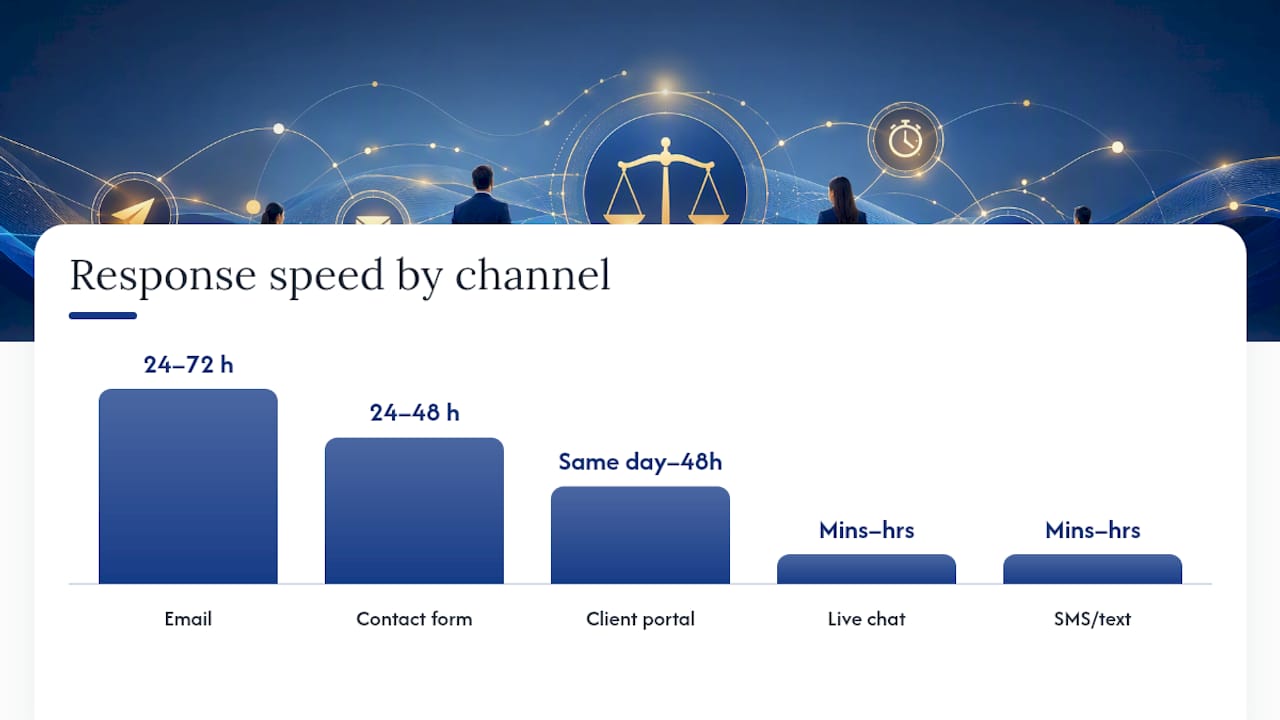
Email is the most direct option for documented questions. You control the pace, you have a written record, and most attorneys treat an email inquiry as a formal first contact. Some firms, like Paramount Law, offer a dedicated free email consultation where an attorney reviews your written intake without requiring a call.
Contact forms on law-firm websites function like email but route your message through the firm's intake system. They often include fields for practice area, jurisdiction, and a brief description, which helps the right attorney see your inquiry faster.
Secure client portals are the right channel for sensitive documents or ongoing matters. Once an attorney engages you, they typically provide portal access (tools like Clio or MyCase are common) where you can upload files, exchange messages, and track your matter, all encrypted.
Live chat and messaging on firm websites let you ask a quick triage question in real time. These are best for confirming whether a firm handles your type of case before you commit to a full intake.
SMS/text is offered by some attorneys as a follow-up channel after initial intake, though it is rarely appropriate for sensitive legal details. Use it only for scheduling or brief status checks.
Online intake and matching platforms handle the entire first step for you. You describe your issue in writing, and the platform routes your intake to matched attorneys who respond in writing.
| Channel | Best for | Confidentiality | Typical speed |
|---|---|---|---|
| Documented questions, initial intake | Moderate (use firm address) | 24–72 hours | |
| Contact form | Routing to the right attorney | Moderate | 24–48 hours |
| Secure client portal | Sensitive documents, ongoing matters | High (encrypted) | Same day to 48 hours |
| Live chat/messaging | Quick triage, case-type confirmation | Low to moderate | Minutes to hours |
| SMS/text | Scheduling, status checks only | Low | Minutes to hours |
| Online intake platform | Full phone-free match to an attorney | Varies by platform | Under 24 hours |
How to find attorneys who accept written or online-only communication
The fastest way to find a lawyer who will communicate without calls is to look for explicit signals on their intake page. Search "[practice area] email consultation" or "[practice area] online intake" along with your state. Firms that accept written-only contact usually say so directly, with phrases like "email preferred," "submit your case online," or "no phone required."
Law-firm websites are the first place to check. Look at the contact page and any intake form. If the form includes a field for "preferred contact method" or lists email as a standalone option, that firm is set up for written communication. Some firms, like Jesus Reyes Law, publish a dedicated email consultation page and list email as the primary intake channel, with phone listed only as an optional alternative.
Verified attorney directories let you filter by practice area and location. On each profile, look for notes about communication preferences, secure messaging, or online intake. Directories tied to a state bar tend to carry more reliable vetting than general aggregators.
State bar referral programs are worth checking directly. Most state bars maintain a lawyer referral service with an online request form. You submit your issue in writing, and a coordinator matches you with an attorney who then contacts you, often by email first.
Legal aid and pro bono programs typically accept written applications and communicate by email or secure form. Eligibility is income-based, but if you qualify, these programs rarely require a phone call to start.
Online intake and matching platforms are the most direct route. You describe your situation in plain language, and the platform handles the match. Legalleads, for example, uses a written intake to generate a case brief and deliver a verified attorney shortlist without any phone interaction.
When vetting a profile or intake page, check for: explicit "email preferred" or "online intake" language, a secure portal or encrypted upload option, visible client reviews that mention written communication, and clear fee or billing information posted upfront.
What to write in your first message to an attorney
A clear first message gets a faster, more useful reply. Attorneys receive many vague inquiries; a well-organized email stands out and reduces the back-and-forth that often leads to a phone request.
Include these elements in every first written message:
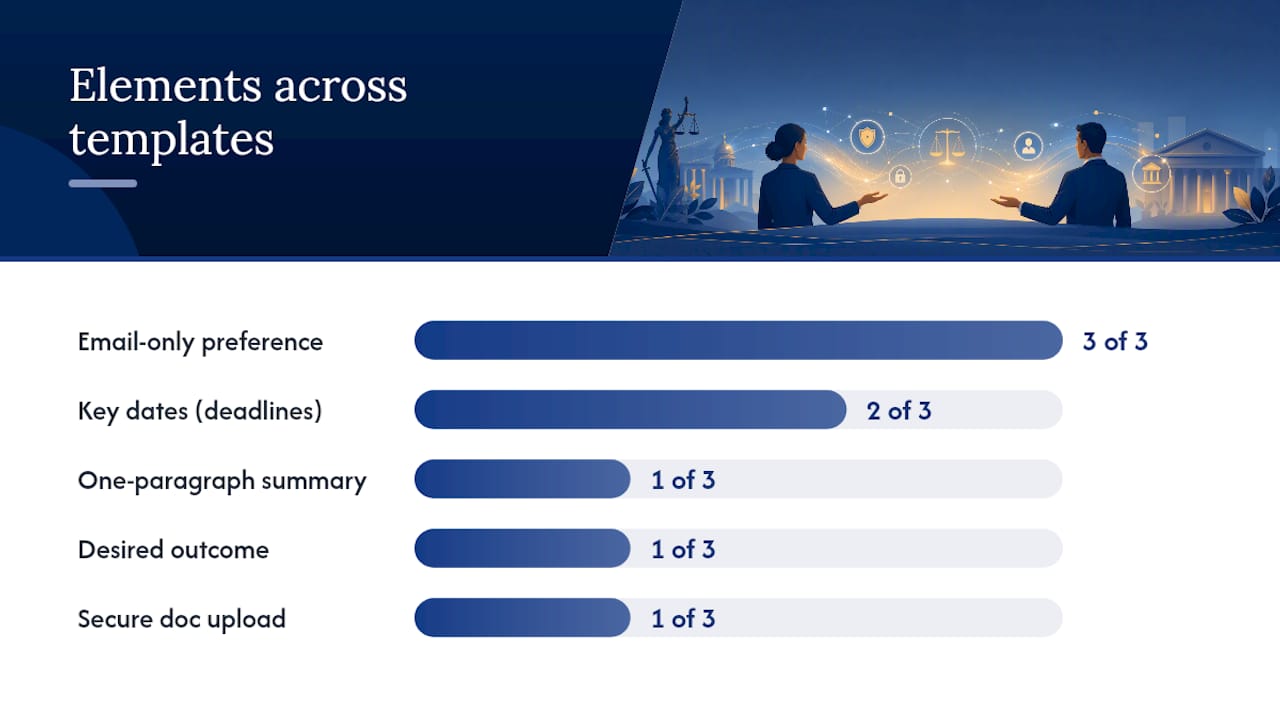
- A one-paragraph summary of your legal issue (what happened, when, and where)
- Your desired outcome (what you want the attorney to help you achieve)
- Your jurisdiction (state and city)
- Key dates (incident date, any deadlines or court dates you know of)
- A statement that you prefer email-only communication
- Whether you can upload documents securely if needed
Three ready-to-use templates:
1. Initial intake email
Subject: Legal Inquiry — [Practice Area] — [Your State]
I am writing to request an initial consultation regarding [brief issue description]. The matter occurred on [date] in [city, state]. My desired outcome is [what you want]. I prefer to communicate by email or secure portal only. Please let me know if you need any documents and how to send them securely. I am available to respond within [your timeframe].
2. Short urgent question
Subject: Urgent Question — [Practice Area]
I have a time-sensitive question about [specific issue]. The relevant deadline is [date]. Could you advise on [specific question]? I prefer written responses only. Please reply to this email address.
3. Explicit no-phone request
Subject: Email-Only Communication Request — [Your Name]
I authorize you to communicate with me exclusively by email or secure client portal. I am not available by phone. All correspondence, documents, and advice should be sent to [your email]. I will respond promptly to written messages.
Pro Tip: Include the minimum facts needed to get a useful first reply, but stop there. One paragraph covering what happened, when, where, and what you want is enough. Attorneys who need more will ask in writing. Sending too much detail upfront, especially sensitive personal or financial information, before a formal engagement is in place carries privacy risks.
For guidance on what questions to prioritize in your written intake, the urgent legal situations guide covers what to lead with when time is short.
What to expect on fees and response times for written consultations
Written consultations follow a range of pricing models. Knowing which applies before you send your first message helps you avoid surprises.
Free written options exist but come with limits. Public platforms like ABA Free Legal Answers let income-eligible users post civil legal questions online and receive email notifications when a volunteer attorney responds, no phone call required. Some firms also offer a free initial email review, though that review is typically limited in scope and may prompt a paid follow-up recommendation.
Paid written consultations are common for anything beyond a general answer. Attorneys may charge a flat fee for a written opinion letter, bill by the hour for email exchanges under a retainer, or offer a fixed-price intake review. Rates vary widely by practice area and location.
Typical response timelines:
- Live chat: minutes to a few hours
- Email or contact form: 24–72 hours for most firms
- Secure portal messages (active matters): same day to 48 hours
- Free public Q&A platforms: 1–7 days depending on volunteer availability
Response times stretch for complex matters, high-volume periods, or when a firm needs to confirm conflict checks before replying.
Billing checklist to address in your first message:
- Ask whether the initial email review is free or billable.
- Confirm whether ongoing email exchanges count toward an hourly retainer.
- Ask if a flat-fee written consultation is available for your issue type.
- Clarify what triggers a formal engagement (a signed agreement, a payment, or a written confirmation).
Submitting a written intake does not automatically create an attorney-client relationship. Most firm intake pages state this explicitly, and formal representation begins only after a signed engagement letter or explicit written confirmation from the attorney.
Privacy and safety: what not to send and how to use secure channels
Not every written channel is equally safe for legal details. The channel you choose for your first message should match the sensitivity of what you are sharing.
Do not include these in an initial non-secure message:
- Social Security numbers or government ID numbers
- Full financial account numbers or credit card details
- Highly sensitive medical records or diagnoses
- Immigration status details beyond a general description
- Passwords or access credentials of any kind
Match the channel to the content:
- Preliminary facts (what happened, general timeline, what you need) are fine for a standard email or contact form.
- Sensitive documents, financial records, or detailed personal information should go through a secure client portal with encrypted upload, not a regular email attachment.
Attorney-client privilege does not automatically apply to questions posted on public forums or free Q&A sites. As Justia Ask A Lawyer notes, submissions on open platforms are not confidential and do not create an attorney-client relationship. Privilege typically attaches after a formal engagement, not at the point of inquiry.
Pro Tip: Before sending any document, ask the attorney or platform for a secure intake link or encrypted upload option. A reputable firm will provide one. If they cannot, send only a general description and wait for a secure channel to be established before sharing anything sensitive. For guidance on redacting documents before submission, the document preparation guide covers what to remove and how.
Free and low-cost written legal help resources
Several legitimate resources provide written legal answers at no cost or low cost. Each has eligibility rules and scope limits worth knowing before you submit.
- ABA Free Legal Answers: A public service where income-eligible individuals post civil legal questions online and receive email responses from volunteer attorneys. No phone call is required at any point. Eligibility is income- and state-based; not all states participate, and the service covers civil matters only, not criminal cases.
- Legal aid organizations: Most operate in every state and accept written applications by email or online form. They handle civil matters for qualifying low-income individuals. Response times vary, but phone calls are rarely required to start.
- Law school clinics: Many accredited law schools run supervised clinics that accept written inquiries. Students handle initial intake under attorney supervision. Turnaround is slower, but the service is free for qualifying matters.
- Firm-level free email intake: Some private firms offer a free initial email review for specific practice areas. The review is limited in scope, and the firm may recommend paid follow-up. This option is worth checking on firm websites for your practice area and state.
Caveats to keep in mind:
- Free answers on public platforms are general information, not individualized legal advice, and are not confidential.
- Eligibility for legal aid and ABA Free Legal Answers is income-based and varies by state.
- Law school clinic availability depends on the academic calendar and the clinic's current caseload.
- A free email review from a private firm does not create an attorney-client relationship until a formal engagement is signed.
To get the most from a free written resource, keep your question specific and factual. State the issue, the jurisdiction, and the outcome you need in three to four sentences. Vague questions get general answers; precise questions get useful ones.
How Legalleads connects you to attorneys without phone calls
Legalleads is built specifically for phone-free intake. The platform's workflow runs entirely in writing, from your first description to the attorney shortlist you receive.
How the process works:
- You describe your legal issue in plain English through the online intake form, no phone call required.
- Legalleads generates a professional case brief from your written description in under two minutes.
- A verified attorney shortlist is delivered to you, typically within 24 hours, based on your practice area and location.
- Attorneys on the shortlist are pre-vetted, so you are not sorting through unverified profiles.
The platform covers personal injury, family law, immigration, employment, criminal defense, and other major practice areas in California. You can also browse verified attorney profiles directly to check communication preferences before submitting an intake.
Trust signals the platform provides:
- Verified attorney directory with pre-screened profiles
- Secure written intake, no phone number required to start
- Case brief generated in under two minutes from your written description
- Attorney shortlist delivered in under 24 hours
For a fuller picture of how online legal services work and when each intake method makes sense, that guide covers the full range of written and digital options.
What actually happens when you request no-phone communication
Requesting written-only contact is a reasonable, accepted practice. Most attorneys handle it without friction, especially for initial intake.
In practice, the majority of attorneys will honor an email-first preference at the intake stage. Some will note that a brief call may be needed before they can formally engage you, particularly for complex matters where they need to assess conflict of interest or gather details that are hard to convey in writing. That is a fair request, not a refusal.
If an attorney asks for a call before committing to written-only communication, you have a few options. You can agree to a single, time-limited call (15 minutes, with a clear agenda) and confirm in writing afterward. You can ask whether a video call with a transcript or a detailed written questionnaire would serve the same purpose. Or you can move on to another attorney who is set up for fully written intake from the start.
A brief call is sometimes unavoidable for emergency matters, court-deadline situations, or cases that require immediate strategic decisions. Outside those scenarios, a firm preference for email or portal communication is entirely workable with most attorneys. The key is stating it clearly in your first message and repeating it if a follow-up pushes toward a call.
Attorneys who regularly use secure portals, online intake platforms, or dedicated email consultation pages are the most likely to accommodate a no-phone preference without negotiation. Those are the profiles and platforms worth prioritizing in your search.
Legalleads gets you a verified attorney match without a single call
Phone-free legal help is available right now. Legalleads removes the intake friction entirely: you describe your situation in writing, the platform produces a professional case brief in under two minutes, and a shortlist of verified attorneys reaches you in under 24 hours.
No phone number is required to start. The intake is written, the matching is automated, and the attorneys on your shortlist are pre-vetted for your practice area and location in California. Whether you need a personal injury attorney in Los Angeles, a family lawyer in Orange County, or representation for an employment matter, the process is the same: write, submit, receive your shortlist.
To start your phone-free match, go to Find Lawyer | Legalleads, describe your issue in plain English, and receive your verified attorney shortlist, all without picking up the phone.
Sources
FAQ
Can I chat with a lawyer online for free?
Yes. ABA Free Legal Answers lets income-eligible users post civil legal questions and receive written responses from volunteer attorneys at no cost. Public Q&A platforms like Justia Ask A Lawyer also provide free general answers, though those responses are not confidential and do not constitute formal legal advice.
Why don't attorneys return phone calls?
High caseloads, conflict checks, and intake screening mean many attorneys prioritize written communication for new inquiries. Submitting a clear written intake through email or an online form often gets a faster, more organized response than a voicemail.
What should I not tell my attorney in an initial message?
Do not include Social Security numbers, full financial account numbers, or highly sensitive medical details in any non-secure first message. Share only the general facts of your situation until a formal engagement is in place and a secure channel is established.
Do attorneys charge for every email or message?
It depends on the billing arrangement. Initial email reviews are often free but limited in scope. Once a retainer is signed, email exchanges may count as billable time. Ask about billing for written communication before you engage, and confirm whether a flat-fee written consultation is available for your matter.