
Start by shortlisting three family-law specialists, checking each one's state bar standing, and booking consultations. Compare their answers on three axes: experience with cases like yours, their strategic approach (settlement versus litigation), and how clearly they explain fees. The right choice is the attorney who scores well on all three, not just the one with the biggest reputation.
TL;DR:
- Most contested divorces involving custody, significant assets, or misconduct require legal counsel to avoid risks, especially if a spouse already has an attorney.
- When choosing a lawyer, verify their license and disciplinary record, and select specialists with family law certification or relevant courtroom experience specific to your case.
- During consultations, ask about their recent cases, strategy, workload distribution, and get fee estimates in writing to avoid unexpected costs.
- Hourly billing rates from $150 to $500 and retainer fees between $2,500 and $10,000 are typical, with many cases averaging around $12,900 in total costs.
- Alternatives like mediation and collaborative divorce can offer cost-effective, less adversarial paths outside court, but ensure your attorney has experience with these methods if interested.
Table of Contents
- Do You Actually Need a Divorce Lawyer?
- How to Start Your Search and Build a Shortlist
- Verifying Credentials, Discipline, and Local Experience
- What to Ask During Your Consultation
- Understanding How Divorce Lawyers Charge
- Warning Signs You Should Not Ignore
- Comparing Finalists and Signing the Retainer
- Mediation and Collaborative Divorce: Alternatives Worth Asking About
- A Publisher's View: Where Attorney Matching Fits In
- Get Matched With a Family Law Attorney Faster
- Where to Verify Attorney Credentials and Find Low-Cost Help
- Sources
- FAQ
Do You Actually Need a Divorce Lawyer?
Not every divorce needs a lawyer at every step. But certain situations raise the stakes enough that going it alone becomes risky.
You likely need counsel if any of these apply:
- Custody of children is disputed or unresolved
- Significant assets, a business, or retirement accounts are involved
- There's a history of domestic violence or intimidation
- Your spouse already has an attorney
- You suspect hidden income, property, or debt
- The case crosses state lines or involves military benefits
If your divorce is uncontested, has no children, and involves minimal shared property, self-representation or an unbundled online service can work fine. Many state courts even provide standardized forms for exactly this scenario.
Cost is often the deciding factor. Divorce fees in the U.S. typically run between $7,000 and $23,000, with the average total cost landing around $12,900 and attorney fees averaging $11,300. That range depends heavily on whether the case settles quickly or drags through litigation, so understanding your case's complexity before you hire anyone helps you budget realistically.
How to Start Your Search and Build a Shortlist
Finding the right divorce lawyer starts with where you look, not just who you find.
- Ask people you trust first. Referrals from friends, family, or colleagues who went through a divorce carry more weight than any online ad, because they come with a real account of how the attorney communicated and performed.
- Ask other attorneys. If you have a relationship with a lawyer in another field (real estate, estate planning), ask who they'd send a family member to. Attorneys know which of their peers actually win custody disputes versus who just talks a good game.
- Use state and local bar referral services. These programs vet attorneys for good standing before referring them, and groups like the American Academy of Matrimonial Lawyers maintain rosters of attorneys focused specifically on family law.
- Check directories, but treat them as a starting point. Online reviews can flag major problems (unreturned calls, billing disputes) but rarely tell you much about legal skill. Weight patterns across many reviews more than any single five-star or one-star post.
- Run a quick pre-screen before you call. Look for: what percentage of their caseload is family law, whether they've handled cases with facts similar to yours, whether they regularly appear in your local courthouse, and what the consultation costs.
Aim for three to five names before you start reaching out. Fewer than that and you risk settling too fast; more than that and the comparison process eats time you don't have.
Verifying Credentials, Discipline, and Local Experience
Before any consultation, spend fifteen minutes checking each candidate's paper trail.
Every state bar association publishes a public attorney lookup. Search each name and confirm the license is active. Then look at the disciplinary section. A single old complaint that was dismissed is rarely disqualifying, but a pattern of sanctions, suspensions, or client complaints is a real problem you should not talk yourself past.
Specialization matters more in family law than people expect, because custody and asset division work differently case to case.
- Board certification in family law (where the state offers it) signals a tested level of competence beyond a general practice license.
- Membership or leadership in a state bar's family law section suggests ongoing engagement with changes in custody and support statutes.
- For high-asset or business-ownership divorces, ask directly whether the attorney has worked with forensic accountants or business valuation experts on prior cases. That experience often separates a workable outcome from a costly one when a business or complex portfolio is on the table.
Local courthouse familiarity is easy to overlook and genuinely matters. An attorney who knows the tendencies of the judges assigned to your case, and who has a working relationship with the courthouse staff, can move your case more efficiently and anticipate procedural friction that an outsider would not see coming.
Pro Tip: Ask directly who will actually handle your file day to day. Some firms have the named partner run the consultation, then hand the case to a junior associate. Get the answer in writing before you sign anything.
What to Ask During Your Consultation
Treat the consultation as a two-way interview, not a sales pitch you're passively receiving. Interviewing at least two or three attorneys before deciding gives you something to compare answers against, which matters more than any single meeting feeling reassuring in isolation.
- What percentage of your practice is family law, and have you handled cases like mine recently? Vague answers here are a warning sign.
- What's your likely strategy for my situation, mediation or litigation? The best attorney for you matches your goals, not the most aggressive posture available.
- Who will do the actual work on my case, and how quickly do you respond to calls or emails?
- Can you walk me through the first three steps you'd take if I hired you today? The answer reveals whether they've actually thought about your facts or are reciting a generic script.
- How do you bill, and can I get that in writing? Ask about the retainer amount, hourly rate, what triggers replenishment, and any costs billed separately from time (filing fees, expert witnesses, court reporters).
Bring notes or documents to this meeting if you can. Organizing your situation beforehand, similar to how you'd prepare for any first attorney call, lets the attorney give you a more specific answer instead of a generic overview.
Understanding How Divorce Lawyers Charge
Billing structure affects your total cost as much as the hourly rate does.
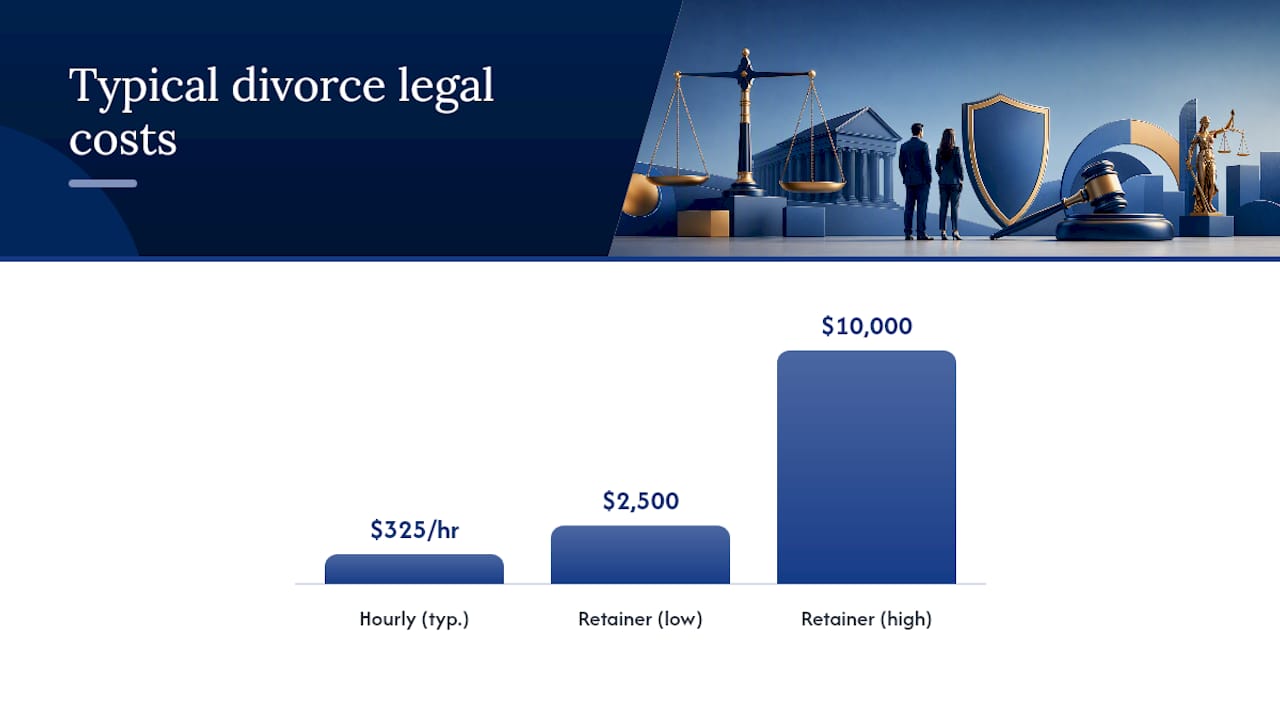
Most family law attorneys bill by the hour, with rates commonly ranging from $150 to $500 depending on location and experience, and retainers between $2,500 and $10,000 for a typical case. Flat fees exist for simple, uncontested filings, but rarely make sense once custody or significant assets are contested.
- Hourly billing is standard for anything contested; you pay for actual time worked.
- Retainers are an upfront deposit the attorney draws down against; ask what happens when it runs out.
- Flat fees work for uncontested, paperwork-only divorces.
- Limited-scope (unbundled) representation lets you hire an attorney for specific tasks, like reviewing a settlement agreement, while you handle the rest yourself.
Unbundled representation is a recognized cost-saving option endorsed by bar associations nationwide, and it can cut total legal spending by roughly half compared to full representation when you're capable of handling the administrative parts yourself.
Get every fee arrangement in writing before work begins. Ask about caps on specific tasks and whether the firm offers monthly budget check-ins so surprises don't pile up until the final invoice.
Warning Signs You Should Not Ignore
Some behaviors during the hiring process predict problems down the road.
- Guaranteed outcomes. No ethical attorney promises a specific custody split or settlement amount before reviewing your case in depth.
- Pressure to sign immediately. A rushed retainer signature, especially paired with a discount for "signing today," is a pressure tactic, not a favor.
- Vague or shifting fee quotes. Be cautious of attorneys promising fixed, all-inclusive fees for anything beyond a routine uncontested divorce; complex cases rarely fit a flat price, and an attorney who claims otherwise may not understand your case yet.
- Unexplained handoffs. If the person you interviewed disappears and a stranger handles your file, ask why.
- Unreturned calls before you've even signed. Slow communication during courtship rarely improves once you're a paying client.
If you spot a red flag after you've already hired someone, document the specific incident, request a direct conversation about it, and put your concerns in writing. If the pattern continues, you have the right to switch attorneys, though you may owe fees for work already completed.
Comparing Finalists and Signing the Retainer
Once consultations are done, score each candidate against the same three criteria: specialization fit, strategy fit, and fee transparency. Whoever scores highest across all three, not just one, is usually the safer choice.
- Confirm the retainer agreement spells out the hourly rate, retainer amount, billing increments, and what counts as a reimbursable cost.
- Start gathering financial documents, account statements, and any children-related paperwork (custody agreements, school records) right away.
- If you need to switch attorneys later, expect to pay for work completed and possibly a short delay while the new attorney reviews the file.
Pro Tip: Ask your top choice how they'd handle a disagreement between you two over strategy. Their answer tells you more about compatibility than anything else in the consultation.
Mediation and Collaborative Divorce: Alternatives Worth Asking About
Not every divorce lawyer defaults to a courtroom fight. Many now offer, or work alongside, mediation and collaborative divorce as lower-conflict paths to a settlement.
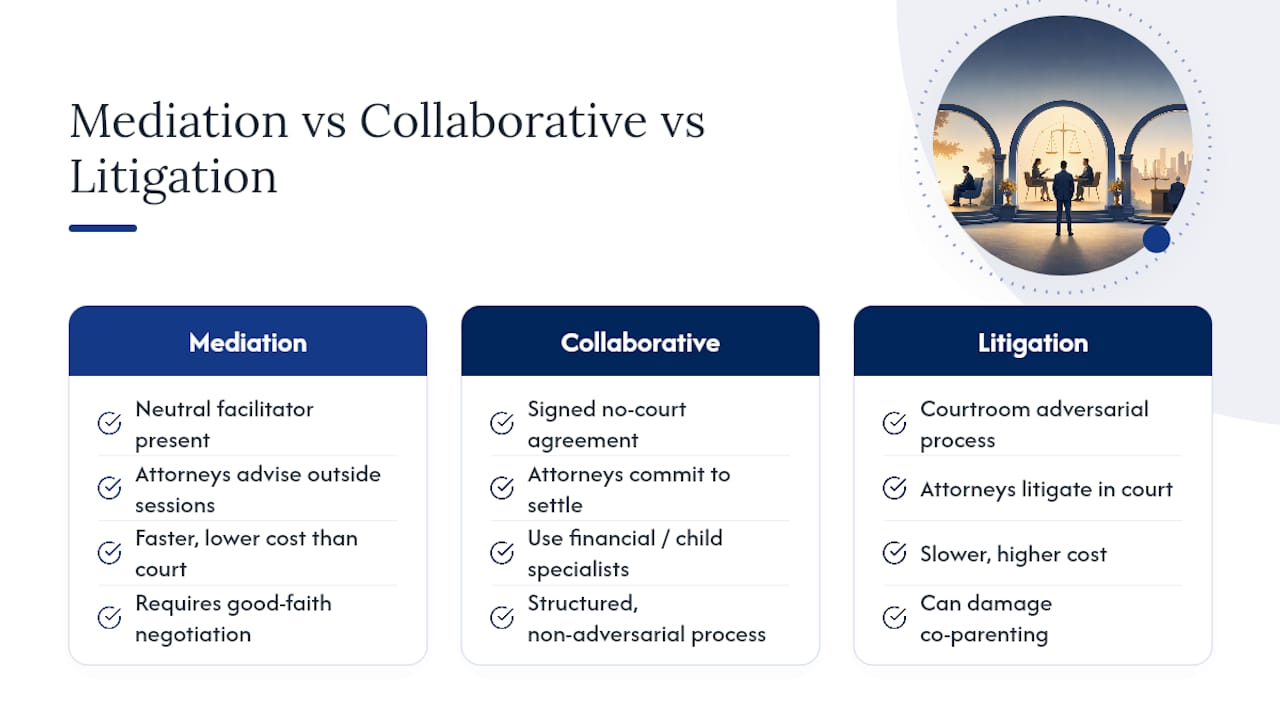
Mediation puts a neutral third party in the room to help both spouses negotiate directly, with each side's attorney available for advice outside the sessions. It tends to move faster and cost less than litigation, though it requires both spouses to negotiate in reasonably good faith.
Collaborative divorce goes a step further: both spouses and their attorneys sign an agreement committing to settle outside of court, often bringing in financial or child specialists as needed rather than dueling expert witnesses. It suits couples who want a structured process without the adversarial posture of litigation.
Ask any attorney you're considering whether they're trained in or regularly use these approaches. An attorney who only knows how to litigate will push toward litigation, even when a calmer path would serve you better and cost less. If your case involves ongoing co-parenting, a mediated or collaborative outcome can also preserve a working relationship with your ex that litigation tends to damage.
A Publisher's View: Where Attorney Matching Fits In
Everything above assumes you have time to research, call, and interview multiple attorneys. Not everyone does. Some attorney matching services allow users to describe their situation in plain language, get a case brief in under two minutes, and receive attorney matches within 24 hours.
Matching services shine when speed matters or when you're searching an unfamiliar local market and don't know where to start. If you already have strong referrals from people you trust, or your case is simple enough to research alone, a direct search may still serve you just as well.
Either way, the vetting steps in this guide don't disappear once you get a match. Verify the attorney's state bar standing, confirm their disciplinary record, and get every fee arrangement in writing before you sign.
— Admin
Get Matched With a Family Law Attorney Faster
Some attorney matching platforms offer an alternative to weeks of cold calls and voicemail tag by allowing you to describe your divorce situation once and get matched with a qualified attorney within 24 hours instead of spending days chasing callbacks.

The intake process takes about two minutes and works well whether you're dealing with a straightforward uncontested filing or a contested custody dispute that needs a specialist fast. It's especially useful if you're relocating, searching an unfamiliar county, or simply don't have the bandwidth to call five firms this week. Once you receive a match, run it through the same checklist covered here: confirm bar standing, ask about their family law caseload, and get the fee agreement in writing before signing anything. Readers in Southern California can also browse attorney listings directly, including family lawyers in Los Angeles, Orange County, San Bernardino, and Riverside. To start your own match, visit the Find Lawyer page and describe your case.
Where to Verify Attorney Credentials and Find Low-Cost Help
Check these directly before hiring:
- Your state bar's website for license status and public disciplinary records.
- The American Bar Association for guidance on unbundled and limited-scope representation options.
- Legal Services Corporation if cost is a barrier and you may qualify for legal aid.
This article is general information, not a substitute for advice from a qualified lawyer. Consult a qualified legal professional about your own circumstances before acting on anything here.
Sources
- Finding a Divorce Lawyer — Investopedia
- I need legal help — Legal Services Corporation
- Limited scope unbundling — American Bar Association
- Selecting a divorce attorney — North Carolina State Bar (Legal Eagle)
- How to choose a divorce lawyer — Unvow
FAQ
What's the best way to choose a divorce lawyer?
Shortlist three to five family-law specialists through referrals or bar referral services, verify their license and disciplinary history on your state bar's website, then interview each one about experience, strategy, and fees before deciding.
What's the biggest mistake people make during a divorce?
Hiring the first attorney they talk to without comparing at least one other option, and signing a retainer before getting the fee structure explained in writing.
What should I do first if I want a divorce?
Gather financial documents, assess whether your situation involves disputed custody or significant assets, and start building a shortlist of family-law attorneys before any conflict with your spouse escalates.
How much do most divorce lawyers charge?
Hourly rates typically run $150 to $500 depending on location and experience, with retainers between $2,500 and $10,000; total divorce costs average around $12,900 nationwide.